The captain, the hens and the hungry army
A thousand men were on guard, and yet the sheep and the fowl were all missing from the place. Illustration: Conor McGuire
In November 1880, the British Empire sent an army to Mayo to dig turnips. The man it was all for was always coming back on his holidays.
There's a rule in the west of Ireland older than the Land League and one which is observed with far greater stringency. You close the gate behind you. A farmer will tolerate a stranger doing all sorts of things, but he will not in the least tolerate a gate left ajar and his bullocks halfway to Ballinrobe.
Which is pretty much how it all started. Boycott was land agent to Lord Erne's estate at Lough Mask and one of the complaints his tenants had was that he would fine them for gates left ajar and for hens going over the boundary. If you look at it the most humbling month the Empire ever spent in Connacht, and the word it gave to every language from Dutch to Russian, started with poultry.
He wasn't much of a ‘captain’ either. He bought a commission in the 39th Foot in 1850 and sold it two years later. One historian actually suspects the title came from the tenants (that's the Irish way of promoting a man so that the fall is measurably longer). Before his tenure on the Mayo mainland, he'd spent a lot of time on Achill, where he was sued once for assault and, in turn, sued someone else for libel. That, for a lone Englishman in 19th-century Ireland, was a decent attempt at networking. He was an average jockey and preferred to race in greens. Nobody had to invent any of that.
In September 1880, with the Land League in full swing, his tenants asked for a reduction in rent and didn't get it. A process server by the name of David Sears went out with 17 policemen to serve the evictions. The women of the district came out and sent him and his men home with stones, mud and manure. Seventeen armed constables routed by dung. I'd like to think the RIC learned a lesson from that.
It was the local women who did the quiet work. They got the house servants to walk. They wouldn't take his washing. At the post office in Ballinrobe, they wouldn't take his letters. The historian Elizabeth Malcolm makes the point that the first boycott was very much a women's initiative and that history, as history does, has put a man's name to it.
Boycott wrote to , as Englishmen in difficulty do. His blacksmith had been threatened with murder and, in the same rather aggrieved tone, he said "my laundress has also been ordered to give up my washing". It's a letter which can't tell the difference between an assassination and an ironing basket, which makes him somewhat endearing.
Three of the staff stayed: the groom Johnny Meany, the cook Judy and the parlour maid Harriet. Everyone else in the house (a visiting niece, two nephews and the niece's fiancé who must have been quietly putting the idea of it to one side) got up at four to milk the cows.
A word was being born. An American journalist, James Redpath, was telling Father John O'Malley of The Neale that 'ostracism' was rather too grand a word for the crafty tenants. O'Malley suggested 'boycotting'. Redpath had it in print in Chicago by October. The , when it came to explain the novelty to its readers, needed four other verbs to do it: to ratten, to intimidate, to send to Coventry, to taboo. Mayo had got away with one.
And then the Empire decided to get involved.
The raised a fund to send out Ulster volunteers to save Boycott's harvest. Forster, the Chief Secretary, thought 50 unarmed men would be quite sufficient. Boycott himself said that ten or 15 labourers would be quite enough and he was quite certain that a large Orange expedition would only create trouble.
No one took either of them seriously. Special trains left Dublin with Hussars, the Army Service Corps, wagons and ambulances and the 84th Regiment got on at Athlone. By the end of it there were something like 900 soldiers and a very large number of police assembled to protect 50 men from Cavan and Monaghan as they went about digging turnips as if the fate of the Empire depended on it.
The 50 got off the train at Claremorris on November 11th and found that no carman in the county would drive them. They therefore walked 15 miles through driving rain. Father O'Malley (the man who'd given the thing its name) walked at the head of the procession with an umbrella over his shoulder. That's the most Mayo image I know of. The priest leads the invasion and he's the only one who stays dry.
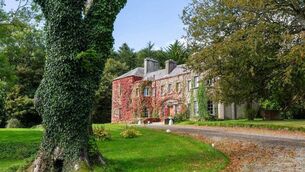
They camped on the lawns of Lough Mask House and in the barns and the boathouse. It rained in torrents all the time and the grounds became a sodden bog. The local women called them the hungry army and angishores (from ainciseoir, a miserable wretch) and told them Boycott would make them pay for a miserable dinner of boiled turnips. One of the women went so far as to taunt the men of the parish for not doing anything and was told "Don't be making a fool of yourself, woman... we'd be out if we were wanted".
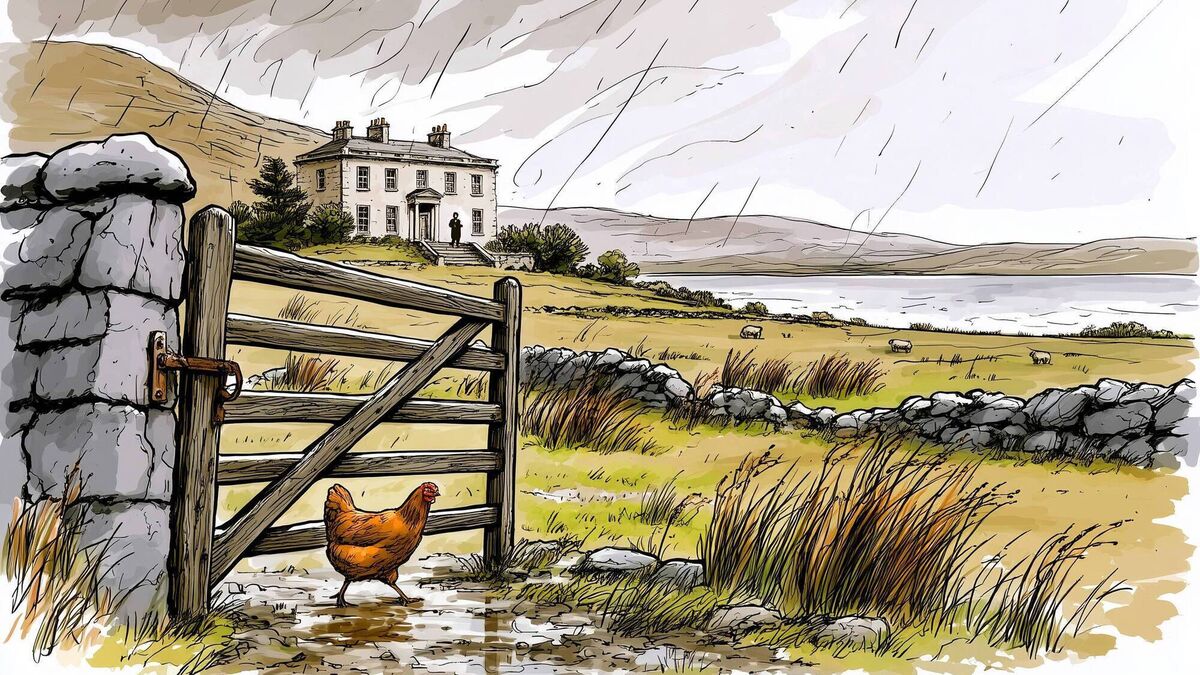
There was no ambush, nobody was hurt, the crops came in perfectly. A thousand men were on guard, and yet the sheep and the fowl were all missing from the place. The hens had the last laugh.
The bill came in at about £10,000. The crop was £500, according to the , and £350, according to a more conservative estimate. Parnell said it was a shilling for every turnip dug from Boycott's land. That's the line we all remember as Parnell's to use, so I'll just leave it at that.
Boycott left on November 27th. No driver in Mayo would have him so he went to Claremorris station in an army ambulance with the Hussars all around him. Must be the only time in history the winning side have been carried off the field. In Dublin, the Hamman Hotel received a number of letters to the effect that, if it kept him, it would be boycotted, and he was told to go. Within a few weeks his name was being used against him by people who had never seen him at all. That's fame or infamy. That's also, I'd say, part of the Irish condition.
He went over to America and registered as Charles Cunningham. That didn't help at all. The had a piece on the arrival of Captain Boycott, "who has inadvertently given us a new word". I've seen a lot of newspaper copy and I can't recall ever coming across a better adverb.
He finished as land agent on an estate in Suffolk and died there in 1897. His widow was sued for the funeral expenses. Nobody walked 15 miles in the rain for her.
Here's the bit that is surprising. He came back. The historians are all over the details, but he was clearly back in Ireland again. One account has him going back to Lough Mask in August the year after the siege to find everything was exactly as it had been, nothing missing or stolen. After the airborne manure, the army and the ambulance, he came back for the summer holidays and no one in the least bit minded.
The most Irish thing in the whole story, in my view, is the distinction the locals made between the man and what he represented. We may be a nation of grudge-keepers, but this grudge wasn't deeply personal; it was political. Mayo didn't hate Charles Boycott; it hated the idea of the land agent, and once he stopped being one, he was just a harmless and befuddled Englishman who liked the lake and a spot of fishing. The county simply closed its door on him with the most total and public of convictions and then graciously left the gate open.