Tackling the growth of complaint culture
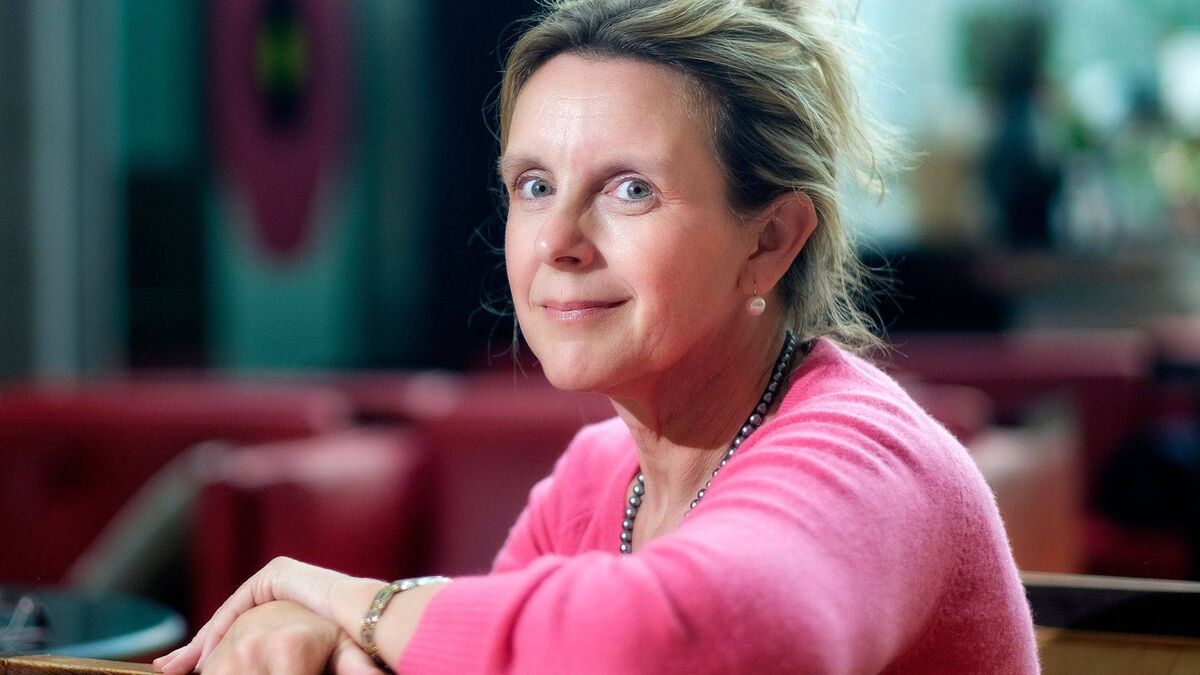
Consultant psychiatrist Dr Gwen Adshead has worked with and written about people who have suffered appalling trauma but have lines have become blurred by people whose suffering is more imagined?
It’s only recently I’ve discovered a writer whose real name escapes me but who has chosen the unlikely pen name, Theodore Dalrymple. Among his titles are and .
A retired doctor and psychiatrist, Dalrymple has worked in a general hospital and in a prison and now writes a weekly column in The Spectator, a British politically conservative and cultural news magazine that allows him to chart and to dissect what he sees as the social (and other) decline of the UK. A favoured theme is that the prevalent views within western intellectual circles minimise the responsibility of individuals for their own actions – as per his book titles, above.
The following paragraph is a typical theme:
(That paragraph bears a re-reading!)
The quote is from a recent (28.2.2026) review by Darlymple in of a book by a consultant psychiatrist, Gwen Adshead, coming to the end of her career who had specialised in looking after people who had committed atrocious crimes as well as those who had suffered an appalling event or accident that subsequently affected their mental capacity. Their stories are related in a recent book, Gwen Adshead, , published by Faber, £20.
Adshead examines eight different kinds of trauma: a former Japanese prisoner who suddenly relives his experiences after 50 years; a refugee from former Yugoslavia whose child will not speak; children who were cruelly treated in orphanages; a man whose parents escaped from Nazi Germany and whose close family was killed and who knew nothing of their suffering and now suffers himself; a man taken by terrorists on a long haul flight; and a man who was the target of a racial attack in a park; and so on.
Dalrymple honours a number of strengths of the book. First, there is a recognition that human beings ‘are not simply ivory balls on a billiard table that go off in a predictable direction according to simple physical laws when they are struck by another ball’. Second, there is no automatic connection between trauma and a person’s reaction to it – as temperament, life experience, social circumstances moderate that reaction. Three, human beings are affected by but not determined by the experience of trauma.
But, as might be expected, Dalrymple has some reservations about Dr Adshead’s ‘basic stance’ and wonders out loud whether the notion that there is a psychological anti-dote to suffering after a traumatic experience ‘actually adds to the aggregate of such suffering’.
It is a telling point. Patients of whatever order, when they visit their GP or consultant are often given to expecting one or more of the following results: an instant diagnosis of the condition; a prescription that will speedily produce an antidote to that condition; and a guarantee that the antidote will obliterate – as speedily as possible – whatever suffering is involved. And Dalrymple concludes that such impossible demands lead to resentment, adding an additional layer of mental discomfort to the original distress.
This touches a popular nerve and, as we know, there is an unhealthy growth of a culture of complaint among those who inhabit a world whose defining impulse is to over-visit doctors’ surgeries regularly in the mistaken belief that there is something every doctor can do to relieve every possible ailment – despite the obvious complexity of diagnosing everyone who calls to see them and despite the advent of the stresses and strains that inevitably attend the diminishments of old age. This culture is heightened by a media compulsion to give soft interviews to anyone and everyone who has a bone to pick ‘with doctors’ or ‘with the health service’ or with those whose impossible health expectations are regularly disappointed. Indeed, embedded in this culture of complaint is the growth of ‘psychological injury’ and the additional distress that it is said to visit particularly on those whose media day in the sun makes good television.
Dalrymple points out that where people are rewarded, financially or in some other way, for psychological injury, they will either claim to suffer or actually suffer, from it – ‘since suffering is itself reflective and to some extent dependent on expectation’. And, as is clear, when there is the prospect of financial compensation, with constant repetition and enhanced by media attention, the patient can become convinced that psychologically as well as physically they must be even worse than they imagined and suddenly they are being advised by specialised legal experts on how to represent their illness in a court of law. A comparative condition, it seems, afflicts the present unworthy occupant of the Oval Office where Donald J. Trump recently confessed that because of his personality, he needed the psychological boost of personally taking charge of Greenland.
It is instructive that the Irish government is at present reviewing the ‘no foal, no fee’ legal practice in which solicitors take on what they regard as promising litigation cases by covering legal fees and providing a ‘no foal, no fee’ security for reluctant litigants. The hope is that banning such cases might reduce the number of legal challenges, particularly to planning and environmental decisions and moderate the inevitable trauma for all concerned.
A wise move, no doubt Theodore Dalrymple would agree.