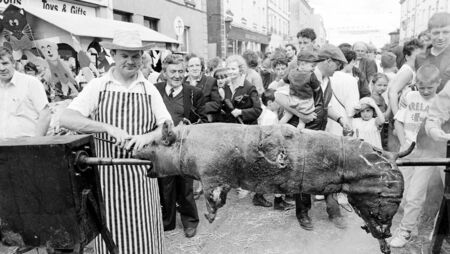
Rearing geese for Christmas was once common in the West
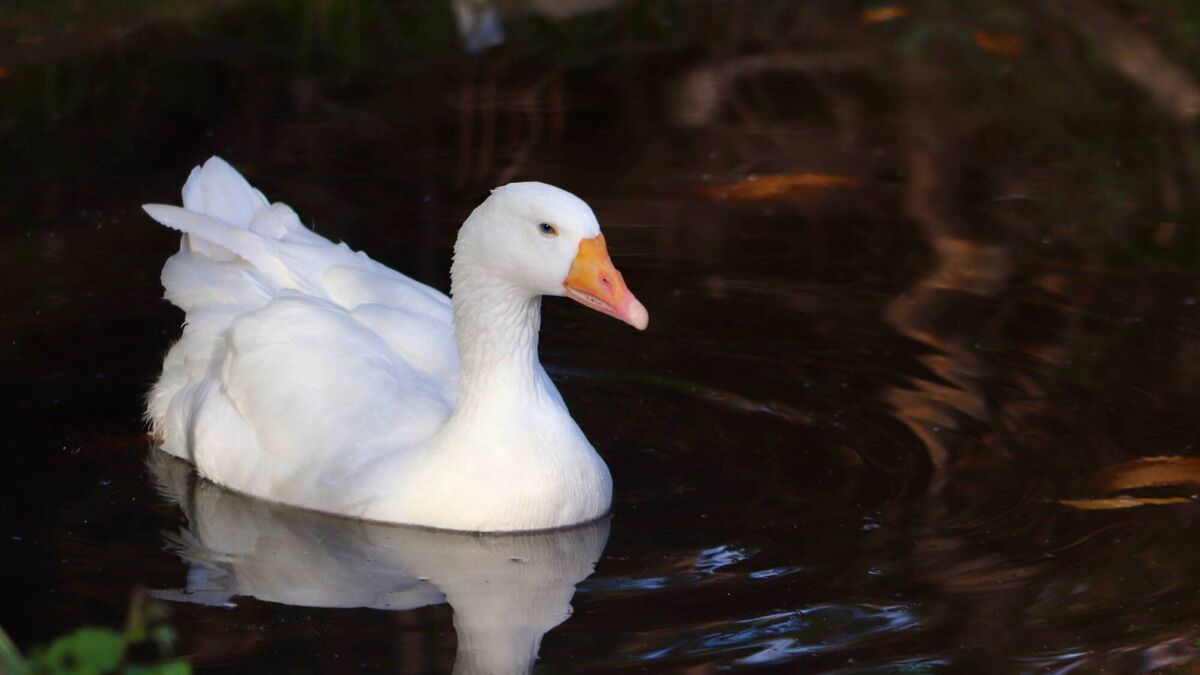
The goose adapts well to both warm and cold climates.
There is something remarkable about geese; the way they stand in the rain, their face raised to heavens, their beaks slightly open, allowing the first drops of a summer shower to tribble into their mouths. I have stood and watched a goose in this pose and realised there is much about this choice creature we are unaware of.
In times gone by, rearing a few geese for Christmas was very common in the Ox Mountain region. Most farmhouses had a few such fowl about the place and of course stories of wicked ganders are legendary. The hatching goose, her adorable goslings, and the prospect of having a few geese to sell at Christmas, meant the poultry enterprise on the small farm more than paid its way. A Christmas goose would even be prepared and posted off to friends and relations, some as far away as Limerick, Liverpool, or London.
Domestic geese have been derived through selective breeding from the wild Greylag goose. Given their size and ease of rearing, geese are important in many culinary traditions. Their meat, liver and other organs, fat, skin, blood and eggs are all used in various forms.
The Food and Agriculture Organisation of the United Nations, in an information piece on domestic geese, spells out their starting point. They say it is generally accepted that geese were one of the first animals to be domesticated and that domestication probably took place in Egypt about 3,000 years ago.
There are two main types of domestic geese. The first are thought to have their origins in Europe, (from the Greylag), the second are thought to have their origins in Asia, descendants of the wild Swan goose. Crosses between the domestic breeds which have originated from these two species of wild geese are fertile and have resulted in the variety of recognised breeds we have today.
The ’common’ goose of farmyards and story books was, in most cases, the Embden breed. This is a white goose with relatively tight feathering, an erect stance, orange shanks, and an orange beak. Most strains of Embden geese can be sexed on the down colour of the goslings, as males are a lighter grey than females.
The Embden is suitable for meat production but also has a place when used as the male line in the production of a crossbred commercial goose. These hybrids are now popular, having replaced the older breeds in terms of efficiency. In large breeds, some males weigh up to 10kg and females usually a little less. Geese have a moderate egg production, producing about 40 eggs per year.
Another great benefit arising from keeping geese was the bounty of their feathers. I have a goose down jacket and I can only wear it on the coldest of cold days. A little-known tradition associated with geese is, ‘The Harvest of Feathers’ or ‘The Harvest of the Geese’. This process is described by Cloonacool girl, Rita Davitt, in a contribution to the School Folklore Collection in 1937.
I imagine these poor geese felt embarrassed, not to mention the chill, and how this seasonal plucking must have affected their social life, one can only be speculated. I imagine it’s where the phrase ‘goose pimples’ originated. Regardless, this ‘harvest’ was certainly a great way, for people who live in cold houses, to get an extra crop of warm feathers. Incidentally, the down off a full-size goose only amounted to five or six ounces of feathers – not much in terms of filling a pillow – but this late summer fleecing amounted to a considerable sacrifice on behalf of the goose.
My own story of having goose for Christmas dinner is a story of perceived cleverness that ended in abject failure. I knew a man that was breeding geese for the Christmas market and I offered to take one off his hands, convincing myself that our family Christmas that year would be flavoured with an old tradition. While I hadn’t reared the goose myself, I would surely have all the other benefits.
The first issue I was presented with was plucking the goose. I took one look at the lifeless beast and decided that skinning it was my quickest option. This departure from tradition was not written in any ‘How to Prepare your Goose for Christmas’ manual but I felt I had come up with a short-cut that previous generations had somehow missed. The skinning went well, took but a few minutes and, hey presto, my goose was oven-ready.
I didn’t know it at the time, but in removing the skin form the goose, I had committed several fatal errors. Firstly, the goose no longer looked like a goose. Secondly, most geese kill out at about 75% of their live weight. Without its skin, my goose went down to about 25%. Finally, in removing the skin, I had removed the fat, and that fat is essential for basting the bird, keeping the meat moist and providing valuable goose grease as a byproduct. Undaunted, I stuffed the carcass and eventually placed my 2003 Christmas dinner in the oven. A few hours later – that’s how long it said in the book – I removed the roast from the oven. I was greeted with something resembling a cross between an old football boot and a bog body. I had destroyed the goose, I had destroyed Christmas dinner, I had destroyed Christmas itself.
They say three geese will eat as much grass as two sheep. Keeping geese can be very rewarding, although it seems they have gone out of fashion in recent times. Maybe this is because they have a reputation for being aggressive and more noisy than other fowl. It could also be a question of space; most gardens, while large enough for a few hens, do not have enough grass to keep geese.
Not all geese are aggressive, and if you choose geese that have been raised by hand and handled regularly, you will find they can become very tame. Of course, things do heat up a little during the breeding season, and ganders view most intruders as a threat.
If you choose the right breed and the right number of geese for your field or garden, then you will have some eco-friendly lawnmowers as well as free-range eggs to eat or hatch each spring. Domestic geese do not require a pond; in fact, they spend most of their time on land, eating grass. A basic water trough that can be tipped out and re-filled with fresh water will work well for them, and of course, they can always stand, heads raised, and drink the rain.