Rape crisis centre made an honest point badly
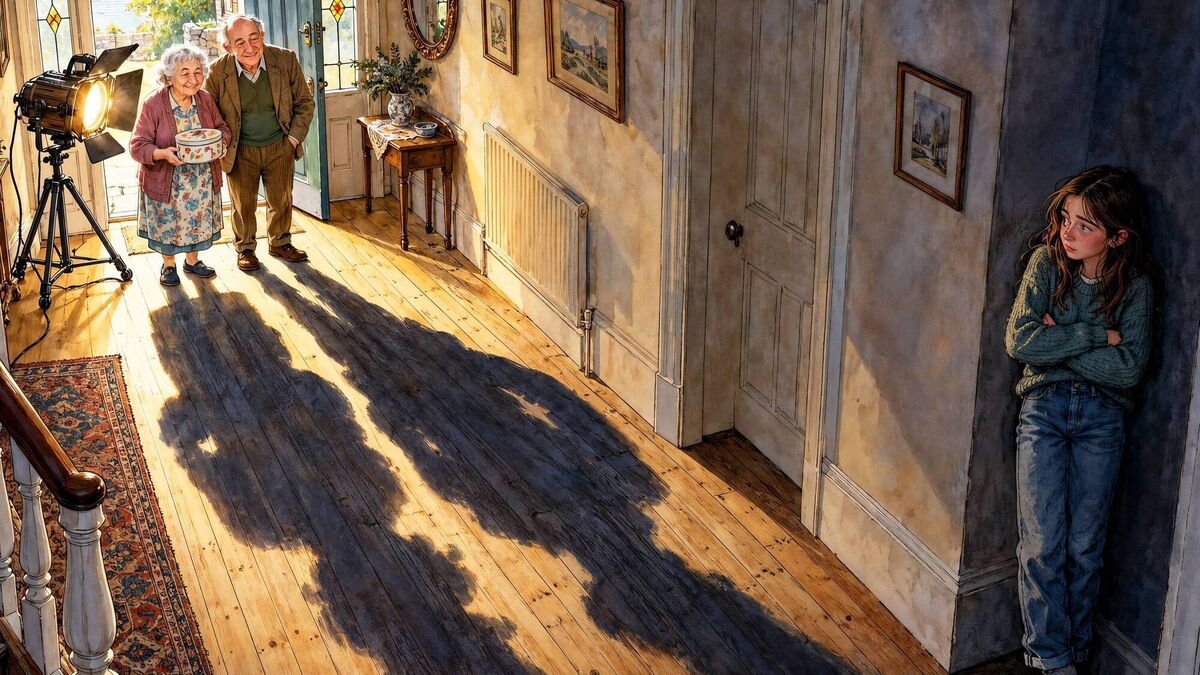
The DRCC weren't wrong about the kernel. They were wrong about everything around it. Illustration: Conor McGuire
Of all the people in Irish life you might think of putting in the dock, the granny at the front door would come last on most lists. She's about the only figure the country still agrees on. The priests have had their reckoning and the politicians never had far to fall, but the grandmother on the step, arms already open, has come through every upheaval we've inflicted on ourselves without a mark.
I adored my grandmother. Her kitchen served as a refuge, and her arms were the way in. Nobody needed a consent workshop to explain that to me, and I'd have been baffled by anyone who tried.
So I watched the Dublin Rape Crisis Centre's little film as a grandson first and a columnist a distant second. Twenty-five seconds. A doorbell. Grandparents on the step, giddy as spaniels. A small boy flings himself at them and is swallowed whole. Behind him a girl hangs back, wearing the face of a teenager who's just been told the Wi-Fi is down. The grandparents advance. Cut to the slogan: .
That was it. It went up in mid-September and sat on social media for a month like a leaflet on a parish noticeboard, read by roughly nobody. Then somebody posted it on X on Wednesday, and by Thursday lunchtime it was gone, along with two siblings. The Minister for Justice had called it demeaning to grandparents, and the Minister for Health was on her feet in the Dáil, distancing the Government from a campaign it pays for.
Most of the outrage has settled on one word. Demonisation. Aontú's Paul Lawless used it in the Dáil, and you'll probably have heard it from every second caller on every afternoon phone-in for the rest of the week. It's nearly right. The gap between nearly and right is where the real offence lives.
Watch it, and the first thing that hits you is the ham-fisted casting. These aren't any grandparents you or I have ever met. They're a caricature of grandparents, an overbearing double act who come through the door as if affection were something you seize rather than something you're given. Faintly odious, repellent and plainly meant to be. The film needs you to recoil alongside the girl, so it makes them easy to recoil from. A warm, ordinary granny would have muddied the lesson, and somebody decided the lesson mattered more than the granny.
Then the branding finishes the job. The film was made by a rape crisis centre, and the frame does the talking. Put a cartoon of a grabbing grandmother inside that logo, and there's only one way to read it. The script sneered. The letterhead accused.
I don't believe anyone at the DRCC sat down to cast Granny as a predator. Something sadder happened. They tell us the scenario came out of more than 20 consent workshops and was shot on a shoestring with staff and volunteers. I believe them, and that's the problem. Spend your working life in the worst rooms in the country, hearing what goes on behind certain front doors, and the front door itself starts to look different. By the centre's own figures, as much as half the child sexual abuse it deals with happens inside the immediate family. With that caseload, a Sunday visit stops being a Sunday visit. It becomes a setting.
A surgeon looks at a body and sees everything that might go wrong with it. You'd want your surgeon to think like that. You wouldn't want him designing your Christmas cards.
Which brings us to the Government, who were rather less sinned against than they'd have us think.
We-Consent was launched in 2023 with a Minister for Justice at the photocall and is supported by the Department of Justice and the Department of Children. Public money with a departmental blessing and a lamentable lack of oversight. Yet when the wind turned, Jim O'Callaghan's officials were on the phone within hours, and his statement had the clipped tone of someone handing back a dog that's bitten the postman. Engagement, in the dialect of Merrion Street, being the sound of a minister clearing his throat down a phone line.
Then the Minister for Health Jennifer Carroll MacNeill told the Dáil the campaign had been funded "without any reference to Government", which is a remarkable thing to say about money the Government hands over. I've read it several times now. It has the flavour of a man insisting he never drives the car he's just been photographed parking.
The notable thing isn't that the video was pulled; there are plenty of things that deserve to be pulled. It's that it was pulled swiftly inside a day, on the strength of one post and a gathering howl of protest, by a State that couldn't bring itself to say, even once, what the film was clumsily reaching for. A month of blithe indifference followed by 24 hours of complete panic. That isn't policy. It's a weathervane.
And let’s be honest about who had a hand in it. Aontú owned the story from the off, and Peadar Tóibín wanted an apology on behalf of the grandparents of Ireland, Lawless wanted to know what it cost, and the coalition, rather than defend or even explain a charity it funds, simply legged it. You can call that responsiveness if you like. I'd call it a government more frightened of a small party with a good line than sure of anything it claims to believe.
Here's the thing nobody would say on Thursday, because there was no percentage in it for anybody.
The DRCC weren't wrong about the kernel. They were wrong about everything around it. A child taught that her uneasiness doesn't count, that she must go and kiss whoever's on the step because it would be rude not to, learns to keep quiet about adults. Child protection people have been saying this for 30 years, and they're right. A shelter only works because the child walks into it of her own accord. My grandmother never once had to demand a hug. That was rather the beauty of her.
That's a real point, and it deserved a considered, professional advert. Just not one with a Roald Dahl caricatured granny in it. A creepy uncle, maybe, or an unctuous and overhandsy family friend. The swim coach who's a shade too keen to give you a lift home. Anyone, frankly, except the most admired and least threatening figure in Irish domestic life, the woman who kept half of us fed and nurtured while our parents worked, whose hug is the nearest thing this country still has to a sacrament. Pick her, and you've lost the room before you've opened your mouth.
So the DRCC made an honest point badly, the Government disowned its own money, the Opposition got its clip for the evening news, and the grandparents of Ireland, who never asked to be in any of it, were informed by two ministers that they'd been gravely insulted. Most of them, I'd guess, hadn't noticed. They were too busy ringing doorbells.
The girl in the video never got her ending. We'll never know whether she'd have given in and hugged them. Teenagers usually do, eventually, once they're sure nobody's looking. That was the shot worth waiting for, and nobody had the patience to film it.