Priests must confront the 'legacy question'
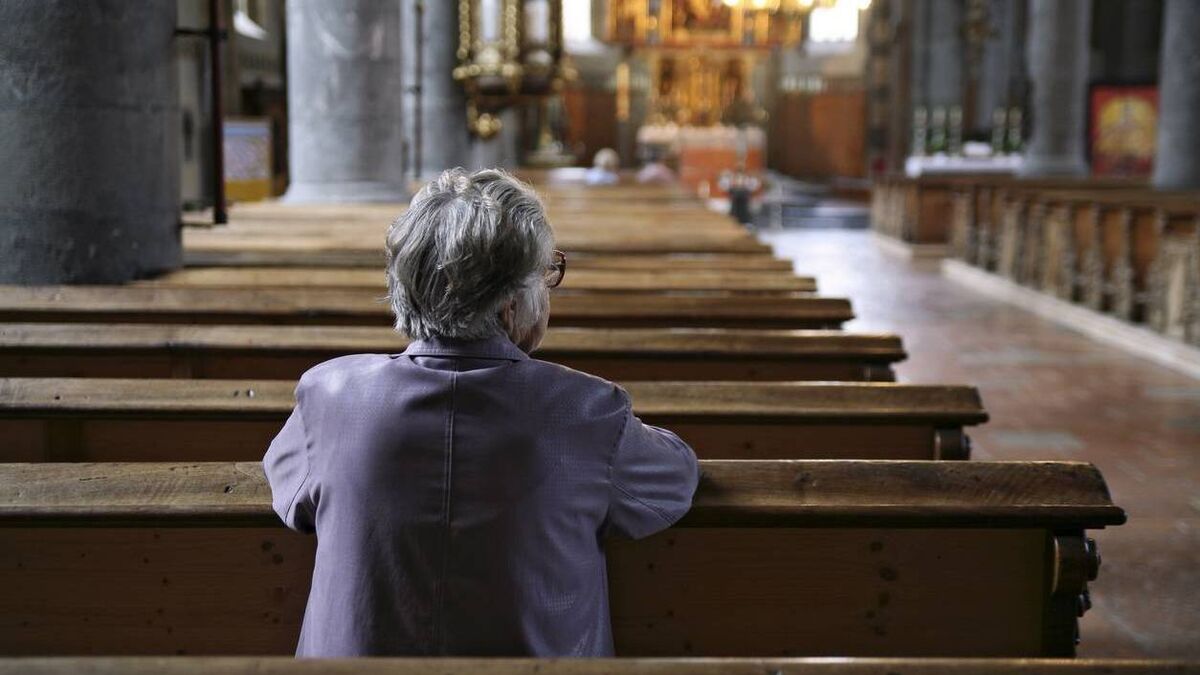
Decisions will have to be taken in every Catholic parish in Ireland about the number of Masses that are needed - and that can be realistically provided.
Gradually in the Catholic Church in Ireland we’re coming to a number of crisis points that are determined by the long-predicted and now emerging level of a gradual but definitive decline in the number of priests. The number of priests is the governing reality that determines so much else that will follow. The number of priests in a diocese, for example, determines the number of Masses and this is where the upcoming crisis will first be felt.
Up to now we have had more than enough Masses to provide a wide choice for everyone. We have Masses – usually on Saturdays and Sundays and in most parishes every morning of every week, Monday to Friday. But in terms of what’s coming down the line, the first challenge is to cut our cloth according to our measure. We will be asking questions in every parish: how many Masses have we? How many Masses do we need? And each diocese and each parish will be making choices that will be determined by the number and size of churches and their location, the numbers attending, the relative location of other churches and whatever other factors are deemed to be relevant.
The pace of this reflection will be determined by the number of priests as clearly the number of priests determine ultimately the number of Masses.
In Killala diocese, it has been officially estimated that in six years’ time – in 2032 – there may be as few as six priests for the 22 parishes of the diocese. Even that statistic on its own indicates the huge change that will be involved for every parish. Another statistic – Killala has only one priest under 50 years of age – compounds the depth of the crisis. And it isn’t just Killala, of course. This is a challenge that faces every diocese in Ireland.
In Kilmore diocese (which generally covers County Cavan), a few weeks ago Bishop Martin Hayes warned of the impending ‘staffing crisis’. He outlined what he called ‘Kilmore’s challenging statistics’: 47 per cent of the priests are over 70; 60 per cent are over 65; nine are under 40. While he pointed to possibilities of attracting priests from abroad and the availability of increased participation of lay people, his unvarying focus was that (for Kilmore diocese) he is justified in using the word ‘crisis’.
That crisis is now knocking on every bishop’s door because despite the support that priests from abroad may bring or that lay ministers can contribute it is, for the religious landscape with which we are familiar, a matter of seismic change. In a nutshell the present service being delivered by 20-plus Killala priests in the 22 parishes of the diocese will be very different from what, with the best will in the world, six priests will be able to cover – that’s while there are six priests still available.
So let’s try to imagine what this will look like. The probability is that while daily Masses (Monday to Friday) will continue in some parishes in some form, this is a short-term reality and such Masses will soon discontinue because sustaining them in the long term with a diocesan team of just six priests – and numbers gradually ever-declining more – will simply be impossible in a situation where the six priests will every week be covering funeral Masses in the 22 parishes. This means that, in parishes where lay leaders have been trained and commissioned, lay-led liturgies will substitute for morning daily Masses.
Already lay-led liturgies have been introduced in some parishes and take place usually when the priest is on holidays and a lay person, female or male, leads a liturgy not unlike Mass. Apart from no Eucharistic Prayer and no consecration of bread and wine, a lay-led ceremony has all the other features we’re used to at Mass: Scripture Readings, Bidding Prayers, reception of Holy Communion, reflections, etc. Some parishes with trained and commissioned lay leaders – there are now 80 such in Killala diocese – are able to provide lay-led liturgies as Mass numbers decrease but parishes who have neglected to train women and men (or who have had them trained and for some reason just refuse to use them) will not be able to provide this alternative to morning Mass.
Lay-led liturgies provide a good example of what a wider and fuller service of lay ministers will be able to provide for parishes in not just supporting priests but more generally in serving their own parishes. An example of this ministry is the contribution in particular lay ministers can make to supporting and enhancing funeral ministry in their own parishes.
This raises the question of parishes preparing appropriately for a time when the service they are used to now will be replaced by a lesser level of service that will (if it’s to happen) need to be driven by lay people. It is what has become for priests what’s called the ‘legacy question’.
The compelling question now that progressively the declining number of priests are asking is: what’s the legacy that as a priest I need to leave to my parish and parishioners after I’m gone? How will what we do now to prepare for the future serve or not serve the parish well in the future?
For parishes to become as near to self-sustaining as it is possible in the future two things are needed: parishioners who are willing to step up to the responsibilities of lay ministries (like lay-led liturgies, funeral ministry, Communion to the sick and housebound, etc) and priests who are prepared to facilitate them. Responding to the seismic change I mentioned earlier will depend on how those two challenges are met.
This raises the difficult question of priests who are not preparing for the seismic change that’s coming. Effectively, in not preparing, they are sitting on their hands and limiting the service that will be available to their parishes and parishioners in the near future. They are walking blindly towards a cliff-face instead of preparing parish and parishioners for a different future.
They may not be easily forgiven.