An exceptional book for this moment in time
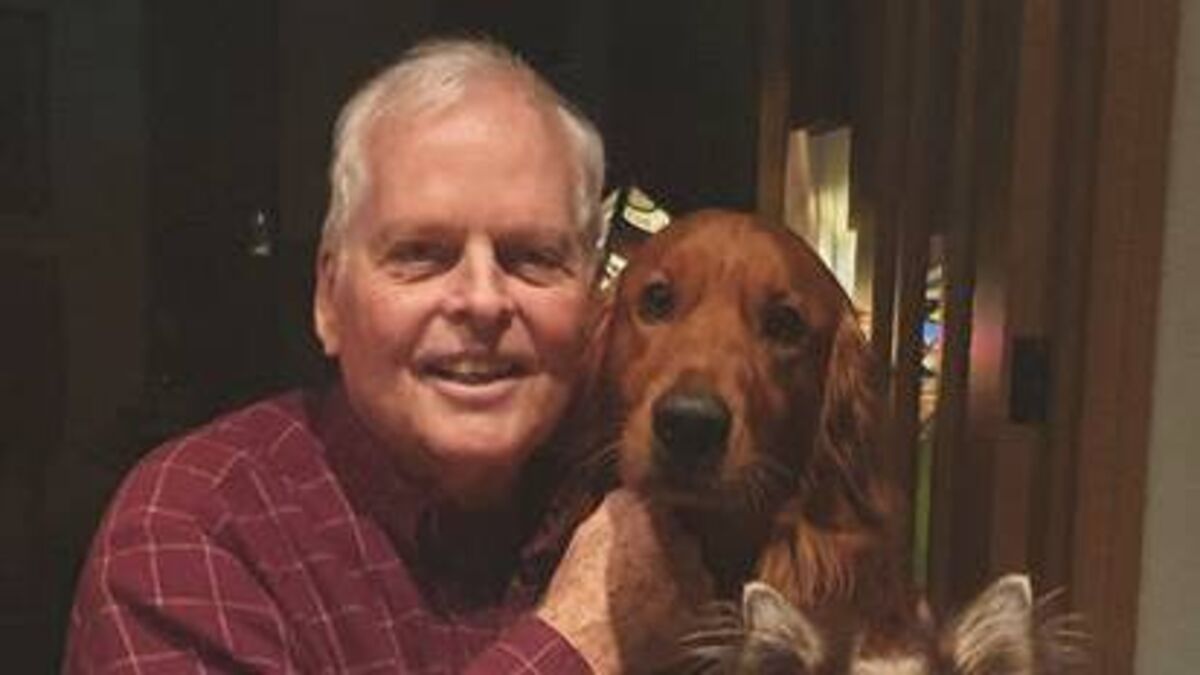
John Cunningham was ordained a priest for Phoenix diocese and during his ministry he established two parishes, earned a PhD and taught religious studies at Arizona State University for 25 years.
In a prologue to his new book, , the author John Cunningham explains in simple terms his double focus: ‘Rumination’ is the act of turning something over in one’s mind – to ponder, contemplate, consider; and ‘religion’ is like an old chest we open and rummage through to discover valuable gems to cherish as well as useless items to discard.
His broad title, , he adds helpfully, is to pursue a vision or chase a dream and he examines religion - and Catholicism in particular - ‘through the framework of a paradigm shift’ or a fundamental change in how Catholics view their faith and their religious practice as, for example, with the challenges and opportunities science now presents for religious believers.
An American native of Irish parents, John Cunningham was ordained a priest for Phoenix diocese and during his ministry he established two parishes, earned a PhD and taught religious studies at Arizona State University for 25 years. In 2018, he moved to Ireland and now lives in Kiltimagh within a stone’s throw of his mother’s old home and within sight of the Ox Mountains near Foxford, near where his father was born. As a priest, teacher and lifelong student, he has pondered an ongoing search for meaning and now he’s sharing what he believes is the best way forward for the world, science and religion and what he calls ‘the new story’ that holds the promise of the future.
‘Write about what you know’ is advice he recalls from a past professor and is an account of what he has learned in life and from which he has weaved important truths from a variety of disciplines – psychology, theology, science, history and religion – into a tapestry that has given him new purpose and focus. is an engaging, thoughtful reminder of how far we may need to travel to welcome what is coming.
A short review like this does scant justice to Fr Cunningham’s success in presenting and analysing what all of this means so I mention in passing a few examples of his thinking and refer later to others.
Early on in the book he writes: ‘We have to go beyond what was, to embrace what is, and beyond what is, to welcome what is coming.'
‘Humanity (he writes) is experiencing a historic breakthrough in understanding. What is now proven was once only imagined and is now slowly guiding us towards a new dawn’.
This applies to religion as well. It isn’t enough, he writes, just ‘to tinker at the edges of theology’. Instead of resisting, religion needs to embrace change by partnering with science. What religion needs, he suggests, is a radical reimagining required by the paradigm shift we are experiencing – more than the present reshuffling around church unity and theology.
Science for Catholics is often the elephant in the room and Catholicism to survive has to keep up with what we know scientifically in the 21st century. Science is moving ahead; religion hardly moving at all. New knowledge replaces previous beliefs, attitudes and assumptions so we need (he writes) ‘to let go of increasingly irrelevant, outdated views’.
Reimagining God is another leap of similar magnitude. We have to process new knowledge and new tools and we need to embrace the change that challenge represents. John Cunningham writes: ‘After we lay the Sky God to rest, tomorrow’s religion will not celebrate interventions from above but the emergence of the divine within us’. This is not to abandon the old faith but rather it’s about seeing religious traditions differently. Humanity evolves, and so must all living faith traditions.
John Cunningham immersed himself in influences that have marked his life. Teilhard de Chardin, reconciling faith and evolution, was his prophet of the future and Carl Jung became a central influence on his life. Jung believed that young people do not really know who they are until they reach middle age. It takes time and experience to detach from parents and to understand and claim one’s identity. Thus Jung believed Christianity was better suited to mature adults than to young people and that different moments in our lives call for different approaches. The young, Cunningham writes, cannot give away what they have not already built up.
A troubling point in our culture, Cunningham suggests, is that people who believe often do not think, and people who think often do not believe. Three stories we’ve been told summarise three world views: the first is rooted in faith and myth; the second in the scientific pursuit of knowledge; and the third is a combination of the first and second. While the first and second stories believe they have all the answers; the third story opts for the middle ground. So too does John Cunningham – what we need (he suggests) is a narrative synthesis of information and spirituality suited to the demands of our time.
Other pertinent issues that Cunningham delves into include: the role of myth in religion; scripture with a critical eye; wholeness versus perfection; mystical experience; mystery and the divine; Church or Empire? Doctrines die; the limits of fundamentalism; priests and prophets; dreams and visions; and, finally, how an appreciation of nature, often teeming unnoticed around us, can facilitate personal prayer to which Cunningham brings a sure, analytical touch. This was, for me, a noted highlight of this book, which I am more than happy to unreservedly recommend.
is a book that was waiting to be written and, in John Cunningham, it has fortuitously surfaced a writer worthy of the exacting challenge it represents. His extraordinary breath of vision, his incredibly extensive reading range, his engaging writing-style, his clarity of expression and not least his exceptional commitment to the task he has set himself have all conspired to deliver an exceptional book that has done justice to this key moment in time. deserves to become, and I have no doubt but that it will soon become, a classic of its kind. A gift from Kiltimagh by way of Arizona.
is available on amazon.ie for €30.00