Preserving the idyllic islands of Inishkea
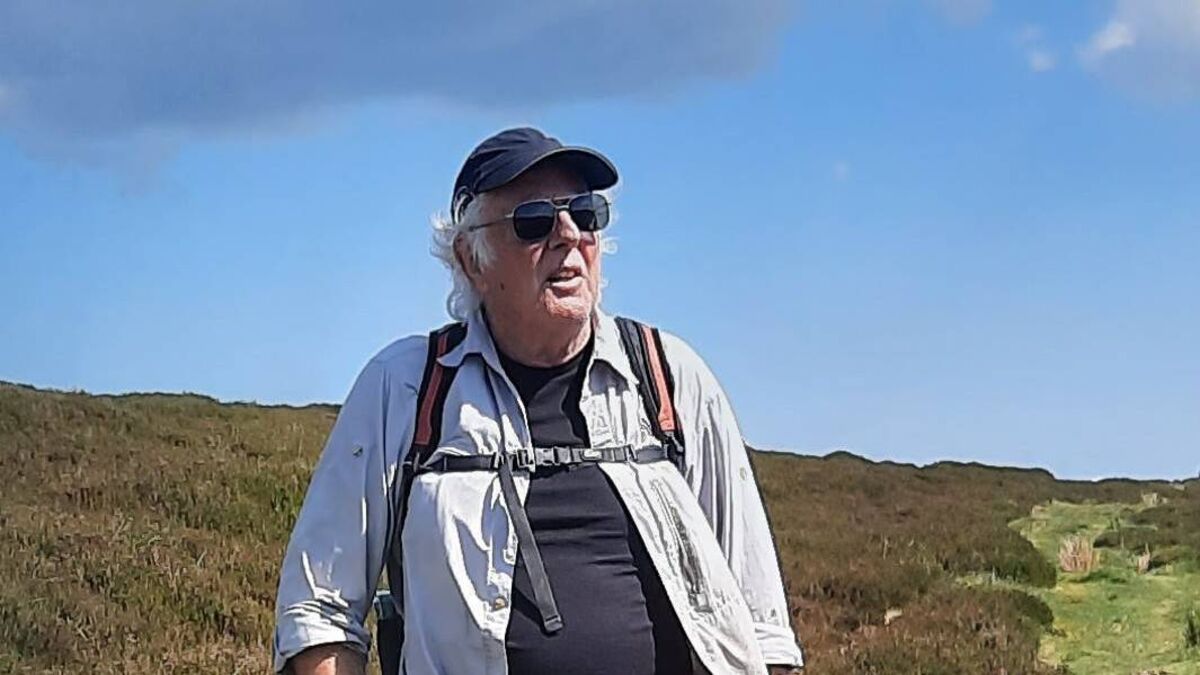
Brian Dornan has conducted extensive research on the history of the Inishkeas.
The Inishkeas, two small islands lying to the west of the Mullet peninsula, open to all the Atlantic weather can throw at them, are now deserted of permanent occupation, but this has not always been the case.
Several thousand years ago, about 2000 BC, people farmed, lived and died on them, or perhaps on it, as they may at that time been one larger island. These Bronze Age people, as archaeologists call them, spoke a language unknown to us, worshipped a god or gods and believed in a life after death according to a religion once again unknown to us now.
So, what do we know of their lives from the evidence they left us? For a start, they built their homes, round houses essentially, with stone foundations, the upper walls probably of timber or sod. They warmed themselves by fires on which they also cooked their food. They made their own pottery, several types, food vessels, urns and simple pots, sherds of which have been found and are now stored in the National Museum of Ireland.
They commemorated their dead in a variety of ways, sometimes by erecting megalithic ‘wedge tombs’, such as the one on the island north of the ‘Dock’ on the North Island or perhaps by simple burials that left little trace, such as the cluster of bones, now eroded away by the sea, on the North Island shoreline near the beach.
How long these Bronze Age peoples lived there is not clear, but we do know that many years later, a new people arrived with Christian beliefs. They erected beautiful cross slabs, including a crucifixion slab, one of only two known in Ireland.
These new people built corbelled huts of stone around the Baily Mór, itself a much-adapted sandhill and a very rare feature. They farmed the land and sea, extracted purple dye for sacred and trading purposes and believed in a Christian god. They probably spoke an ancient form of Gaelic.
Their existence on the islands may have been cut short by Viking attacks, and there is evidence to suggest the burning and destruction of their homes. The Vikings went on in their turn to settle on the islands, as shown by Françoise Henry’s comments and the evidence of burning, burial and movement of slabs.
Yet another occupation appears in the form of a small church, called ‘St Columcille’s’, that stands on the North Island landscape, which dates probably to the eleventh century, but built by whom and for whom remains a mystery, probably by a priest or priests for a community for whom evidence no longer remains.
All these layers of occupation reveal that people lived, worked and died on the Inishkeas over a period of 4,000 years and perhaps even longer. The evidence lies on the edge of the area used by the modern community (1750-1930s), and what may have been destroyed by the ridge and furrow agriculture they used, we may never know.
Are the Inishkeas’ layers of occupation the only example on the western seaboard? Definitely not, but further research is needed. Perhaps other islands along the coast need to be reexamined. Also, what secrets lie hidden beneath the bogs that started growing in the west around 4,000 years ago?
Not unique perhaps, but vitally significant evidence such as the Inishkeas reveal must be further researched and protected where possible. At the same time, the fragile wildlife landscapes must be looked after by all the relevant stakeholders.
Has the evidence from the Inishkeas a connection with other sites such as the Céide Fields in Belderrig and perhaps even the myriad of promontory forts or duns that occur in abundance along the western seaboard?
There is a rich vein of information waiting to be found by fieldwalking, surveying and information collection from the local populace, by interested people, aided by modern methods such as drone survey, Lidar, ground penetrating radar, satellite imagery, as well as the older methods of pollen analysis, bone analysis and folklore.
My research over nearly 40 years reveals much about the islands that could be used as a template for community groups, men’s sheds, local historical and archaeological societies, secondary school students, especially those studying history, and provide topics for several university research fields.
But time, tides and gales wait for no one.
In my recent book, Mayo’s Wild Atlantic Islands: The Inishkeas, published by Mayo Books Press a few short months ago, the rate of destruction of several sites is revealed, as are the new areas of erosion revealed by aerial photography, especially on the heretofore protected eastern shoreline. Sites such as an Dún, Bronze Age burials, possible tombs, as well as more modern sites, such as lime kilns, are all under threat.
Tourism and agriculture are seen as the lifeblood of the area, but the very thing we seek to protect must be safeguarded by those, especially in the locality, through knowledge and proper agreement.
We may not see their likes again – let us protect them properly for the generations that follow.
- Mayo’s Wild Atlantic Islands: The Inishkeas, published by Mayo Books Press in 2025, is Brian Dornan’s second book on the Inishkeas and is available in all good bookshops as is his first book, Mayo’s Lost Islands: The Inishkeas