Parents must lead way on social media ban
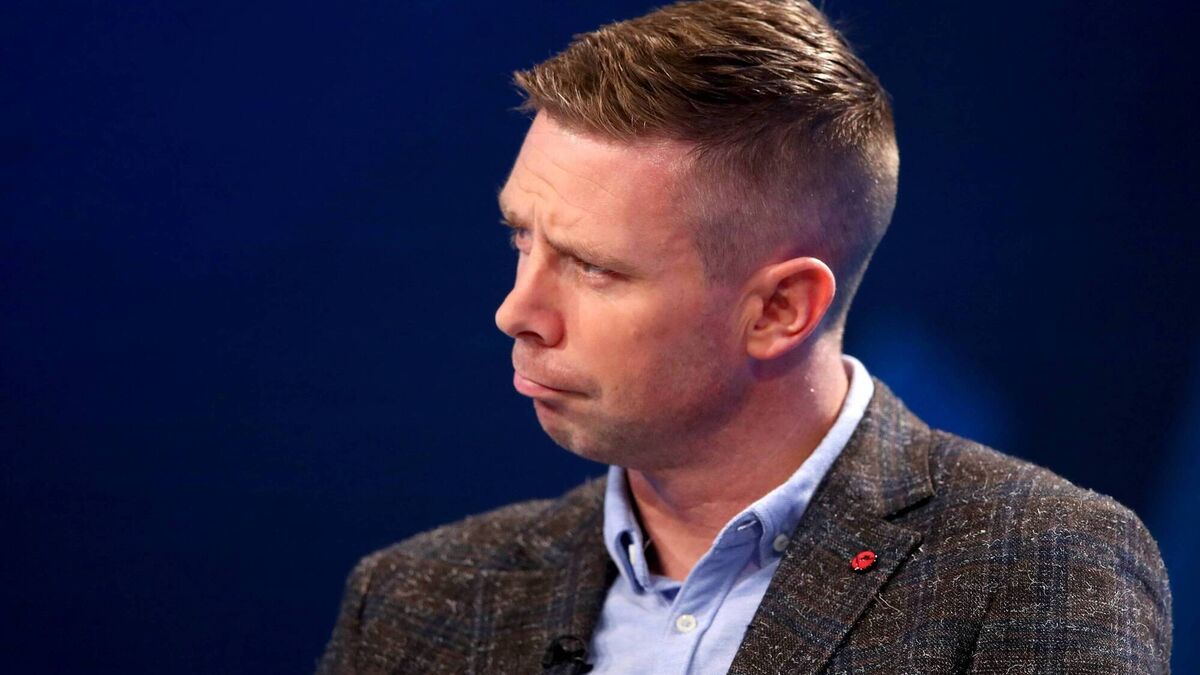
One memory shared by Kerry football legend - and National School principal - Tomás Ó Sé at the recent Western People Mayo Sports Stars Awards really struck home with many of those present.
Listening to Kerry football legend Tomás Ó Sé at the recent Mayo Sports Stars Awards, one memory he shared about childhood really struck home with me and many of those present.
Ó Sé spoke about the differences between the childhood experience when he was growing up in Corca Dhuibhne in the 1980s compared to children nowadays. He reflected on a simpler time. And central to it was how he grew up without technology being an ever-present reality in his life, unlike the children of today. It was the time of just two TV channels and a ‘mobile phone’ meant a hi-falutin cordless phone in posh houses.
“I was glad of the youth we had. We were always out playing. There were no distractions, there were only two channels on television and we weren’t allowed watch any of them. We’d be out in the back garden putting one of us crying.
“Slowly but surely you can see it in schools with parents and at government level they’re asking is it (technology) healthy and is it good for us and I think it will come full circle again but not to the level it was,” he said.
It is a speech we’ve given our children several times when they complain about having to watch ads because something isn’t recorded and the ads cannot be skipped. I’m always conscious when saying that how I must sound like a real old man to them.
On the one hand, they are growing up in a different generation to us just like we grew up in a different generation to our parents, who also would regularly tell us how lucky we were to be afforded so much play time and how much better Santa was to our generation than the more frugal times they grew up in.
And you cannot turn back the clock. Wailing against change might make you the type of person you never thought you’d become.
But maybe we don’t have to just let change overwhelm us, particularly if we truly think it is not a progressive, positive change.
Tomás Ó Sé is right – there is a growing acceptance among parents about the need to press pause on the direction that technology, phones and social media have taken the current generation of children and young adults. And he is speaking not just as a parent of four children but as principal of the Gaelscoil in Fermoy, Co Cork.
When it comes to smartphones and social media, most parents I have ever spoken to express concerns about what access to the platforms at such a young age means for their children. This concern often starts in primary school and accelerates when the children go to secondary school.
Parents are worried, fearful and simply wish for simpler times without the massive issues that smartphones and the online world bring into their home.
There are the clear and present dangers online: the way bullying follows a child home in a way that was not the case when our generation was in school; how social media companies harvest data to manipulate algorithms to maximise engagement and addiction; grooming via games, livestream chats, and messaging; fake or manipulated images and the unverified information children assume to be true.
There are other effects like the need for validation via post likes; attention and learning deficits and that’s not to mention the internal strains within families as parents try to exert some control over their children’s use of smartphones, the internet and social media.
The impact of social media and smartphones on a child’s wellbeing, self-worth, concentration and sleep are all major issues.
Of course, technology brings connection, creativity and learning too - but many parents increasingly feel the bad outweighs the good.
Yet parents have become resigned to what they see as the inevitable, that it is like trying to stop the tide. They do not want their children to feel left out and it becomes an insidious domino effect as more and more of their peers get access to smartphones and social media from parents also trying their best but who feel helpless too.
But does it have to be like this? Do we, as parents of the current generation of Irish kids, not have control over this?
Tomás Ó Sé talked about an awakening that is taking place and there are plenty of examples. The move by Australia to ban social media for under 16s have really brought to the fore a debate about if we need to tamely accept this change, particularly if we think – and know from reading the statistics on this – that it is not a change for the better.

Tánaiste Simon Harris said recently that he is ‘convinced’ a similar ban in Ireland and throughout the European Union (EU) is the only way to go.
How far and how quickly Ireland acts in this regard remains to be seen, particularly as the Government appears to want the EU to take the lead here and the presence of so many social media companies in Ireland is a complication.
But while all this debate about legislative efforts is taking place, many parents around the country are taking back control themselves.
Some parents were led to believe that while smartphones and social media have risks, the positives outweigh them. But the more and more data that is emerging, the less that is the case.
The concept of a smartphone free childhood has really ignited around the country, including in Mayo. The concept is simple - that children would not have their own smartphone or access to social media while in national school. It creates a powerful collective for parents in school communities to be able to act together for the betterment of their children. Parents sign up to this voluntary agreement and there is great peace of mind for parents in knowing how many other parents are on board and an ability to assure their children that they are not being left out.
And it also serves to create a more engaged, conscious discussion around access to the online world as a whole because often what are sold as harmless sites and apps like YouTube can have inappropriate content while an RTÉ Investigates show before Christmas highlighted the dangers of the online game Roblox, a game played by many young primary school children.
In Mayo, the national schools in Ballina have come together to implement a smartphone free childhood. The Quay NS in Westport have done great work in this regard while all the primary schools of Erris are working as one on this.
There is something very empowering in all of this for those of us who have young children and are concerned about their future when it comes to technology.
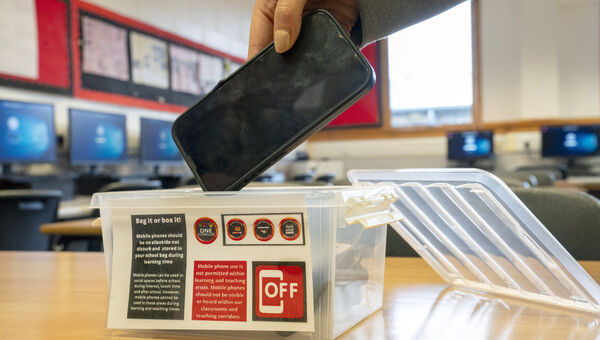
Recent Planet Youth Mayo research among 1,397 Transition Year and Fifth Year students across 29 post-primary schools in the county found that 78 percent of young people had a smartphone by age 12, with 83 percent keeping it in their bedroom at night and 67 percent spending three hours or more daily on social media. Low mental wellbeing scores increased significantly among heavier social media users.
The most simple solution for problems created with online use among children who do have their own smartphone is preventing them from having it at night. Secondary school teachers in the county will tell you of the impact this has, with children often up until 4am in WhatsApp groups and the corrosive effect this has not just on sleep but on mood if the exchanges become unpleasant.
But a reckoning has been reached and it would appear that legislation will come in, at some stage, to have social media off limits for under 16s.
In the meantime, parents are showing the change that can take place.
In years to come we may well ask how we let childhood become something lived through a screen. The better question now might be simpler - what small choices today will our children thank us for tomorrow?