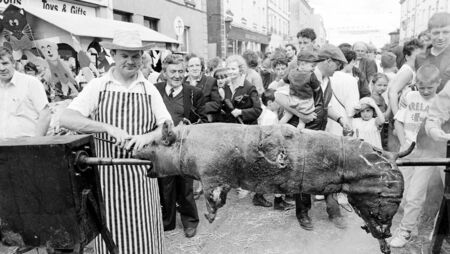
Our national language is no longer being treated like a relic
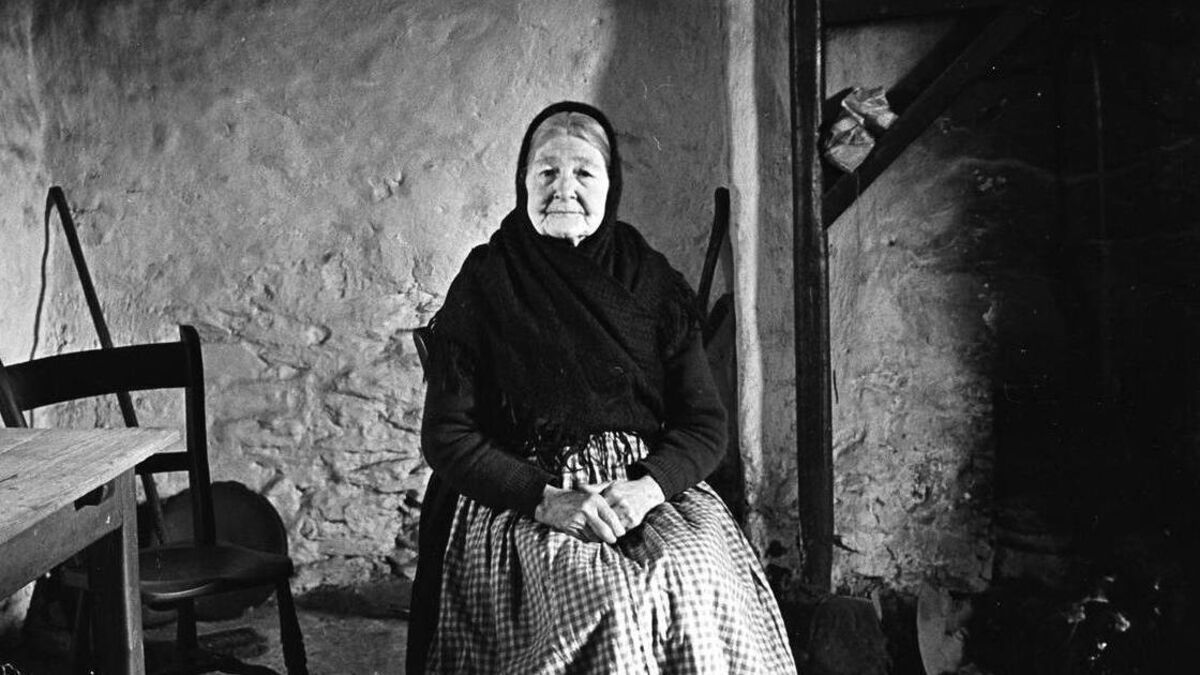
We made Peig Sayers, a woman whose actual life was an epic of endurance, into a punishment.
We learned Irish the way you learn to flinch. There was a leather strap in it, more often than not. That wasn't a metaphor, that was the curriculum, wielded by men who believed, with the serene conviction of the genuinely cruel, that the modal particles of our ancestral tongue could be installed in a child through the palms of the hands. A whole generation chanted the the way medieval villages chanted against plague. We did not love it. You don't love the thing that hits you. You could come out the far end of it able to decline a noun and despise a language in the same breath, which is, when you think about it, a fairly sophisticated bilingual achievement.
So you'll understand the particular vertigo of opening the phone now and finding a girl of about nineteen explaining to her camera, propped on a pint glass, how to say "the ick" as Gaeilge. She has the lighting. She has the little tripod. She has, God help us, the confidence. And 400,000 people, most of whom never heard a cúpla focal that wasn't barked at them by a substitute teacher with a hangover, are watching her and thinking: that's gorgeous, I want that.
They're calling it GaelTok. Of course they are. Everything now is a portmanteau wearing a lanyard. But strip away the silly name and what you're looking at is the single most successful Irish-language revival initiative in the history of the State, and it was achieved with no budget, no committee, no fáinne, no minister cutting a ribbon, and absolutely no leather whatsoever. An algorithm did in 18 months what Pádraig Pearse, the Christian Brothers, the entire apparatus of a sovereign republic and several billion euro of compulsory schooling could not. It made the language cool.
I want to sit with the indignity of that for a moment, because it's enormous.
We built a country on this language. Men were shot for it. The first thing the new State did, practically before it had found the keys to Dublin Castle, was make Irish compulsory, hang it round the neck of every child like a damp scapular, and assume that obligation and affection were the same emotion. They are not. They are barely on speaking terms. We took the most beautiful thing we owned, a tongue that has words for the specific melancholy of a bog at dusk, that can describe rain in roughly the way Inuit are libelously said to describe snow, and we turned it into homework. We made Peig Sayers, a woman whose actual life was an epic of endurance, into a punishment. A generation of us cannot hear her name without a small involuntary shudder, like a dog that's seen the vet's carrier. That's not her fault. That's ours. We weaponised our own grandmother.
And the thing about coercion is that it doesn't just fail. It inoculates. It builds antibodies. Every "Anois, a pháistí" produced a small hardening of the heart, until an entire population could stand at a graveside, listen to a decade of the rosary in Irish, weep buckets, and still not be able to order a sandwich in it. We became fluent in reverence and illiterate in use. The language went up on the wall, behind glass, with the good china and the picture of the Pope, to be admired and never, ever touched.
Then TikTok arrived, which respects nothing, and that turned out to be the whole point.
Because the algorithm doesn't know the language is sacred. It doesn't know men died. It has never felt the strap. It treats "as Gaeilge" exactly as it treats sourdough starters and a Labrador falling off a sofa, as content, as something that either makes you stay or makes you scroll. And it turns out that when you take a hundred years of solemnity off the language, when you stop treating it like a relic and start treating it like a toy, young people pick it up and start playing. They're not learning Irish to honour the dead. They're learning it because Saoirse from Falcarragh is funny in it, and they want to be funny too. They want the bit. They want to caption the video. The whole tragic architecture of guilt and duty that we spent a century erecting, and it turns out you could just walk around it, with a phone, in a hoodie.
Naturally, the heritage people are appalled, in the way the heritage people are always, haughtily, appalled. There's been muttering in the more self-regarding newspapers about "authenticity", about whether an Irish learned from fifteen-second videos is real Irish or some debased pidgin of hashtags and slang. To which the only honest answer is that languages have always been pidgin and slang and showing off to people you fancy. That is the entire history of every language ever spoken. No teenager in the history of the world has ever learned a tongue in order to preserve it. They learn it to flirt, to belong, to be quicker than the next one. The Connemara fishermen weren't curating a UNESCO asset. They were just talking. The purists want the language in a museum, climate-controlled, and they cannot forgive the children for wanting it alive, which is messier and involves slang for "the ick".
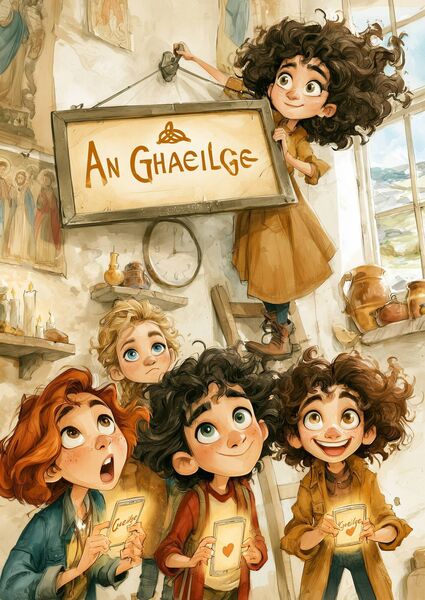
I should declare an interest. My own Irish is a rusted gate. It opens, with a shriek, under protest, and only halfway. I can manage the weather and a blessing and the sort of menacing pleasantries you'd exchange with a Garda. I am, in other words, the exact product the system intended: a middle-aged man who reveres a language he can barely speak, who tears up at the anthem and couldn't tell you what the second verse means. I am the monument. And these ones, who never read , who were never hit by anybody, are casually more fluent in the joy of the thing than I'll ever be in its grammar. Which stirs something I wasn't expecting, somewhere between envy and absolution. Maybe it doesn't matter that they ruined it for the rest of us. Maybe it was always going to skip a generation and land, of all places, on a phone.
There's a lesson in it for the State, who will of course immediately misunderstand it. Within the year there'll be a GaelTok strategy. There'll be a steering group. There'll be a man called Fergal with a slide deck explaining "leveraging short-form vernacular content", and the moment officialdom touches it, the cool will drain out of it like heat from a holiday cottage in October. The one thing the language needed was for the grown-ups to leave it alone, and that is the one thing the grown-ups have never, in a hundred years, been able to do.
So here's my modest prayer for the summer. Let them at it. Let them be daft and slangy and wrong and flirty in it. Let every leather-handed brother who ever beat the genitive into a child spin in his grave like a rotisserie. The strap couldn't save the language. Maybe nothing could, except taking it off the wall, handing it to someone who isn't afraid of it, and letting them point a phone at themselves and laugh.
: the life of a language is in the speaking of it. We kept ours behind glass for a hundred years, too holy to handle. Good luck to the ones who finally took it down off the wall.