Let's not abandon Ireland's beleaguered Jews
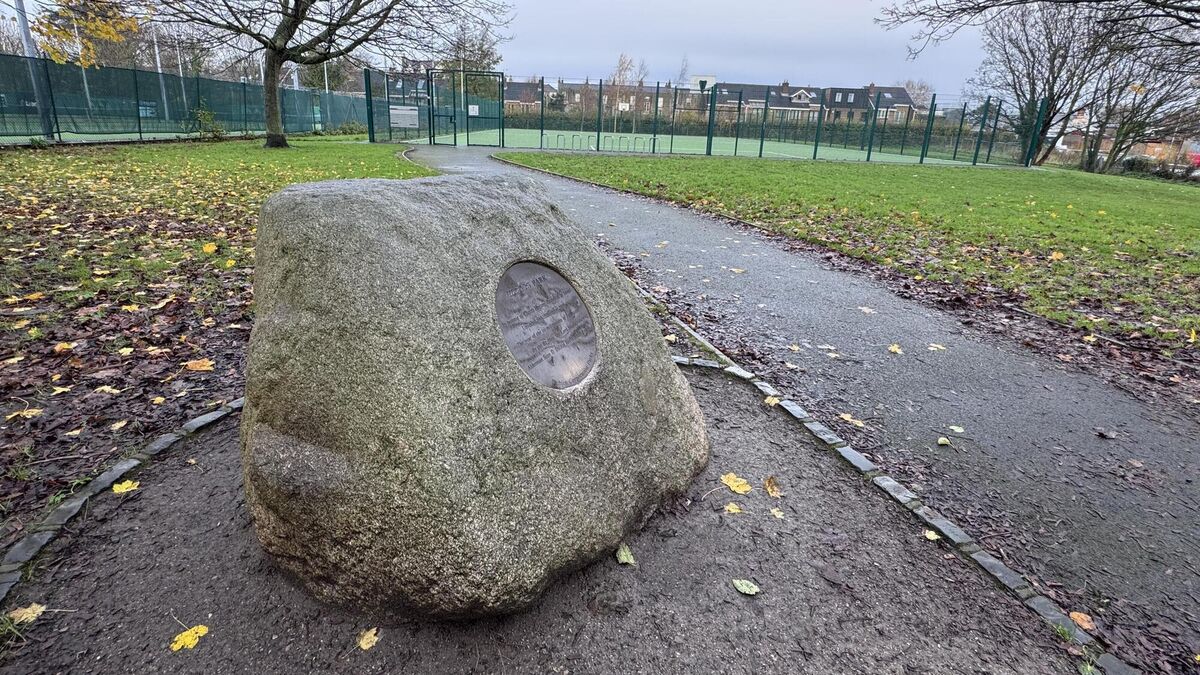
Herzog Park in Rathgar in Dublin is named after Chaim Herzog, who was born in Belfast and raised in Dublin and was the son of Ireland's first chief rabbi Yitzhak HaLevi Herzog. He served as the sixth president of Israel between 1983 and 1993. The park was renamed in his honour in 1995. Picture: Sasko Lazarov/© RollingNews.ie
The Irish have a keen nose for gratuitous oppression, honed by eight centuries under someone else’s rule. We recognise it, even if camouflaged as self-defence or necessity. That’s why it feels deeply uncomfortable when Ireland's Chief Rabbi Yoni Wieder reports over one hundred anti-Semitic incidents here in just four months. It's especially shocking since we genuinely believe we’re the good guys.
Maybe we are, but we're also prone to human error if we are unaware of the full picture. Our unexamined selves are messy, contradictory, capable of righteous anger and blind spots in equal measure.
Let's start with the obvious: there are 2,700 Jews in Ireland, and post the Gaza war, over two million dead, displaced, or starving Palestinians in need of our help. Those numbers matter in terms of perception, and they explain why Irish people, scrolling through images of flattened apartment blocks in Gaza, feel a visceral rage and a sense of urgency. It's not manufactured outrage or performative politics for the ordinary Irish citizen, but genuine horror at what looks uncomfortably familiar.
The Irish still recall the humiliation when a more powerful nation tells you that the land of your forefathers is no longer yours, the stark history lessons of famine ships laden with grain that left Irish ports. We understand what it means to be labelled terrorists when you're fighting to regain self-determination. The much-publicised Irish empathy with Palestinians isn't some bizarre post-colonial fetish, but it's rooted in a shared memory, even if that memory is at a generational remove. That knowledge and consequent identification don't disappear just because the oppressor's uniform changes.
But here's where it gets complicated, because it always does. Somewhere between Ireland's legitimate horror at Palestinian suffering and our government's increasingly strident anti-Israel rhetoric, something's gotten lost. Or rather, someone's gotten hurt. And that someone is a Jewish child being chased around a Dublin playground by kids screaming 'Free Palestine'.
We need to consider such an incident as a red flag, not as a political statement, but as a scene that our rhetoric has enabled. Children pursuing another child, weaponising words they probably don't fully understand, while somewhere nearby, adults have normalised the idea that being Jewish makes you fair game for harassment. That's not solidarity with Palestinians but cruelty with a political alibi.
Rabbi Zalman Lent has run Dublin's Chabad Centre since 2000. He sees Ireland's politics through a different lens than most of us do.
"There's no pro-Israel voice here - not in politics, not in the press," he says.
And he's not wrong. Ireland's political spectrum on this issue runs from critical of Israel to openly hostile.
This isn’t about whether Israel deserves advocacy. It’s about what happens when every dissenting whisper is forced underground, leaving 2,700 Irish Jews increasingly isolated, feeling on trial for crimes committed half a world away.
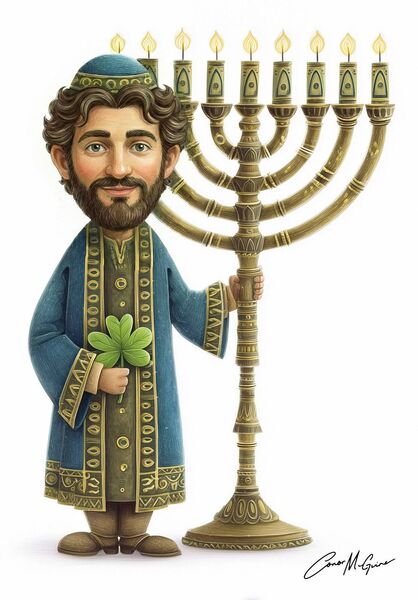
Here's what Maurice Cohen, chair of the Jewish Representative Council, gets that a lot of us don't: anti-Semitism doesn't arrive with a swastika armband and a manifesto. It seeps in through the gaps in our moral certainty. It sounds like a Jordanian doctor refusing to treat a Jewish woman in an Irish hospital. It looks like graffiti calling to 'Kill Jews' in Dublin streets. It feels like a Jewish family being driven out of Killorglin after five years because their neighbours decided being Jewish made them unwelcome.
Now, I can already hear the protests - . Except - and this is crucial - it's not. A Jewish woman in Cork awaiting a C-section didn't create Netanyahu's coalition government. A family in Killorglin didn't vote for Israeli settlements. A child in a Dublin playground didn't authorise any military action. They're just Jewish. And we're making them pay for that.
The Herzog Park debacle crystallised all of this with hideous clarity. A misplaced proposal to rename a park named after Israel's former president found some traction, not because he'd done anything wrong, but simply because he was identified with the present Israeli government. It's political virtue signalling at its most brazen, the kind of gesture that makes the proposers feel righteous while achieving precisely nothing for Palestinians and causing genuine hurt to Irish Jews.
Simon Harris talks about Ireland's position "reflecting the views of the people of Ireland", but is it? Or is it reflecting the views of the loudest voices? Because there are Irish people who look at this situation and see complexity rather than clarity. They see Hamas as a terrorist organisation that started a war by massacring civilians. They see hostages still held in tunnels. They see a conflict with no good guys, just varying shades of grey and a whole lot of innocent people suffering.
But you try to suggest there are civilian victims on both sides in Ireland without being accused of supporting genocide. The discourse, as a consequence, has become so polarised that nuance reads as complicity.
Ireland's historical relationship with Jews is more complicated and perhaps compromised than we like to admit. During the Emergency, that peculiarly Irish euphemism for World War II, we turned away Jewish refugees while remaining neutral, fearful that admitting them would create an "anti-Semitic problem". The irony is that refusing refugees because you're afraid of anti-Semitism is itself anti-Semitic. We happily admitted 500 Christian German children under Operation Shamrock, but knowingly closed our doors to Jewish children fleeing the camps.
We had heroes. Mary Elmes smuggled children from Rivesaltes in the boot of her car. Bob Collis brought orphans from Belsen to Fairy Hill. Hubert Butler processed exit papers for thousands of desperate Jews in Vienna. But these were individuals acting against official policy, not because of it. Ireland's record isn't one of collective virtue, it's one of individual courage despite collective indifference.
But we can be horrified by what's happening in Gaza without making Irish Jews feel unsafe, and we can criticise Netanyahu's government without chasing Jewish children in playgrounds. There can be expressions of support for Palestinian rights without increasing the likelihood of medical care being denied to an innocent Jewish woman of Irish origin. These aren't complicated equations, but somehow we've convinced ourselves they're mutually exclusive positions.
Taoiseach Micheál Martin insists that criticising Israeli policy isn’t the same as anti-Semitism, and in the light of informed reason, he’s right. But if official pronouncements on the state of Israel provoke an atmosphere where Jews shrink from showing a Star of David, hide who they are, or flee their homes in fear, then the difference becomes hollow. Good intentions don’t shield people from hurt. When Jews no longer feel safe in Ireland, something vital has been lost.
And yet the Irish Jewish community isn't retreating. They're growing. Young professionals working for tech giants are finding their way to Chabad's Shabbat dinners, to Deli 613 on South Dublin's quiet streets, where Hebrew and Irish brogues mingle over salt-beef sandwiches. Rabbi Lent's Hebrew school is expecting its biggest summer intake yet. There's something quietly defiant about it, something that speaks to resilience in the face of hostility.
Maybe that's the lesson here, not that Ireland's wrong to care about Palestinian suffering; in fact, we should care deeply and urgently. But empathy isn't rationed. We can care about what's happening to Palestinians without pretending Irish Jews don't have genuine worries of their own. And we can lay into Israeli policy without making the Jews living here feel like they're suddenly suspect and not deserving of 'Irishness'.
Can we in Ireland accept that things are complicated, or will we retreat into narrow definitions of who counts as Irish? The danger isn't that we are intentionally malicious but that we'll trade informed nuance for the easier satisfactions of certainty.
We can't just pick out scapegoats. What we need to grasp is that being clear about right and wrong is a state that requires constant revision, and that informed bravery means living with contradictions.
Real courage is admitting that the people we disagree with might also be suffering because of the actions of smaller extreme elements they have become identified with. That righteousness can curdle into cruelty. That sometimes the historical underdog becomes the bully without realising it.
Ireland's Jews aren't asking us to abandon Palestinians. They're asking us not to abandon them. That shouldn't be a difficult ask. But here we are, one hundred incidents in four months, wondering how we got here while insisting we're the good guys.
Maybe we are. But being good requires more than good intentions. It requires paying attention to who gets hurt while we're busy being righteous.