It's time to take the speedsters off our roads
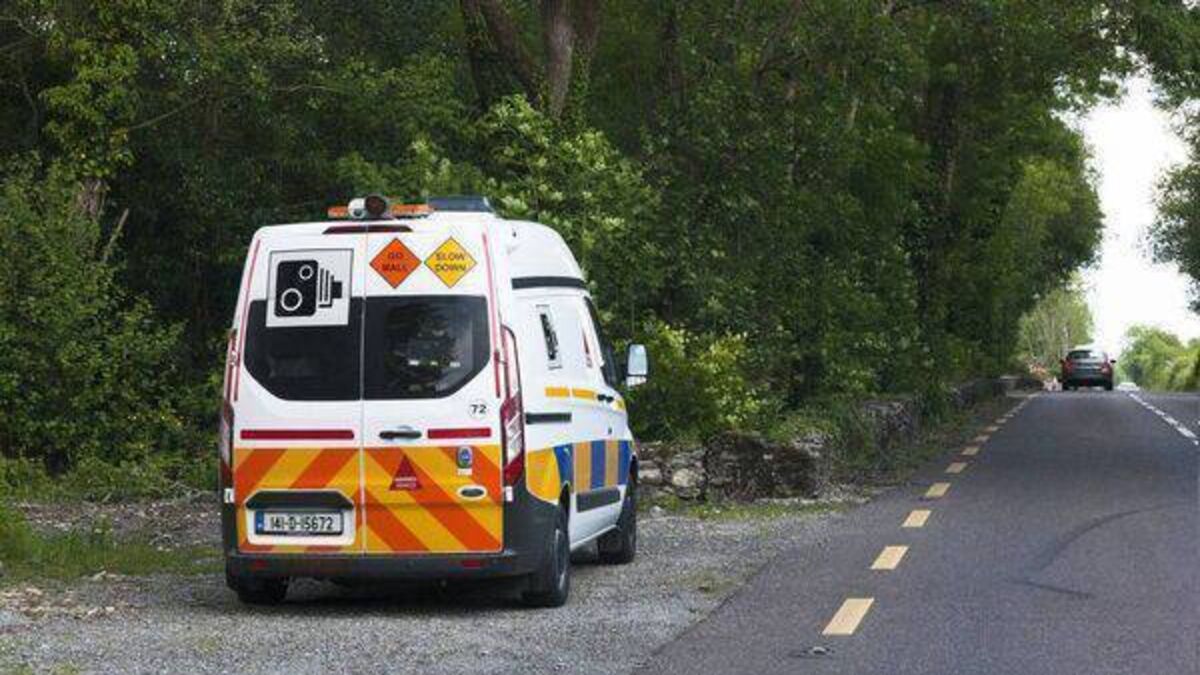
Tougher penalties is the only solution to reducing deaths on our roads.
I return again – unapologetically, I have to say – to what has become something of a personal obsession. Regular readers will recognise it because I find myself returning to it in this column time and time again - road accidents and the devastation and grief that they visit on so many individuals and families.
This obsession was born of direct experience. I was only driving a few years when I was passing through an intersection in a busy town and driving well within the speed limit. It was two o’clock in the afternoon and young children – the infant classes – were teeming out of a busy school. Standing on the kerb was a lollipop woman (as we called them) waiting for the constant traffic to break before she took her place controlling the traffic. Meanwhile she was corralling her young charges, holding the lollipop sign aloft, trying desperately to refrain them from crossing the road.
Suddenly one of them broke ranks and ran across the road, ending up under my car and as I discovered, between the two front wheels. Thankfully there wasn’t a scratch on him and a neighbour who knew him well intervened to bring him home.
The experience is indelibly imprinted in my mind: the crawling traffic, the lollipop woman, the fleeting image of the boy disappearing in front of me; the relief when the boy was comforted by his neighbour; the kindness of the neighbour and others who assured me that it wasn’t my fault; above all, that I sensed I had been within a hare’s breath of taking a life that would, as I knew from my own experience in parish work, have brought devastation to his parents, siblings, friends, neighbours and wider community.
I knew that I was not at fault but that was no consolation at the time. I knew that the parents didn’t hold any ill-will against me but I couldn’t have held it against them even if they had. What dominated my thoughts was a legacy of the nightmare possibilities that the experience left with me and that disrupted my waking hours for some years. And even though, pathetically, I bought an elaborate gift at Christmas to assuage whatever ill-will the young boy might have held towards me, there was no assuaging the memory of what for me was a life-changing experience.
I’m writing about it now for the first time because even though the almost 50 years that have elapsed since then have not made the memory any easier to recall, I can now admit to myself and others where my conviction - that the cars we drive are lethal weapons - has its source. And that we take too easily for granted that it’s in everyone’s interest to obey the rules of the road.
Not everyone believes that, and many of those who don’t can’t admit it even to themselves.
Some are teenagers, in love with life in all its wonderful forms, who can’t believe (until it happens) that they might ever be the agents of death. Or what it will do to them in their waking hours as the events in which they played a central part continue to unnerve them as disturbing flash-backs mark long years of regret.
Others are adults driving unnecessarily high-powered machines that seem to represent an extended part of their naturally aggressive personalities through which their ownership of a significant car becomes part of a macho badge of honour flaunting their masculinity. God help us.
Others again are attention-seekers, show-offs who imagine that the growl of an engine – V-ROOM, V-ROOM – impresses their friends and neighbours and that the response to their infantile expectations is one of regard rather than pity, commiseration rather than envy.
The question about what can be done about speedsters on our roads and the ever-rising toll of death they deliver every year has been long avoided by politicians. But now the good news, announced last week by the present Minister of State at the Department of Transport Seán Canney, is that the present coalition government – Fianna Fáil, Fine Gael and a medley of political all-sorts, which so far has so little to show in the way of new legislation - is to take action.
Or at least they’re now rousing themselves at long last to deal with the open sore of ineffective policing of speed on the roads and the terrible toll it brings. A recent announcement that the 190 lives lost in 2025 - the highest in ten years and with increases in three out of the last four years - has prompted the introduction of a graduated system to punish excessive speeding, the main reason for road deaths.
Now motorists are to face higher penalty points directly reflecting how much the driver exceeds the speed limit. For example, what was the current rate of three penalty points will now be replaced by up to seven points, reflecting how much a motorist exceeds the speed limit. So driving at speeds of 180kmh in a 100kmh speed area, examples of which the Garda authorities have reported for years, will now attract a more equitable penalty, up to and including a ban on driving.
We’ve been there before, of course, when Shane Ross was transport minister (2016-2020) and for years, as the death toll on the roads increased, a variety of appeals for more realistic penalties were made by people like the then garda commissioner, Drew Harris and others.
What’s needed, it’s now clear, isn’t a few cosmetic changes but a new check list of stringent penalties that accumulate and have the effect of actually persuading speedsters on our roads to cop themselves on. In other words, as almost everyone knows now, the only effective way to get drivers to slow down is to put their driving licenses at risk. As we know now to our cost, nothing else really works.
I’m sure Mr Canney knows that too and that his changes will reflect that truth.