Four books you should try to read in 2026
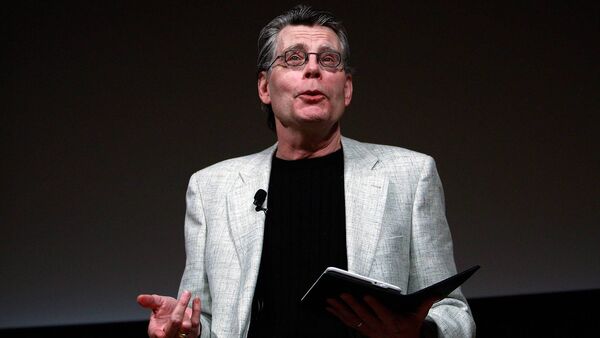
Stephen King, the popular novelist, who has written more than 50 books, most of them bestsellers, wrote: ‘Reading is the creative centre of a writer’s life.' Picture: Mario Tama/Getty Images
Every new year, like every Christmas, measures life out in manageable portions that help us to mark time. as the song goes,
It’s what we do. We remember and then (mostly) we never forget – until the sands of time dictate that whatever genes keep the memory intact have lost their grip and we need others to jog our creaking memories.
I was reminded recently that even though I’ve contributed this column to the Western People for 45 years or thereabouts, remarkably I’ve served under just two editors, Terry Reilly and James Laffey. Terry asked me in the dying embers of the year 1979 (I think) to write my first column which appeared early in 1980 and subsequently in an (almost) uninterrupted run of 2,000-plus columns.
The weekly column has bookmarked my life in many ways and to Terry Reilly and, later James Laffey and, of course, the loyal readers who have encouraged me along the way, I owe debts of deep gratitude. At the start of another year, it is the very least I might do.
While the tide of life ebbs and flows and none of us can mark down the future with any degree of certainty, gratitude is a primary grace. While for others having to produce a constant 900 or so words a week might seem a consummation devoutly to be avoided, for me writing and reading has been a cherished task. As Pam Allyn described it, ‘reading is like breathing in, writing is like breathing out.’
Stephen King, the popular novelist, who has written more than 50 books, most of them bestsellers, wrote: ‘Reading is the creative centre of a writer’s life. If you don’t have time to read, you don’t have the time (or the tools) to write. The real importance of reading is that it creates an ease and an intimacy with the process of writing.’
Not that the process of putting words on ideas is a simple or instinctive gift. Far from it. It’s hard work and often deeply frustrating when the words I produce don’t seem to do justice to the lofty ideas that I imagine I have to communicate. Though, that said, I often don’t really know what I think, until I write things down - the motto of the famed American journalist, Joan Didion.
Sometimes people ask me to give them advice on writing and I am loathe to do that but I love sharing my thoughts on books I’ve read and to celebrate a new year - if my readers can indulge me - I would like to recommend a few books.
First in the queue may be of interest to those who would like to write, feel they don’t know how and have never tried. It’s Stephen King’s (2000). King has been there and done that for years and is highly regarded as an expert. Better still he can write simply about writing - something not every writer can do; his book is out in paperback so it’s very accessible; and it’s an entertaining read. It’s published by Hodder, has 365 pages and costs €16 or thereabouts. If you were thinking of having a go at writing, it’s a sure guide.
Another sensible and accessible book is by Donagh O’Shea, (2023). It’s about a form of prayer that may be unfamiliar to many. If prayer for you means ‘saying prayers’ as with reciting the Rosary or other formal prayers and if over the years you have begun to find such praying generally unsatisfying, this book offers one hundred short ‘roads to meditation’.
Meditation is a less direct way of praying, a more subtle way of moving into silence, of resting in God’s presence and O’Shea has written a hundred short introductions that - each no more than a page and a bit - can be dipped into at will in order to evoke a sense of what meditation, a ‘different and deeper way of praying’ can mean.
Meditation isn’t easy - though it sounds simple. O’Shea describes meditation as ‘sitting in silence in the presence of God, doing nothing, saying nothing, adding nothing’. If this appeals to you, you can trust Donogh O’Shea as a reliable guide. His has around 130 pages and costs €12.
My third choice is Richard Rohr’s (2015). Rohr, an American Franciscan friar, is one of the great spiritual masters of our time. He has spent most of his life in Albuquerque, New Mexico where he founded the Centre for Action and Contemplation. He has written many books and, he says, is his last. Rohr offers seekers an introduction to the wisdom and practices of the Christian contemplative tradition. He’s the kind of thinker who not only changes minds and hearts but changes lives. is not an easy read but in reading it and reflecting prayerfully on it you will find it a beacon of light in our uncertain times.
My fourth choice is Tomas Halik’s (2024). It’s a demanding read. This book, in summary, is a key to understanding the efforts of Pope Francis to lead Catholicism and religion in general through a time of change and of crisis. For Halek, the present crisis is a crossroads where a new era - a new ‘afternoon’ in the history of Christianity - presents itself. If the churches, including the Catholic Church (he writes), can release themselves from the present clericalism, narcissism, and isolation that defines them, they can move towards ‘a universal fraternity’ that was the central theme of Pope Francis’s pontificate. We shouldn’t, Halek argues, reduce life to morality, virtues and sins – a person’s life speaks more about their faith than what they think or say about God. costs €32.50.
I wish all my readers a happy new year.