Changing climate brings new garden visitors
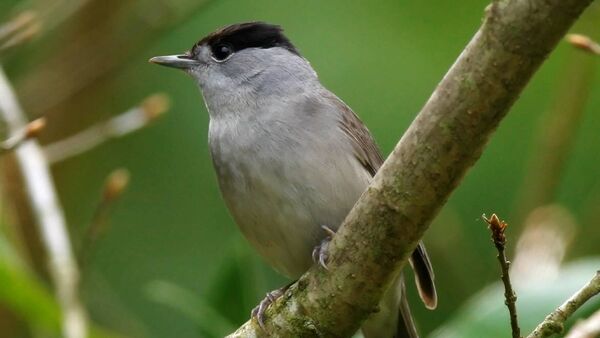
The blackcap is now one of Ireland's top 20 most widespread garden birds.
There is a little bird that has been tweeting around my house for the past two months. He is at it early and late, never giving up and always repeating that same cheery tune. His song is a chatty affair, sounding like the happiest child in the class. Of late, I hear him on the golf course and in the hedges around my workplace. It’s a blackcap.
Now, the funny thing about the blackcap is that he is a new kid on the block; never in my Ox Mountain upbringing did I even hear of or see a Blackcap. His arrival among us and his back story is quite interesting.
Blackcaps are now one of our summer breeding visitors, but their status has changed dramatically in recent decades. While they used to depart for warmer climates in autumn, milder winters and garden bird feeders have recently encouraged these little birds to overwinter in Ireland. So, what has changed their habits, you might well ask. For one thing, it seems they have adapted their food tastes; from an insect-based diet to eating fruits, berries, and the contents of garden bird feeders, making it possible for them to survive an Irish winter.
So, what does a blackcap, now one of Ireland's top 20 most widespread garden birds, look like and how does he survive? Good old BirdWatch Ireland has the answer.
Damien Enright, writing in the in 2010, tells an interesting story about his interaction with a particular female blackcap.
There is no doubt that global warming is also playing a role; enticing certain bird species to linger in Irish winters that are becoming increasingly milder. Enright goes on to explain about a time when the blackcap was not so plentiful here and how they have adapted their habits to enable them to spend more time with us.
These European migrants were opportunistic birds; for them, a shorter journey, and easier pickings was a no-brainer! Also, their journey being shorter, they beat the African migrants each spring in the race for the best nest sites. The females arrive fatter and thus are capable of laying more and better-provisioned eggs. Enright continues:
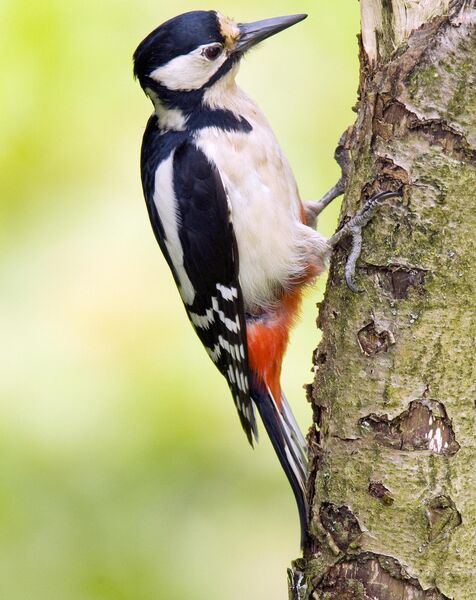
Back in 2010, bird expert, Niall Hatch, writing in magazine, announced how the Great Spotted Woodpecker - known as 'Mórchnagaire breac' in Irish - had recently been sighted in counties Wicklow and Down, making it the first species of woodpecker ever to settle in Ireland.
Though the well-known Great Spotted Woodpecker is a common and widespread woodland and garden resident throughout our neighbouring island (and indeed from the Canary Islands right across to Japan), it was inexplicably absent from Ireland. It was as though St Patrick’s influence on our snake population had produced knock-on effects on woodpeckers, though a long period of glaciation may have been the real culprit in both cases.
Since 2010, the situation has changed with BirdWatch Ireland receiving an increasing number of phone calls and e-mails concerning strange black-and-white birds visiting back garden bird tables. Shortly afterwards, Great Spotted Woodpeckers were known to have bred in mature woodland in the two counties where they were first seen. Though still very rare and thinly distributed, it seems that they have gained a breeding foothold here at long last.
Woodpeckers have spread rapidly and now have established breeding populations in all counties. The Great Spotted Woodpecker has successfully expanded westward. Sightings have been confirmed in the Ox Mountains, as well as at the nearby Tubbercurry Oak Forest and in Cloonacool where local habitats, including mature broadleaf trees, have provided ideal nesting sites and foraging areas.
As I get older, I feel the dawn chorus is getting louder - maybe it’s just that I have more time to stop and listen. One way or another, the blackcap has definitely caught my attention in recent weeks and only the other evening, I heard the machinegun-like rat-tat-tat of a woodpecker in a nearby beech wood. I am less enamoured with the prospect of mosquitos coming our way - imagine that, mosquitos in the Ox Mountains - but in our changing world with its changing climates, where some of our bird species are on the endangered list, maybe we should be happy with small victories. Welcome the tweeting blackcap and all hail the headbanging woodpecker.