Retired Cavan GP accused of professional misconduct over Covid-19 tweets walks out of fitness-to-practise inquiry
Seán McCárthaigh
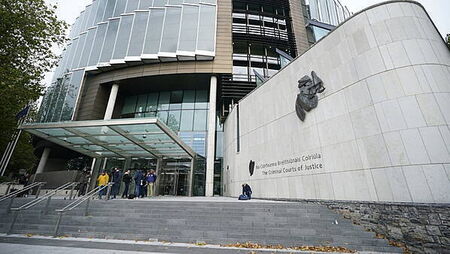
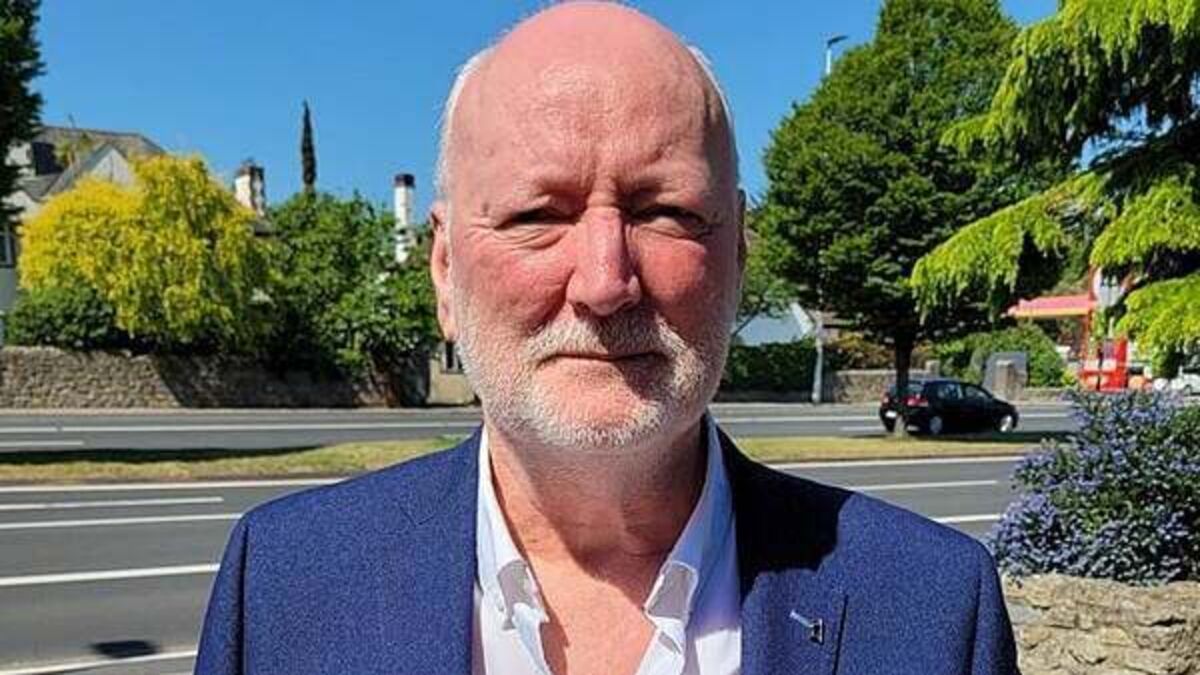
A retired Cavan GP accused of professional misconduct over his social media posts during the Covid-19 pandemic walked out of a fitness-to-practise inquiry held by the Medical Council after claiming the case was designed “to target lawful free speech".
Michael McConville, who retired from his medical practice in Cavan Town two years ago, left the inquiry claiming he had “a bus to catch” after making a lengthy submission in which he stated that he had “no case to answer".
He claimed the Medical Council was cynically engaging in “the destruction of names of good people” with such inquiries.
Dr McConville is accused of five counts of professional misconduct in relation to 19 alleged tweets and one retweet by him on Twitter (now X) between January 2021 and February 2022 which the Medical Council claims undermined public health guidelines at the time.
The texts variously contained criticism of PCR testing, vaccines and facemasks as well as the promotion of ivermectin as a treatment for Covid-19 and questioning the existence of the pandemic itself.
In one post, Dr McConville said the PCR test was “invented to create and sustain a pandemic to promote the suspension of human rights and the sale of an experimental ‘vaccine’ by coercion.”
Dr McConville told the inquiry that he had never been the subject of any complaint from a patient in either Ireland or the UK in 42 years working as a GP.
He claimed his fundamental right to free expression could not be turned into a charge of misconduct and he did not believe the case before him was lawful.
“I don’t know why I am here,” he told the Medical Council’s fitness-to-practise committee repeatedly.
Dr McConville claimed the offence of undermining public health guidelines was created entirely for one purpose which he said was to produce “a chilling effect on free speech.”
The GP argued the State’s own efforts had caused immeasurably more harm to Irish citizens than anything he could have said.
He claimed people did not die from the Covid-19 virus but “from the actions of the State which we tried to correct in real time".

“That is not misconduct. That is the duty of a medical practitioner,” he added.
Dr McConville said it was “absolutely astonishing” that the then president of the Medical Council, Rita Doyle, had sought in a letter in 2020 to not only get doctors to “acquiesce” to the State’s efforts during the pandemic but to actively promote them.
The GP said he could find no other jurisdiction where that had happened.
He also accused the regulatory body of “weaponizing” the Medical Practitioners Act 2007 in relation to investigating complaints against doctors.
The inquiry heard that he was not provided with website links for the alleged offending tweets when he sought them from the Medical Council, while one of its employees who made the complaint about him was not being called as a witness.
Dr McConville said the only evidence against him was an expert report which he claimed was based on “hearsay of hearsay.”
“I’ve been subject to this nonsense for five and a half years,” he added.
He accused the author of the report and GP, Nick Flynn, of having a conflict of interest due to his involvement with a company that did PCR testing.
The GP claimed that the allegations failed to take account of the context of his tweets such as when he said he would not take “blood money” when offered a Covid grant of €3,400 by the HSE.
He explained the phrase was linked to the use of blood tests by big pharmaceutical firms to make money at people’s expense.
Dr McConville explained that he had written letters to both the then Minister for Health, Stephen Donnelly and Taoiseach, Leo Varadkar about his grave concerns which he claimed was “not the actions of someone who is a maverick".
He particularly criticised the use of a vaccine “that was shot into the arms of billions of people” after just a 16-week clinical trial using what he claimed was “a novel technology never before used in human history".
“People secretly know that they were fooled by this and they are terrified of what is inside them,” said Dr McConville.
Instead of “prosecuting” him, he claimed the Medical Council should be asking the Government: “What the hell did you do?”
The GP – who claimed Covid-19 was “created on a computer” – said it was astonishing that no heed was given to the 1,200 known deaths from one of the vaccines before it was administered in Ireland.
Dr McConville, who was supported by a number of other GPs who have faced similar inquiries over the criticism of public health guidelines including Marcus de Brun and Billy Ralph, was greeted with a standing ovation and a round of applause from around a dozen people in the public gallery as he left the hearing.

The FTP committee, chaired by Ronan Quirke, subsequently granted an application by counsel for the Medical Council, Neasa Bird BL, that the case could proceed in the GP’s absence.
Bird said correspondence from Dr McConville showed he accepted the tweets were from his Twitter account.
She said that interactions on social media showed people understood he was a doctor.
The inquiry heard that the account, which had the handle @reasonoverfear, was changed at one time from the GP’s name to Winston Smith MD – the main character in George Orwell’s dystopian novel, 1984.
Bird pointed out that the tweet relating to “blood money” also stated that it was “a thank you to my profession for keeping their mouths shut.”
Noting that the GP had claimed Dr Doyle’s letter to GPs was unlawful, Ms Bird reminded the committee that an official guide on professional conduct and ethics instructs doctors that they have a duty to promote patient safety in the wider context of the health system in addition to complying with legislation.
Correspondence from Dr McConville showed he found working during the pandemic to be extremely stressful and challenging due to his own health issues and those of his medical secretary.
Lockdowns
The GP said he suffered significantly during the pandemic but stressed he never put a patient at risk.
He informed the Medical Council that he had temporarily deleted his Twitter account for a period and stopped watching all news programmes and reading newspapers.
He also claimed there was “a growing disturbing body of evidence that the current ‘public health policy’ may be more harmful than the pandemic itself.”
Dr McConville wrote that he feared the damage caused by lockdowns would “come back to haunt the profession.”
He claimed any ill-tempered or ill-judged actions forced upon him by “an emotional storm not of my own making” should be balanced with his work during the pandemic.
The inquiry will resume on Wednesday when it is expected to hear evidence from the Medical Council’s expert witness.