Brussels bureaucrats can't handle the truth
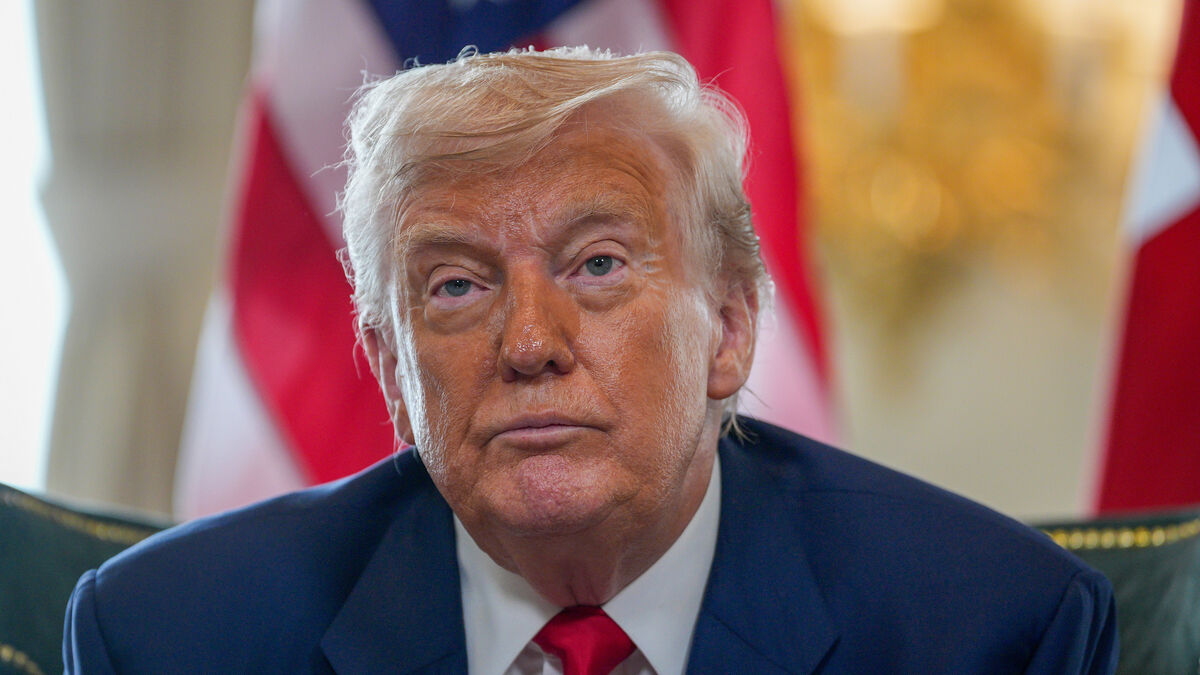
US President Donald Trump believes Europe is facing an 'existential' crisis.
I was browsing online recently and came across the new National Security Strategy document just published by the Trump administration. To my surprise, I found myself nodding along to some content produced by an administration that I'd ordinarily dismiss without a second thought. It's the intellectual equivalent of discovering that the most insufferable person in the room has made an acute observation you can't rubbish, no matter how much you'd like to. I read it again, looking for the obvious flaw, the lightbulb moment that would allow me to discard the whole thing, but it stubbornly refused to materialise.
Trump's new National Security Strategy, released earlier this month with all the subtlety of a brick through a stained-glass window, has managed to say what much of Europe has been desperately trying not to think about. And that, more than anything else, is why it demands attention from anyone in Ireland or across the continent who cares about what comes next.
Our charming American friends have declared with considerable confidence that Europe faces what they term a civilisational erasure. We are facing not just unprecedented economic decline but something far more immediate and even existential. According to Washington's latest strategic thinking, the very foundations of European civilisation are crumbling: free speech, defined borders, cultural identity, the lot. If present trends continue, they argue, European nations will be unrecognisable within two decades.
Before the usual keyboard warriors start shrieking about racism and xenophobia, let's be clear about something. Trump's public record on truth, political consistency, and basic human decency are inglorious. His administration has its own rather spectacular problems with free speech, press freedom, and democratic norms.
But this scathing diagnosis might actually be accurate, even if it comes from a physician you wouldn't trust with a splinter.
Walk through Dublin, Paris, London, Brussels, or Stockholm today and compare them to what you remember from twenty years ago. The change isn't subtle, and it's not about immigration - Europe has always absorbed new people, new ideas, new blood. That's partly what made it European in the first place. What's different now is the scale, the speed, and perhaps most importantly, the total absence of any coherent plan for what comes next.
The starkly worded National Security Strategy document doesn't mince words about European migration policy, claiming it has strained domestic resources leading to increased violence and crime, a weakened social cohesion, distorted labour markets, and an undermining of national security. If you pause and listen, the collective gasp of outrage and faux disbelief from Brussels is almost audible. But is it actually wrong? Or is it simply saying what polling data across Europe has been suggesting for years - that ordinary people are deeply uneasy about the pace of change, while their leaders respond with platitudes and accusations?
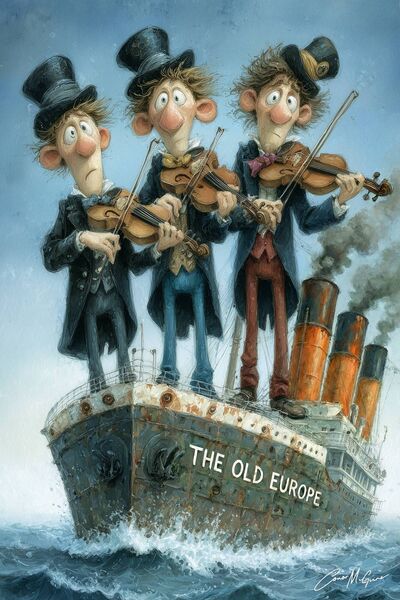
What makes this particularly relevant for Ireland is that we've spent decades congratulating ourselves on not being Little England, on being welcoming and cosmopolitan and European with a capital E. And in many ways, we have been. But we've also been remarkably good at avoiding difficult conversations about integration, cultural cohesion, and what it actually means to be Irish in a rapidly changing world.
The birth rates are indeed collapsing across Europe. This isn't speculation or right-wing fantasy - it's demographic fact. Ireland's fertility rate has fallen, while Italy's is catastrophic. Spain's apocalyptic birth rate would make Malthus weep. And when you combine cratering birth rates with mass immigration, you get profound demographic transformation in the space of a generation or two. Whether you think that's wonderful or terrifying probably depends on where you live and what you've experienced, but pretending it's not happening is simply dishonest.
The American strategy points to something that European elites seem pathologically unable or unwilling to discuss. Our individual national identities matter. Our culture matters. The sense of continuity that links past to present to future matters. These aren't fascist sentiments but basic observations about how human societies function. If administrations actively strip away people's sense of cultural rootedness, they don't become enlightened cosmopolitans; they become angry and resentful and start voting for radical alternatives.
Anthony Smith, the eminent scholar of nationalism, argued that nations are rooted in what he called an "ethnie", a historic community with shared myths, memories, symbols, and cultures. He's not referring to the blood-and-soil visceral attachment to place but the emotional and cultural continuity that holds societies together. When that fragile core becomes invisible or is actively dismantled, it doesn't leave a vacuum; it's quickly replaced. Instead, we embrace a bland, corporate multiculturalism that nobody actually believes in or identifies with on any cultural level. It's a European identity that exists mainly in the imaginations of Brussels bureaucrats.
The strategy's critique of European censorship may be rich, coming from an administration that's cracking down on anything remotely critical of Israel, but the point lands. Speech restrictions are proliferating across Europe at an alarming rate. Our recent hate speech legislation, now thankfully shelved, was so broadly drafted that it could criminalise a pub argument. Germany arrests grandmothers for Facebook posts while Britain imprisons people for offensive tweets. This isn't protecting minorities; it's infantilising entire populations.
What's most striking about the American document is its absolute rejection of the post-war consensus that history had a direction, that Europe's social democratic model was the endpoint of human political evolution. Trump's people are basically stating that your model is dying, and you're in denial about it. They may not be wrong.
The Irish response to all this has been typically schizophrenic. We want to be progressive and European while also maintaining some connection to what makes Ireland Irish. We want open borders and cultural preservation. We want rapid population growth and affordable housing. We want diversity and social cohesion, contradictions that are becoming harder to sustain in a fast-moving reality.
Ireland has an unprecedented homelessness crisis married to a chronic housing shortage, not to mention the increased strain on public services. There is a rise in anti-social behaviour and these aren't unrelated phenomena. They're symptoms of a society changing faster than its institutions can adapt. And when you add the international protection system, which now processes thousands of applications in a country with a host of social issues, you get tensions that won't be resolved by calling everyone racist.
The American strategy suggests Europe's economic problems are now "eclipsed by a much bigger existential threat". That's quite a claim. But consider the alternative. What if they're right? What if, in our determination not to sound like Trump, we've made ourselves unable to discuss real problems? What if the price of progressive respectability is societal dissolution?
This doesn't mean embracing unexamined nativism or closing borders or any of the crude solutions the more extreme elements propose. But it does mean having the courage to acknowledge that rapid demographic change has long-term consequences, that our Irish cultural continuity is fragile and matters and that national identity isn't a fascist conspiracy in need of shaming. It means admitting that the European model of the last 30 years might need a fundamental rethink rather than just more of the same with better PR.
There is an uncomfortable truth in Trump's National Security Strategy for all its hypocrisies and crudeness, and it has identified something real. Europe is changing in ways that many Europeans find profoundly unsettling, and their leaders' response, including Ireland's until a recent volte-face, has been to call them bigots and carry on regardless. That's not a sustainable strategy. It's not even a strategy at all.
Every concerned Irish citizen needs to read this document, not because it's right about everything - as it manifestly isn't - but because it asks the questions our establishment has been studiously avoiding. What kind of society are we trying to build? And what does Irish identity mean in the 21st century? How do we balance openness with cohesion? These aren't easy questions, but they're urgently necessary ones.
I can park my reservations about Trump if it takes a document from his administration to force a much-needed conversation. Perhaps that tells you something about how far we've drifted from honest and fearless discourse. Sometimes the truth arrives in the most unpalatable packaging; the trick is recognising it anyway.