Bishop's youth thesis is not rooted in reality
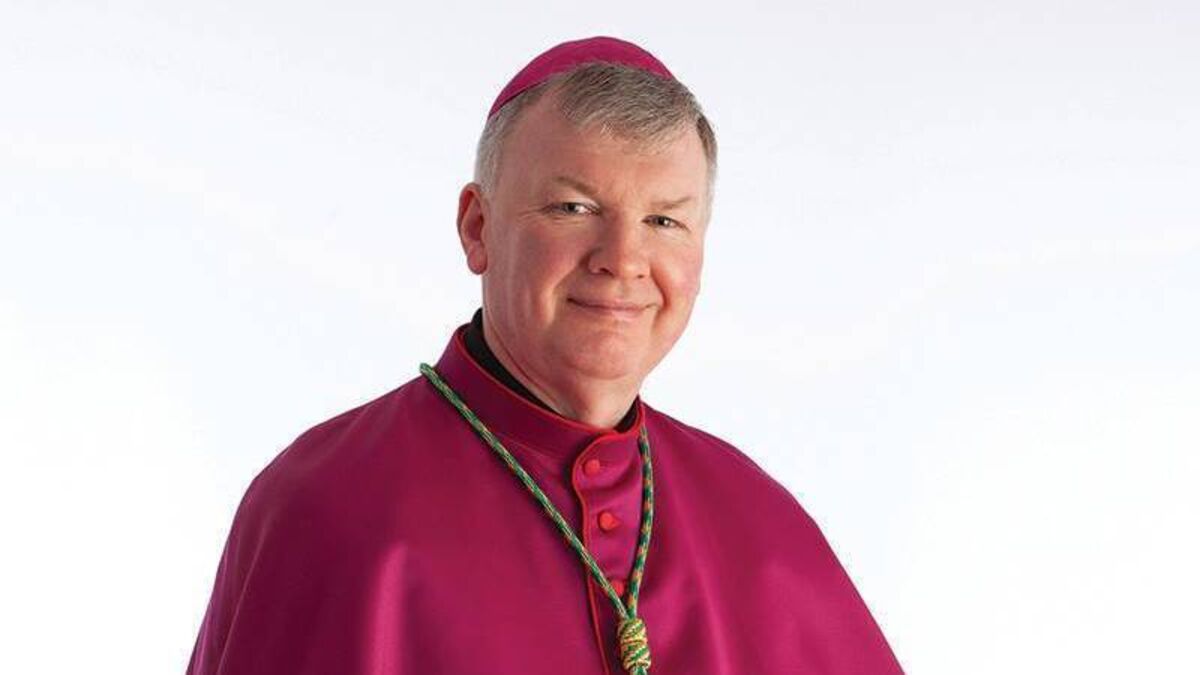
Bishop Niall Coll believes young people want a more traditional Catholic Church.
There has been some media reaction to a recent comment made by Bishop Niall Coll of Raphoe diocese (that’s Donegal, mainly). Until recently Bishop Niall was bishop of Ossory (Kilkenny, mainly) and he was moved back to his native diocese to facilitate the impending merger of Ossory and Ferns (Wexford, mainly).
Bishop Coll was speaking at the launch of a book entitled by a Catholic theologian John O’Brien - and the bishop had some unusual and unexpected comments to make on young people and on the implications of their changing attitudes to religion to which he attached some significance and, I would suggest, to which he attributed unwarranted credence.
Cynics and the world weary might smile patronisingly at any suggestion that the consistently varying opinions of young people deserved such attention as the young almost by definition can change their minds from Tuesdays to Thursdays. But, in this enlightened age when attentive listening and respecting the views of all the baptised are now central to present church reforms, such a ritual dismissal is now unacceptable – and rightly so.
The following, as I understand it, is Bishop Coll’s thesis. First, young people in Ireland today, he said – those born after 1995 (those under 30 now) who have been dubbed ‘the I-Generation’ – are seeking from the Catholic Church what he called ‘clarity, coherence and tradition’ rather than wanting the Church to adapt to the modern world as Church reformers are currently suggesting. Second, there are groups of young people who would like the Church to go back to the past who, he said, want ‘a solid doctrinal foundation rather than a Church that adapts to modern culture’.
I was surprised both at the content and the confidence of Bishop Coll’s thesis as it is the mirror opposite of the given wisdom of our time. Ask anyone who works with and listens to young people today - for example parents, teachers, youth chaplains - as to what young people are saying and who actually hear them explain the kind of Church that they want to belong to and it’s not what Bishop Coll was suggesting. It’s the very opposite.
Young people in my experience - generally but not always - want a very different kind of Church: a Church that’s accepting of life and culture in the modern world; that respects developments in science; and above all that’s open to change and reform. Most young people, in my experience, are mesmerised by the Catholic Church’s refusal to accept the equality of the sexes and to reject what seems to them as embarrassing strains of misogyny and the present ritual patriarchal diminishment of women.
But to be fair to Bishop Coll, he believes that ‘the i-Generation’ today are changing their views. The problem is that the numbers that are doing so are very small and often these young people are very removed from the perspective of their peers and even sometimes their families. Thus, religion and church become places to take refuge from the world rather than where they can source wisdom and courage to engage positively with life.
Many too have been drawn into the web of social media platforms with similar like-minded contemporaries who affirm them in their fears of the world as well as confirm their belief that a traditional church that existed in the past is a far safer, more secure and more authentic place than engaging with the modern world and searching out a faith that speaks to present day life.
Young people often gravitate to other like-minded traditional peer groups - conservatively-inclined bishops, priests and laity - who share the same perspectives and often promote them through strong religious devotions of the past such as Adoration of the Blessed Sacrament and youth pilgrimages - with others more technically engaged with religious influencers, podcasts and YouTube videos.
And out of those bubbles can emanate persistent demands for a church out of sync with the vision of the Second Vatican Council and very much in keeping with what Bishop Coll describes above.
It’s not surprising that such groups often feed on one another, are often dominated by evangelical-minded individuals and that an unusual number of them can be found north of the border. Though few in number and effectively of fringe influence, they are often quoted as emblematic examples of a gathering conspiracy to inflict a pre-Vatican Two Church on an unsuspecting Church.
Bishop Coll’s apparent suggestion that the present officially church-sponsored campaign to introduce synodality into the Catholic Church be replaced by a hybrid involving a coherence with ‘tradition’ seems, with respect, out of kilter with the reforming focus on the introduction of synodality, in Cardinal Grech’s words, ‘at every level of the Church'.
We’ve had synods about synodality. We’ve an ongoing campaign encouraging priests and people to support it. Pope Francis said it was the only way of being church in the third millennium. Pope Leo has agreed and underlined his intention to introduce it. And at present the main focus of the Irish Catholic Church is preparing for a National Synodal Assembly in Meath on October 17 next.
Yet here, it would seem, is Bishop Coll suggesting that Catholic leaders often ‘misread the room’ - in other words implying that they often get it wrong. An unusual plinth for a bishop to find himself occupying in our church when no other Irish bishop has to date raised even an eyebrow of doubt in relation to the present synodality campaign.
It seems to me that he’s placing himself on the wrong side of history in seeming to go against the introduction of the reforms of Vatican Two. And placing it on very shaky foundations - what a small percentage of young people think - isn’t very convincing.
In particular, Bishop Coll’s proposal ‘integrating synodality with tradition’ in order to satisfy a small minority of young people makes no sense and is probably unimplementable - apart from derailing the synodality project entirely.
We can do better than this.