Belmullet case should be a tipping point
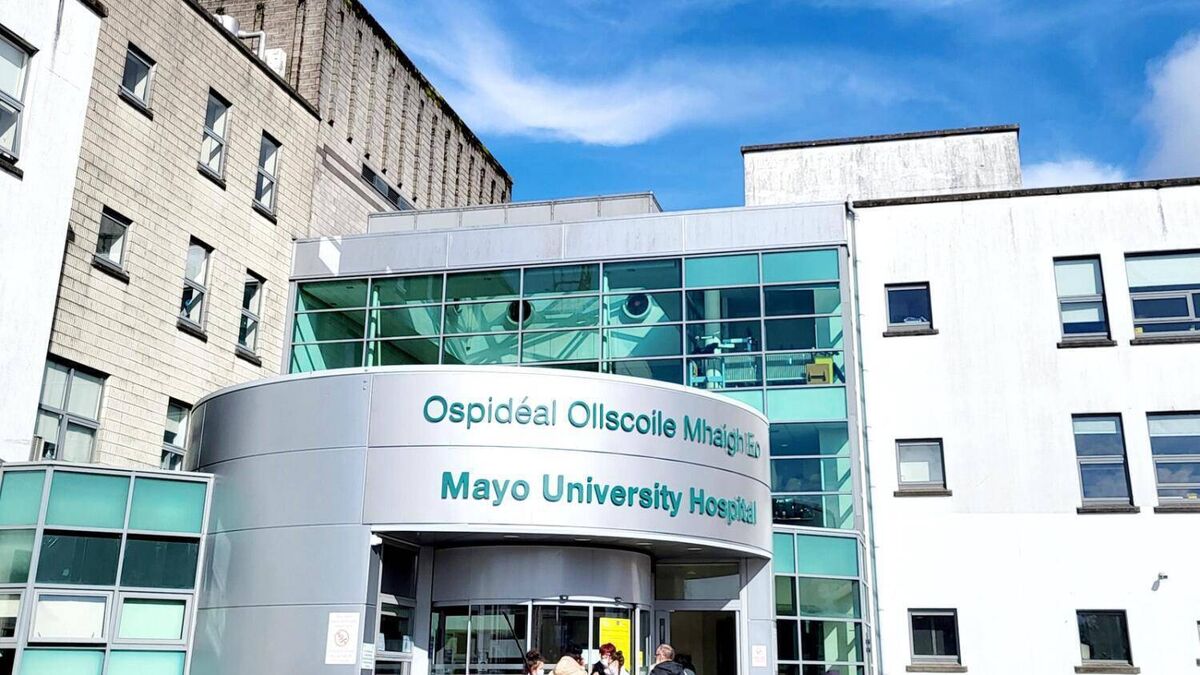
Mayo University Hospital’s Emergency Department is the bottleneck around which so many problems exist in emergency care in the county.
The fate that befell Belmullet man Stephen Lavelle last month is the type of thing that ought to be a tipping point in discussions around reform of emergency care in Ireland. However, the sad reality is that the issues that arose in Mr Lavelle’s death are not new and it remains to be seen how much will actually change.
Mr Lavelle became gravely ill in Binghamstown on Saturday night, January 10. An ambulance was called but despite several follow-up calls, no ambulance arrived. A doctor was called who described it as a category one emergency. Despite this, there was still no sign of an ambulance. The doctor told the family they had to get Stephen to the hospital as soon as possible.
The family carried Stephen to a car to begin the 56-mile journey to Castlebar. An ambulance met the car merely three miles from the hospital. In the car Stephen was screaming in pain and his daughter-in-law had to perform CPR on him.
At the hospital, Stephen’s pulse came back after eight minutes of CPR. He was ventilated and brought to the intensive care unit but, sadly, passed away the following morning.
An inquest may reveal whether a more timely ambulance could have been the difference between life and death. At this point, it is impossible to make any conclusions in that regard but it serves to highlight a huge problem in our health service.
Without knowing the specifics of why there was no ambulance available for Stephen Lavelle, it is no surprise, sadly, that something like this could occur given what we know and the alarm bells that have been rung by many unions on behalf of frontline workers in recent years.
Dr Lisa Cunningham is an emergency consultant at Mayo University Hospital as well as being a flight medic. As such, she is among the best possible people placed to speak on this issue.
With the permission of Stephen Lavelle’s family, she shared that story on social media, describing it as ‘the reality on any given day in Ireland’.
“How abandoned would you feel? How isolated, how vulnerable, how frustrated, how worried? All of these emotions while you are in a car trying to get your way to Castlebar hospital,” she said.
Talk to anyone working in emergency care in Mayo and they too will express grave sorrow but little surprise at what happened.
When it comes to the National Ambulance Service, there are a number of concerns which have been frequently raised. They include a 20 percent increase in call volume, hospital handover delays, staffing shortages and, when you put those three together, the issue of staff welfare in terms of stress and burnout is unsurprising.
Hospital handover delays are a big problem in Mayo because Mayo University Hospital’s Emergency Department is the bottleneck around which so many problems exist in emergency care in the county. It is quite common for half a dozen or more ambulances to be backed up at the side of the Emergency Department, waiting for the admission of the people they have ferried to MUH. If a critical case arrives in an ambulance, then they will rightly jump the queue and get seen to.
But a problem arises if there are so many ambulances waiting and a critical emergency, like what happened Stephen Lavelle, occurs on the periphery of the county. The ambulance from the Belmullet base may be tied up and redirecting one from Castlebar, Ballina or Mulranny may not be possible due to previous call outs.
Logjams frequently happen at MUH, meaning instead of being responsive, many ambulances and their crews are left sitting idle outside the hospital. I experienced this myself when my son was brought by ambulance from Achill to MUH suffering from pneumonia three years ago this month. There were seven ambulances parked up with patients on board ahead of us. His condition was such that it was deemed necessary to jump the queue.
Now part of me felt guilty about this - we’re too polite sometimes - but when it is your son and the medics look concerned, worries about what others may think do not take long to dissipate.
It was an extremely busy day in MUH. So much so that while there was one last space for us to slot into in the Emergency Department, there was no bed or trolley left. The place was heaving. So my son was wheeled in and assessed on his ambulance stretcher.
Nursing staff were being pushed beyond the limits of their capacity. One nurse asked that the department be ‘put off call’, which means any more ambulance calls would have to be directed to hospitals in Galway or Sligo. You could see the need for it on the day but the request was refused by hospital management.
Despite the pressures they were under, the nursing staff were incredible in the care and kindness they showed and in making the right decisions in my son’s treatment. After three hours, he was admitted and sent up to the Pediatric Department.
But while we waited for that, the ambulance stretcher was where my son was treated. That was no hardship at all for us – I was delighted we got in the door at all when I saw what was going on around us. But it meant that the ambulance crew had to wait in the Emergency Department for over two hours until the stretcher was returned to them. You would hope there was no emergency in that time. Many more of their colleagues were waiting much longer outside – waits of over eight hours at MUH are not uncommon for ambulance crews.
How is an ambulance service supposed to be responsive when they are detained so long and inefficiently at MUH?
Thankfully, our son made a full recovery and was home within the week but it was an extremely revealing insight to the reality on the ground. A reality I had reported on for several years from speaking to people working on the frontline but there is nothing like seeing it with your own eyes to fully appreciate the extent of the issue. And we were among the lucky ones, his care was not compromised.
There are many contributing issues that create hospital overcrowding but a constant is bed capacity. If there are no beds available in wards, then patients who come through the doors of the Emergency Department and need admission are technically admitted but often remain in the Emergency Department, which in turn shrinks the capacity there and creates the bottleneck.
Ireland is an outlier in this regard by European standards. Despite our per capita health spend being 17 percent above the EU average, the European Commission Health Profile for Ireland in 2025 reported that ‘acute care capacity is constrained: hospital bed density is 43 percent below the EU average, and Ireland records the EU’s highest bed occupancy rate’.
In short, when it comes to hospital beds, demand outstrips supply in Ireland to a greater extent than most EU countries.
This creates backlogs when it comes to waiting times for elective surgery but, more particularly, a major constraint when it comes to a streamlined emergency department. Which often means people are left waiting for hours in the waiting room or, more pertinently, ambulances are backed up at the side of the Emergency Department, stuck there, which then creates a shortage and a lack of adequate responsiveness.
A lack of a minor injuries clinic in Mayo and a reduction in GP accessibility aggravates the issue, sending more and more people to an already constrained MUH Emergency Department, in many cases by ambulance.
Change is badly needed. The issue of what happened to Stephen Lavelle was raised in the Dáil by Sinn Féin leader Mary Lou McDonald while Deputy Rose Conway-Walsh has spoken on it too.
“The Government has stood by and allowed this to happen. And its ordinary people - in their most desperate, most vulnerable moments - who pay the price.
“No family should ever have to go through what Stephen Lavelle and his family went through on that awful night,” said Deputy Conway-Walsh.
It is hard to argue with that.