Anger is real but so too are the limits
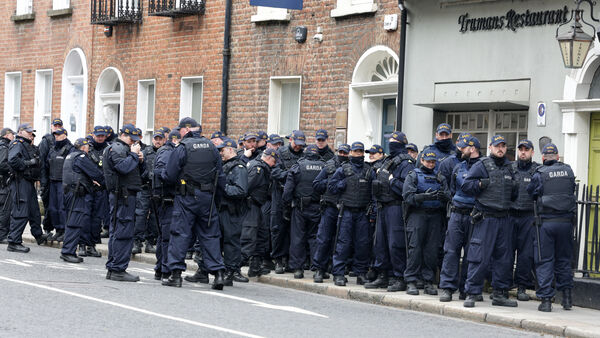
A large gathering of members of Gardai watching protesters outside Leinster House in Dublin last Tuesday as the Government faced a no-confidence motion. Picture: Leah Farrell/© RollingNews.ie
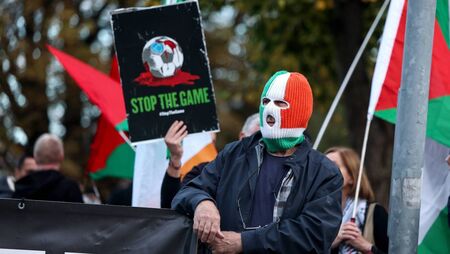
The fuel protests have exposed more than just anger over diesel and petrol prices – they have also revealed how personalised public debate has become.
One recent example from Mayo illustrated this. After Mayo Fine Gael TD Alan Dillon voted confidence in the Government of which he is part last Tuesday, Stephen Kelly, who took part in the show based in Swinford, took to Facebook to declare: ‘Not the first time Alan Dillon bottled it in Dublin.'
It was, of course, a reference to Mayo’s All-Ireland final losses over the years. It may not merit serious weight, but it reflects a wider and increasingly normalised tone online.
Add to that the fact that his page has over 200,000 followers on Facebook alone, so he is someone with a decent degree of influence.
Dillon, before he was a TD, was one of Mayo’s finest footballers, a two-time All-Star and a man who gave close to two decades to training and playing for Mayo at all levels in his free time.
Politically, whether you voted for him or not, he has put his name before the electorate twice and was elected both times.
That same tone now runs through much of the debate around the fuel protests.
The fuel protests have served to be a catalyst for a lot of anger in the country and that anger cannot and should not be dismissed. But the nature of the debate, the vitriolic abuse and the real challenges to democracy it presents are very worrying.
I’m not really sure how any politician or their family puts up with all the abuse and harassment they get, particularly online. They must get repeated lessons about needing to just ignore it.
A glance through social media shows people you once thought rational and decent spewing awful invective at other human beings, and it is happening all around the world.
People have a right to call out what they think is wrong but they also have a responsibility in how they speak and articulate themselves. Anyone calling a TD or a Garda a ‘traitor’ – and you won’t have to go far online or far from wherever you live to see this – is way out of line.
Politicians have to be held to account. They are, by the very nature of the game. If you are doing a bad job, then you should struggle to get re-elected.
It takes a lot of courage to put your name on the ballot paper and put yourself at the mercy of Joe and Joan Public. It can be a reality check for many with perhaps an inflated sense of self-worth but at least they stood, they gave people a choice and they didn’t just hurl from the ditch.
And politicians ought to be held to account in between elections too. And they are.
I’ve written regularly here in a highly critical fashion about this and previous governments – whether it is our health service, particularly the regular issues at Mayo University Hospital, rural depopulation and how it is changing the fabric of rural Ireland, or regional imbalance.
All of these are issues where I am certain the government have let the people down in this part of the world.
But you can be critical without being nasty and personal.
In a civilised society, that is not how one should conduct themselves. Such comments speak far more about the person saying them than the target of the abuse.
People should and plenty do criticise the government in a coherent fashion.
I myself must admit to not being at all enamoured with the leadership, or lack thereof, demonstrated by Taoiseach Micheál Martin and Tánaiste Simon Harris in recent weeks (and long before that, also).
But whether I like it or not, those people are democratically elected because, first of all, they were elected in their own constituencies and then the parties they lead brought home enough TDs to form the basis for a government and got over the line with the support of some independent TDs.
No matter how you voted in the last election, if you do not respect that mandate, then you do not understand how politics and democracy has to and must work.
And if you were one of the 40% of people who did not bother voting in the last election, well then, unless you were indisposed on the day of the election, I have news for you – you have absolutely no grounds for complaint. Get up off your backside and vote if you want change.
That is how it has to work.
It is politics and democracy but too many people don’t seem to know this or, worse, choose to wilfully ignore it.
Now if there were an election in the morning, it would be fascinating to see how it would go. The Government would struggle, of that there is little doubt, but would they be turfed out? If so, who would replace them? That’s far from certain with such a fractured opposition.
But there won’t be an election in the morning. The Government survived the vote of confidence last week comfortably, despite the self-serving 11th-hour departure of Michael Healy-Rae, who now considers himself a man of the people again.
So no Government with brains (and, yes, there’s an easy joke in there) would call an election in the midst of such a storm. They will hope to ride it out, see out their term to 2029, hope the global picture changes by then and take their chances in three years’ time. And if a week is a long time in politics, three years is an aeon.
But the government needs to realise we have reached a tipping point with public unease and anger. The above rhetoric about democracy is important but people who are suffering right now under the cost of living crisis need to feel listened to and not feel the government are being dismissive. Communication from Martin and Harris on a range of issues has been really poor.
Plenty of bad-faith actors have latched onto this unease to leverage it for their own purposes. But that does not mean you dismiss the genuinely held feelings of many protesters.
Sinn Féin and Aontú have moved quickly to frame this politically. Any party in opposition has to see this as an opportunity, but I don’t think they’ve been vocal enough in questioning the method of protest. Road blockages and seeking to grind the country to a halt are beyond the level of protest that is right and proper.
With no real sense of who is in charge of the protest and who they are actually representing, it is a slippery slope to allow this to be considered acceptable behaviour.
Protesters may argue it is a justifiable means to their end, but if such behaviour becomes normative, where does that end the next time some group feels put upon?
A democracy has to protect protest – but it also has to ask where legitimate protest ends and where chaos, bedlam and coercion begins.