The age-old tradition of the circus
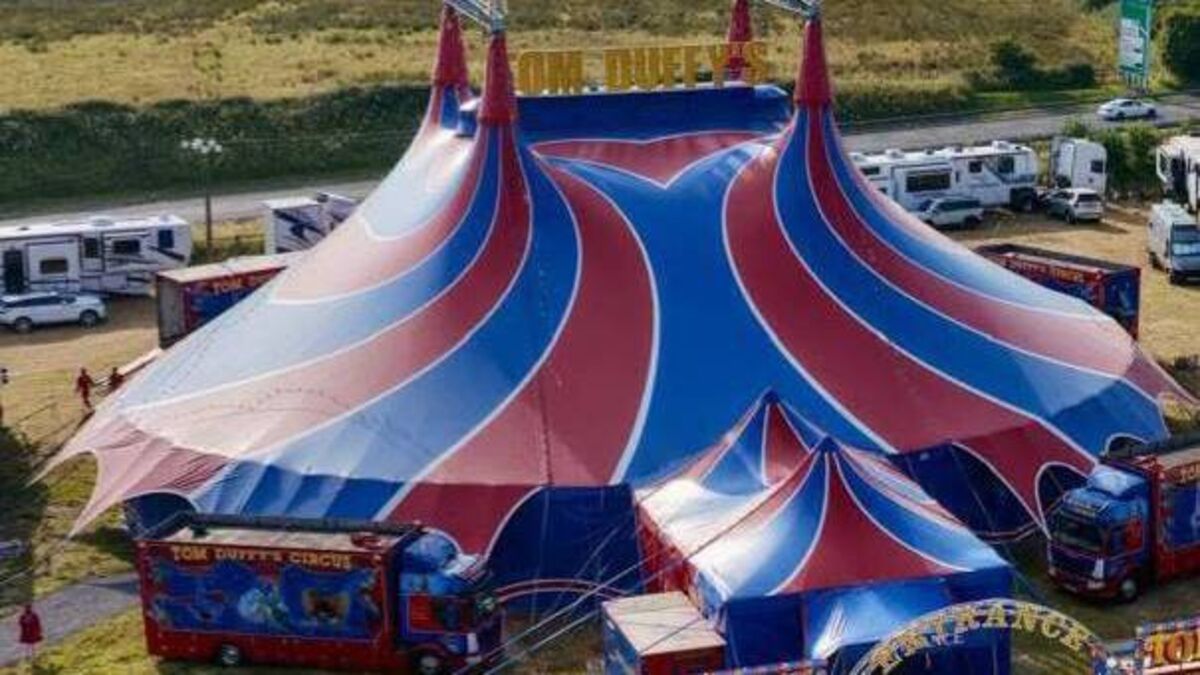
I had the joy of taking my three-year-old granddaughter to the circus this summer. To be honest, I was more anxious to see the show myself; her enjoyment of it was almost secondary.
I had fond memories of being to the circus over the years but this time I was intrigued to see how a modern circus would stand up, given the absence of exotic animals and the countless distractions that today’s children are faced with. Right from the start, I have to say that this show, Tom Duffy’s Circus, held up pretty well, pretty well indeed. It was fantastic!
It seems that most skills that people develop can be turned into an art form or an entertainment of some sort. The virtuoso guitar player, the professional footballer, the gymnast. Surely, it was a collection of such talents that led to the first circus troupe being formed.
The modern circus originated in 18th-century England when former cavalry sergeant major Philip Astley combined trick horse-riding with acrobats, jugglers, and clowns. Despite Astley’s efforts, the circus has a much longer history than that as shown here.
Astley’s rival, Charles Hughes, opened The Royal Circus in London in 1782, popularising the actual name 'circus' for this style of entertainment. In the 19th century, American showmen introduced large canvas tents and utilised the transcontinental railway to move massive shows, giving rise to legendary productions like the Barnum & Bailey circus - the subject of the 2017 film, .
Gulnaz Khan, writing for in 2017, in a piece entitled, , asks the question, in the face of animal welfare controversies and a rapidly evolving entertainment industry, what will become of the American circus? In his article, Khan takes us from flourishing famously to faltering finish.
Khan explains that by the late 20th century, a new generation of animal welfare activists challenged circus owners across Britain and the United States to ban animal acts, citing the cruelty involved in their capture and training. Awareness took root in the public consciousness and business dwindled, eventually culminating in the closure of Ringling Bros, one of the oldest and largest American circuses.
The fate of the remaining traveling circuses and sideshows in the United States - relics of a bygone era - remains to be seen. I would be shocked if those small one-ringed circuses totally go away because the fewer and fewer that there are, the more interesting it will become and more of a niche.
I went to my first circus when I was about seven years old. I am not sure which circus it was, Duffy’s or Fossett’s, but it has remained in my mind ever since.
I arrived home from school earlier that day having heard the news that the circus was in town and of course I wanted to go. As we had no car and given my father’s misgivings about frivolous activities, I held out little hope. What I hadn’t known up to that point in my life however, was that my father loved the circus and that he retained fond memories of attending such spectacles in his youth. His great hero from that time was 'Cyclone Danny', who had actually appeared in Tubbercurry way back then.
'Cyclone Danny' was a famous stunt motorcyclist and Wall-of-Death rider who performed such daredevil acts during the 1930s. He became widely celebrated for his death-defying, high-speed stunts, the most legendary of which took place on July 17, 1937, at the High Beech Speedway in Essex.
The setup took the form of a mock railway signal cabin erected on the racetrack. The signal box, whose ends were blocked with panes of glass was then set ablaze. 'Cyclone Danny' then sped down the track on his motorbike, rode up a steep ramp at full throttle, and crashed through the glass ends of the burning structure. This “dangerous display of nerve and raw precision” was famously recorded in slow motion in a British Pathé newsreel series, cementing Danny’s legacy.
As circus time approached on that school evening, back in 1968, my father disappeared on his bike. He returned a short while later announcing that our cattle-dealing neighbour would be collecting my sister and myself in good time to make the seven-mile trip to Tubbercurry. We all piled into the cab of Peadar’s cattle truck - there was now a collection of other children signed up as well - and, all securely squashed, we headed for town.
I still remember some of the tricks that were so dazzlingly performed that evening; the trays of multistorey glasses so perfectly balanced by a highwire walker, the white horses circling the ring, the crazy clown acting the… clown (funnily enough), and that circus band pounding out those circus tunes.
Back to Tom Duffy’s Circus and my trip to see it in the company of my granddaughter. This circus contained all that is great about the circus tradition: the travelling roadshow, the Big Top, the welcome, the atmosphere and of course, the stunningly impressive entertainment. It all reminded me of a West End show, you know the shows where a group of 12 of 15 people do everything, doubling up to play many roles in a non-stop spectacular.
In some respects, circus work is not glamourous; there is a lot of setting up and taking down and the person who raises the Big Top is also the person who takes your ticket at the door. On the other hand, circus performance is one of the most fantastical experiences imaginable. For those who witness it, it combines the best in aerial artistry, comical clowning and physical feats. And don’t tell me it is too expensive; given that we pay huge money for show and concert tickets these days, a trip to the circus is great value. Support your local circus; where else will you get such a show that arrives in your local town, providing such quality entertainment, wowing grandparents and grandchildren alike. It’s the greatest show on earth!