Paul Henry at 150: Remembering Achill’s painter-son

Elizabeth Barrett (left) and historian Mary J Murphy with Paul Henry's portraits of Eliza White and John Barrett with whom Henry and his first wife Grace Mitchell stayed.
Achill’s most universally lauded painter-son, Paul Henry, was born 150 years ago next Saturday, April 11, while his biography, – which sings the island’s praises – was published precisely 75 years ago.
On Achill, Paul and his first wife, Grace Mitchell, stayed initially with Elizabeth White and her husband John Barrett, of Keel, where they ran the post office, and whose portraits he painted in ‘My Host and Hostess’. Their grandniece, Elizabeth Barrett, carries on the same warm family tradition of hospitality to this day in the Bervie Guest House. Later, the Henrys lodged with Bridgid Fadian, a widow who married an uncle of the Dooagh historian, John Twin McNamara, two years after her first husband drowned. He perished along with John Weir and Michael Weir in July 1910, and John Twin (1935-2025) told this writer that their funeral, mentioned in , enabled him to date Paul Henry’s precise arrival date on Achill as the 5th of that month.
John Twin’s grandfather, Johnny Tom Owen, was a friend of Paul Henry, and Paul was later to write in his biography that Johnny’s son Anthony – John’s father – had an artistic gift that reminded him of the work of no less a painter than Vincent Van Gogh.
John Twin grew up just across the road from Eva O’Flaherty’s St Colman’s Knitting Industries at Dooagh, a cultured Galway woman who had known Paul Henry in Paris in the late 1890s, in London in the very early 1900s, and on Achill subsequently. They shared a common O’Flaherty ancestry (Paul on his mother's side) and John Twin spoke of seeing Paul call into Eva’s home in the mid-1950s, possibly to say a final farewell.
In 1915, Paul Henry was involved with the stage design of in halla Dooagh with Claud Chavasse, Darrell Figgis, and a young Anthony McNamara, after which Figgis gave a lantern slides talk on the Norse invasion of Ireland, no less. One year later Paul was commissioned to paint a portrait of Eva's half-brother, Arthur O'Gorman Lalor, in Limerick, and that picture is now in the Limerick Municipal Gallery of Art.
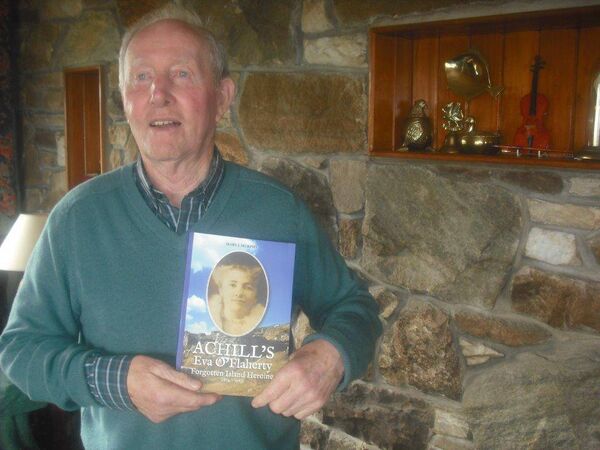
While it’s been known for some time that O’Flaherty was an original co–founder of Cumann na mBan in Dublin, it has been discovered recently that she was also an extremely influential ‘hands-on’ organiser with the Cumann in Limerick in 1914, with Molly Spring Rice of fame. Eva, whose 63rd anniversary occurs on April 17, grew up in Limerick after her mother died in Lisdonagh House, Caherlistrane, in 1881.
Spring Rice and Figgis were pivotally involved in the Howth Gun-Running escapade of 1914, Figgis wrote to Eva from Reading Prison in 1916, and Millie Figgis and Eva were on a Cumann na mBan sub-committee in 1918, so the interlocking circles were many and varied.
While Paul Henry made zero mention of Grace Mitchell in , thrilling information has come to light recently regarding his second wife, Mabel Young, and a hitherto undocumented occasion during which he holidayed in Corrnamona, on the shores of Lough Corrib, c. 1938. From a credible source, whose mother was born in the locality, we know now that Henry stayed on the island of Doorus in that year, sleeping in a converted green aluminium bus! The vehicle was well kitted out for hosting select guests in the summer months, where the lake vista opens out onto Glan and the Connemara mountains, a godsend view for any painter.
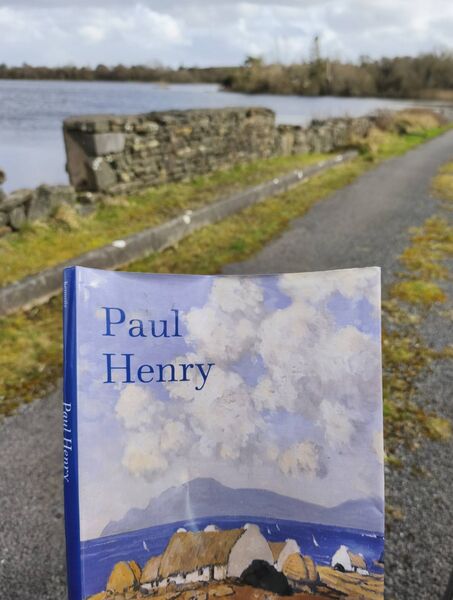
A number of locals in the vicinity interacted with Paul Henry at the time, the knowledge of his presence there is still vivid amongst their now-elderly children, and one lady (now deceased) saw him painting, as a little girl. She told her son, this writer’s cheerful informant, that a well-dressed city lady – in something of a rush, and now known to have been Mabel Young – asked for directions to find Paul, way back in the late 1930s. That observant little girl also saw Henry painting, as did some others, and the cosy holiday bus was only taken apart and removed in the 1960s. That dismantling was witnessed by the girl’s equally observant, then teenage, son, still hale and hearty. He recalls seeing colourful stacks of pots of paint, and numerous paint brushes, that were all jammed in underneath it, presumably the former possessions of Ireland’s most famous ‘birthday boy’ painter.