Electricity demand in Mayo is set to keep increasing
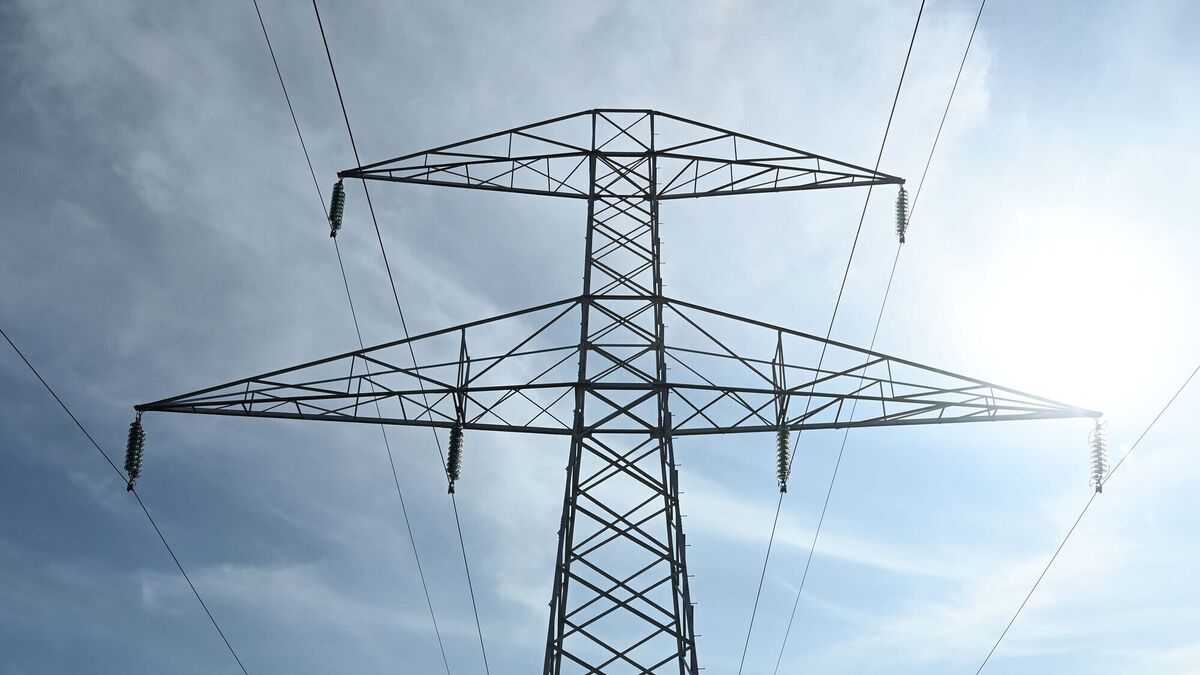
Demand for electricity is expected to increase significantly in Mayo in the coming years.
Demand for electricity is expected to increase significantly in Mayo in the coming years, members of Mayo County Council's Environment and Climate Change Strategic Policy Committee (SPC) have been told.
A delegation from ESB Networks and EirGrid gave a presentation to the SPC last week, outlining the various challenges facing the electricity network in the county.
While the presentation was welcomed, SPC members noted that specific questions in relation to the costs and affordability of electricity, the reduced capacity target for grid lines in Mayo and the frequency of electricity blackouts across the county, were not addressed at all, while there was also no mention of the many data centres being set up and the energy they consume.
EirGrid representatives included programme manager Michael T. Kelly, transmissions lead Timothy Hurley and senior project manager Eoin Brockert, while attending from ESB Networks were project manager Paul Doherty, local area manager in Ballina/Sligo Kevin Staunton, North West regional manager Eoin Waldron and senior planning engineer Aisling Goulding.
The meeting was told that ESB Networks launched its net zero strategy in 2023, with the aim of generating 80% of energy from renewable sources after 2030. This target is to be delivered through an approved capital investment package of €13.4 billion.
It was noted there are projects for increased electricity capacity in stations in Castlebar and the Ballyhaunis/Claremorris area, where larger transformers will feed the growth; from 2030 on, the new station being developed in North Mayo will support the Ballina/Crossmolina/Killala areas and there will be a need to upgrade some of the existing 38kV circuits there.
Aisling Goulding of ESB Networks said there will be a need to increase output, which will entail new energy generation projects.
"Our biggest challenges to building the infrastructure quicker are sites and planning permission, with long lead times to find a suitable site. The challenges ahead for ESB Networks is a combination of site acquisition and planning permission. It can be difficult to accommodate requests for large single connections, in locations where capacity can be tight.”
Ms Goulding said ESB Networks is currently dealing with third parties and it can take some time to acquire a site for the necessary infrastructure. She appealed to council members, particularly in North Mayo, to identify any parcels of land that might be available for projects. She also requested that “advance notice of any new large developments looking for planning permission be made known to ESB Networks in order for it to install cable routing and ducting in the ground once a road is open”, adding: “Improved communication and collaboration between ourselves on cable routes and advance ducting would be really helpful, rather than a road opening licence having to be sought again in a couple of years.”
She said under the ESB Networks Distribution Plan, Mayo’s electricity demand is forecast to increase significantly out to 2040, based on government targets, climate action and housing targets. This will result in “pinch points and spare capacity not always being in the area you want it".
EirGrid’s Timothy Hurley added: “Public consultation is part of the process of delivering projects, so we look at identifying the need, then the technology, the best options, where to put it, planning and then delivery. These are the stages of a project.”
A map of the transmission system in Mayo showed a network of 110kV and 220kV lines, as well as their corresponding stations.
In terms of active projects, Mr Hurley said the main grid reinforcement projects in Mayo are the Moy 110kV substation reconfiguration and upgrade, which entails a new 59km 110kV underground cable connecting ESB substations Ballina and Tonroe in Ballaghadereen - 32km of which is complete (this includes 8km off-road/private lands, 23km along the N5, 11km along the N26 and 17km in local roads); the Castlebar-Cloon 110kV line, which entails the uprating of 57.3km of overhead lines, with full completion due in 2028; the Dalton 110kV station busbar uprate and substation reinforcement, due for completion in 2029; and the Glenree-Moy 110kV circuit uprating, entailing the upgrade of 14km of overhead lines, and substation reinforcement. Additional upgrades and thermal capacity increases are being carried out in the Cashla-Dalton and Castlebar-Dalton 110kV circuit, all of which will increase grid capacity to allow for a significant increase in power flow.
Mr Hurley added that renewable energy targets are now also being taken into account in shaping the future of electricity supply, alongside the need for grid reinforcement projects and more interconnection with neighbouring areas, noting that significant large energy users to the grid have come about through heat pumps and the electrification of the rail service.
“A number of parts of Mayo are at risk of overloading and these active upgrade projects will lead to over 100km of existing transmission lines being uprated to meet the need as identified in these areas.”
He told council members: “The sooner we know of projects or increases in demand you are aware of in Mayo, the better that we know also, to ensure the transmission and distribution system is in place to supply the needs of County Mayo.”
Further infographics highlighted more national statistics around electricity, such as one noting that electricity demand is expected to increase by 50% by 2030.
- Published as part of the Local Democracy Reporting Scheme.