Lambs – Tis the Season
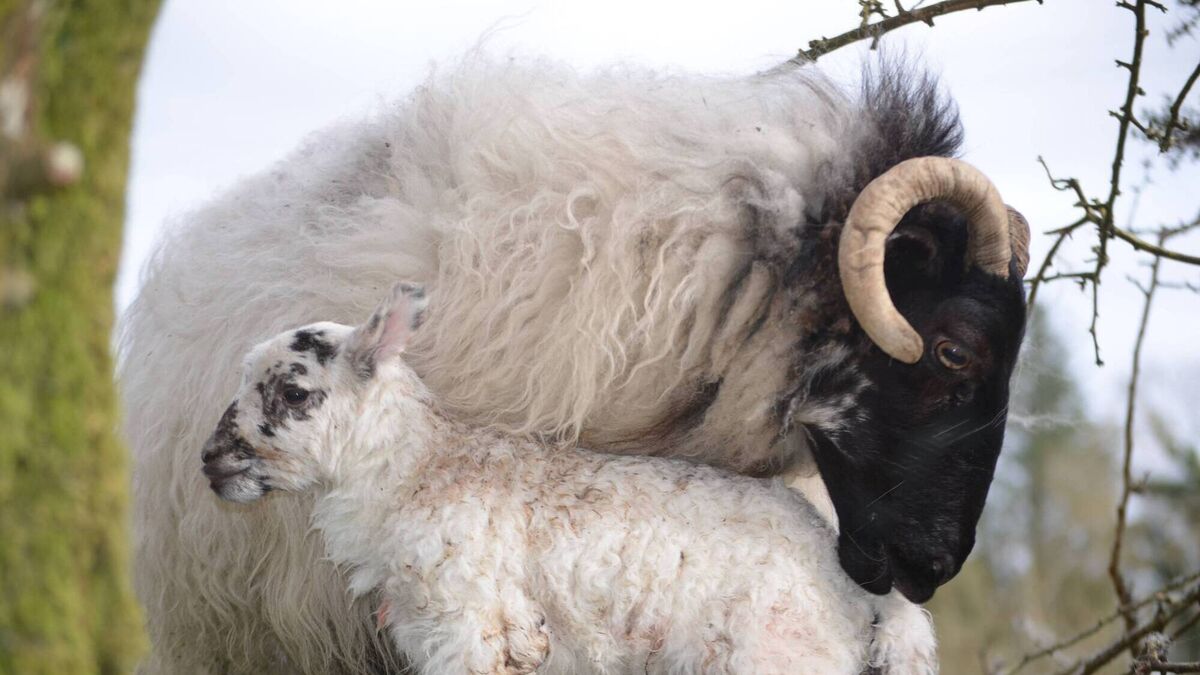
Mountain black-face sheep had a simple job to do and generally they did it – producing one good quality lamb each year – twins were a bonus and triplets were a pain.
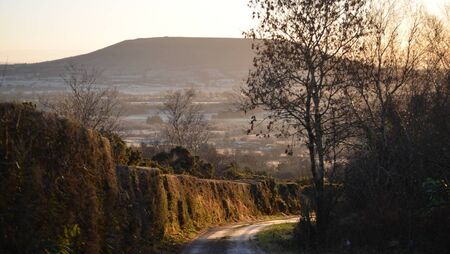
This is the Season of Lambs in the Ox Mountain region. Over the coming weeks, bit by bit, our fields will fill with a new crop of lambs, continuing a long and treasured tradition. There are few things as beguiling as the sweet face of a new-born lamb; the world over, lambs have become symbols of calmness and innocence.
This time of year, our greeting cards and religious services use the lamb to impart messages of new growth and precious gifts. While spring is a season synonymous with new beginnings, today’s lambing seasons are often accompanied by headaches and sleep-deprived nights.
Once upon a time in the Ox Mountains, sheep farming was a way of life, passing like the seasons, taking people from one phase of the farming year to the next. Lambing presented one of those phases and it fitted gently into place with the phase that went before it and the one that came after it. There were no massive feed bills to be matched against the number of lambs produced.
Mountain black-face sheep had a simple job to do and generally they did it – producing one good quality lamb each year – twins were a bonus and triplets were a pain. Lambing was scheduled to take place from April 1 each year and it happened in the outdoors, gradually and over a period of five or six weeks. An old saying, that a neighbour of mine used to quote, was; “an ounce of breeding is worth a ton of feeding.” Put simply, this meant that if you had good stock and you followed the cycle of seasonal growth, you got good lambs with no extra feeding and not too much hard work.
Today things are quite different. In an effort to increase yields, both sheep (pre-lambing) and lambs (post-lambing) are fed extra rations. These rations were never more expensive than they are today, so the whole process has become very results orientated. Sheep are scanned during pregnancy to find out which sheep needs to be fed more than another. Sheep are now managed in a way that the lambing season is more condensed – few farmers these days have the time or the patience to accommodate a lengthy lambing period. Additionally, mortality rates need to be kept to a minimum to maximise profits.
Suddenly, the whole process has gone up a few notches and by the time lambing starts, the pressure is on. Lambs that were once born by the side of a rock on the slopes of the Ox Mountains are now meeting the world in a cosy sheep shed, lined with straw and watched over by CCTV. There is nothing wrong with any of this, it’s just a different way of doing things. This all amounts to a lot of hard work but the pride that today’s sheep farmers have in their new crop of lambs remains the same, that will never change.
Another thing that never changes in the world of sheep farming are the tricks of the trade. Of these, few are as simple (or complex) as getting a foster mother to accept an orphan lamb. This procedure is always worth a try and in times past, if such a lamb survived, it might well pay for a few school books the following September or provide that extra bit of Christmas cheer. A contribution to the from Michael Leech, Glenariffe, Co. Antrim in 1955, describes the process and includes a second version of the trick that I, for one, had not heard of before.
All in an April evening
The beautiful seasonal poem by Irish writer, Katharine Tynan, , tells of her experience of encountering sheep and lambs ‘all in an April evening’ and connecting the scene to the crucifixion of Christ, the Lamb of God. Tynan also describes the lambs in her poem as ‘weary and crying with a weak, human cry’ reminding her of the people who lined the route as Jesus went ‘meekly to die’ on Good Friday. The poem could be set on any Ox Mountain road and is filled with colour, atmosphere and symbolism. The poem was later set to music as “All in the April Evening” and is sung to this day by choirs all over the world at Easter time.
Lambs are universally recognised as symbols of purity and innocence because of their gentle and innocent appearance. In contrast to this, and maybe because of this, lambs were historically used in religious sacrifices. These sacrifices evolved into the concept of "substitutionary atonement", where the lamb (or Christ) takes the place of sinners. John the Baptist referred to Jesus as the "Lamb of God who takes away the sin of the world," highlighting his role as the ultimate, sacrificial lamb. Continuing with the place of the lamb in scripture, another source makes the following connections.
Folklore
In folklore, lambs are tied to the spring equinox, associated with fertility and new life. In general, white lambs symbolise purity, while black lambs represent the "black sheep", or non-conformity. Additionally, as reported both in Ireland and Scotland, it is said that a first lamb of the season seen facing you brings good luck.
In Celtic lore, lambs were believed to have connections to the fairy world and were sometimes seen as omens or spirits themselves. Folk tradition uses sheep behaviour to predict weather, believing they descend from mountains to avoid coming bad weather. Other lore suggests that lambs born in fairy forts are protected by the fairy folk.
They say that the shorter a period a young animal remains playful, the less intelligent they are. Lambs of course, are very playful but they only seem to play for a few short weeks. Don’t be fooled by this however, as sheep and lambs are in fact quite smart and possess excellent memory. Newborn lambs get nudged into life by their mothers. Within 24 hours, lambs can take off on all fours and explore their surroundings, recognising each other by their bleats and proving very difficult to catch. Further studies have shown that lambs can also recognise facial expressions and experience happiness, fear and boredom.