Old-style ways of forecasting the weather
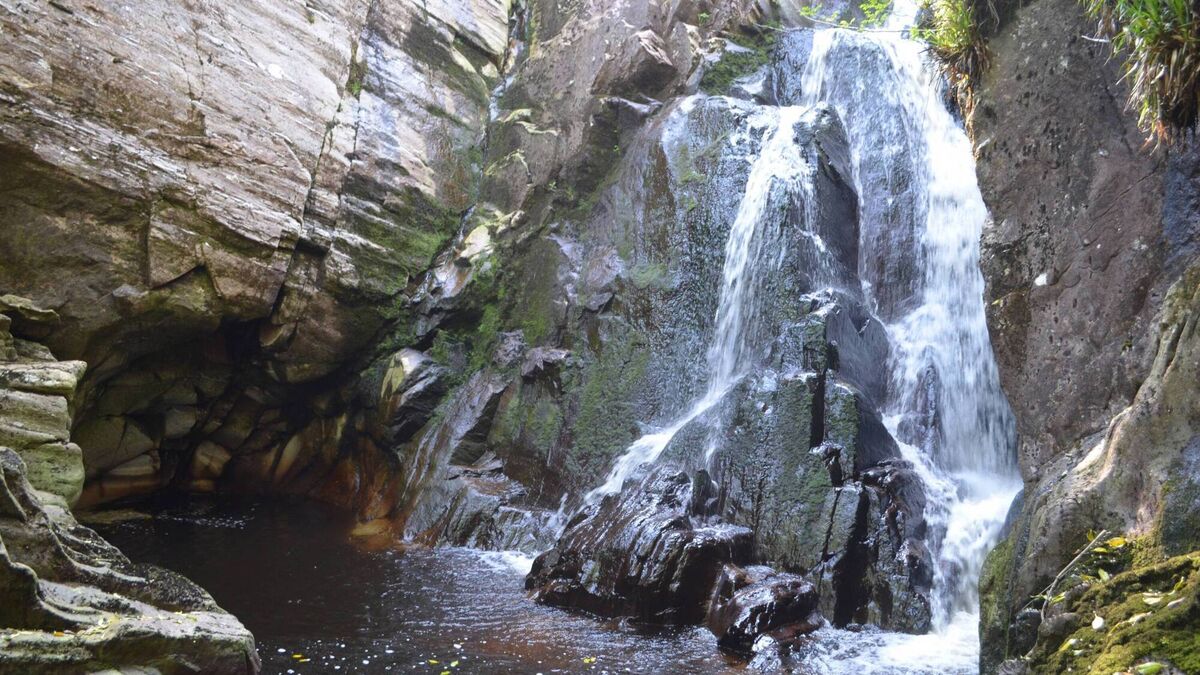
The people living in Cloonacool say that they know by the noise of the waterfall when rain is near.
The old sayings about forecasting the weather are interesting; they contain age-old wisdom concerning what next week, even the next season, might bring. Apart from knowing what Heaven is really like, few things capture our imagination like finding a secret formula that seems to unlock our future weather patterns.
It is fair to say, and I have touched on this subject in the past, that forecasting the weather has never been more advanced or as accurate. This is great but, in another way, it kind of spoils the fun of not knowing what tomorrow will send, weatherwise.
This rhyme has been used for centuries to predict weather patterns. I love this piece of weather wisdom and I am not even sure it forecasts a future summer all that accurately but you know what, I don’t care. It sounds good, it sounds wise and it would seem to me to be old wisdom, possibly as old as our first farmers. Breaking it down, the suggestion is that if the oak comes into leaf before the ash, our summer will be good, with only a splash of rain. If, on the other hand, the ash blooms first, we are in for a soaking.
This year I am keeping an eye on two old trees, one an ash, the other an oak, with a view to testing the old adage. So far, it would seem the signs are positive, with the oak being first out of the blocks. If tradition holds, we are in for a nice summer. The funny thing is, whichever trees blooms first, we seem to be in for rain either way... and that sounds about right for the Ox Mountain region.
While many believe the oak usually buds first, others disagree, and say the order often depends on specific species and spring temperatures. It seems the wise old oak already knows something about global warming, and like the experts, it is now regularly suggesting dryer summers. The Woodland Trust explains further.
Michael Gallagher, known as the 'Donegal Postman' and a popular amateur weather forecaster, predicts weather by observing nature. His predictions, which have sometimes differed from scientific forecasts, are based on traditional methods. He studies the behaviour of animals and plants to determine the nature of the weather. His predictions have been disputed by Met Éireann yet he says between 70 and 80 per cent of his predictions come true. Michael ceased providing regular, public, long-term forecasts after encountering online abuse. How sad is that?
Ronan McGreevy, writing in (December 2009) portrayed Michael Gallagher in a way that showed up those who saw fit to criticise his predictions, as failing to recognise the valuable historical and folk background from which his predictions emerged.
Long before the days for all-seeing satellites and forensic weather forecasting people had to rely on the signs in nature if they wanted to make plans that involved the weather... and in the distant past, all plans (including survival itself) involved the weather.
A search through the National Folklore Collection throws up any amount of old weather forecasting proverbs. Many are quite believable while others stretch the meteorological imagination to its very limits. However, I believe all these sayings and proverbs have a place, whether they are accurate or not. To search for certainty in them is to miss the point. These nuggets of information were formed by successive generations of people who closely observed nature. This information is in the DNA of our ancient natural history. It is part of our heritage; providing information capsules that have served our forebearers over thousands of years. That is their truth, that is their value.
The following contribution to the Children's Folklore Collection (Schools) was provided by James MacDonnell of Ballinalassa, near Belcarra, Castlebar, as told to him by his father in 1938. The information reads like a piece of stylish prose and reflects not just on weather signs but on a different way of life when people took time to observe such things.
Two girls from a school in the parish of Cloonacool, also writing for the Children’s Folklore Collection, recount further weather lore. Note how they include landmarks and nearby placenames that personalise and localise the information.
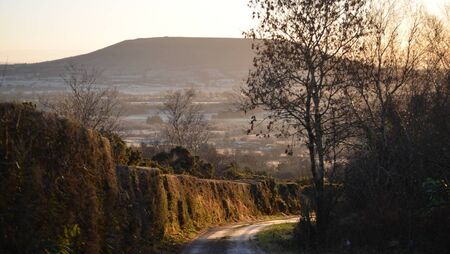
I live in Cloonacool; it is my place. What these girls describe is my sky, my mountain, my sounds of nature. I will be looking out for the sight of Friday rainbows and the sound of the local waterfall in the weeks to come, not caring whether the weather they predict is good or bad, right or wrong.