Government should publish AG advice on Occupied Territories Bill, TD says
By Cillian Sherlock, Press Association
The Government should publish legal advice on whether services can be included in the Occupied Territories Bill, an opposition TD has said.
Concerns have been raised that the Government’s legislation would include only restrictions on goods from illegal Israeli settlements – and exclude services.
The Government has said covering services in the legislation is more legally complex, and Foreign Affairs Minister Helen McEntee has received advice from the Attorney General on the matter.
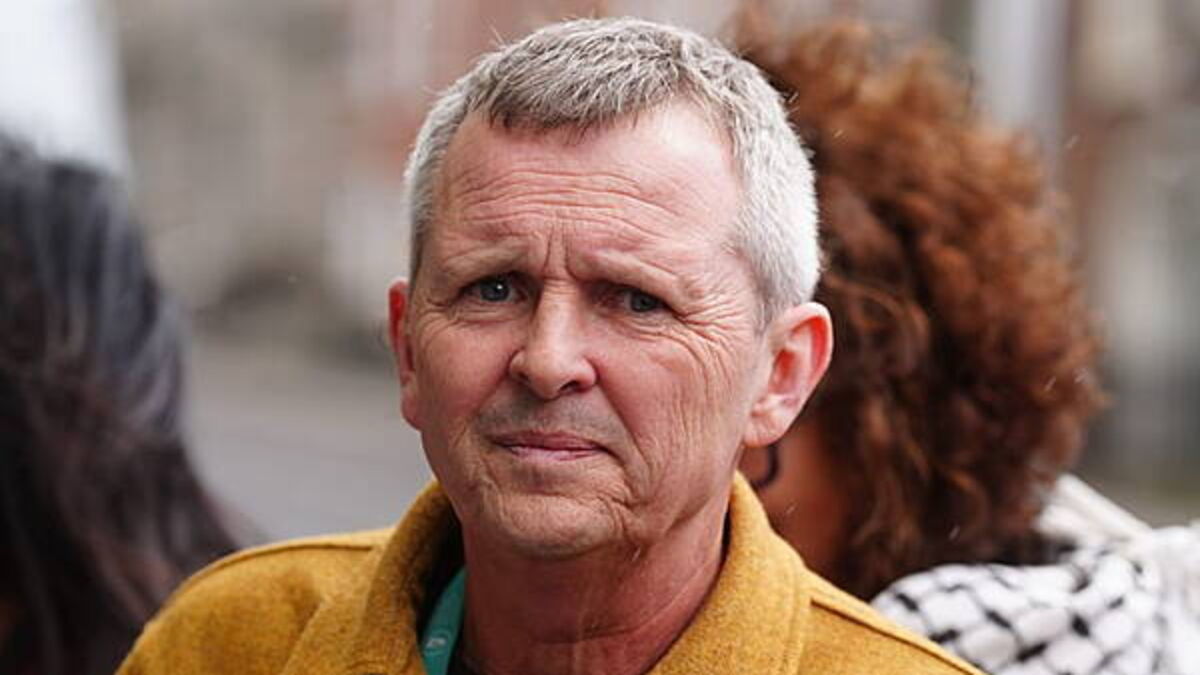
Speaking to the Press Association, People Before Profit leader Richard Boyd Barrett said: “Obviously I’d like to see the legal advice published.
“But, in the first instance, there is a moral obligation to do something to stop the horror that is being visited on the Palestinians – and I think the government are running away from taking any serious action.”

Boyd Barrett has brought a separate piece of legislation to the Dáil which would impose sweeping sanctions against Israel ahead of a Dáil debate on the matter.
He said: “Our bill is proposing to break off all economic trade and financial relations with the State of Israel on the basis that it is involved in a genocidal assault against the Palestinian people.”
He added: “Therefore our State and all states who are signatories to things like the Genocide Convention have an obligation to impose sanctions.”
McEntee told the Dáil that the bill brought by Boyd Barrett would amount to a blanket prohibition on trade in all goods and certain services between Ireland and Israel.
She said: “In effect, it amounts to a boycott, divestment and sanctions approach with respect to Israel.
“The Government does not support that approach, although we fully recognise the right of individuals and indeed organisations to make their own decisions in this regard.”
The Minister said Ireland does not operate a unilateral domestic sanctions regime and instead implements European Union sanctions and United Nations sanctions through the EU framework.

She said EU sanction regimes are designed carefully to avoid unintended consequences, including access around essential goods for civilian populations.
Earlier this week, the Department of Foreign Affairs published its latest multi-year strategy and changed its wording around the Occupied Territories Bill.
The department has said it wants to “progress” a prohibition on goods from the Occupied Palestinian Territory by 2029, a change from last year’s goal to “enact legislation banning imports” from the settlements by 2028.
The wording reflects that of the Programme for Government but was criticised as a “dilution” of ambition by opposition parties.
The coalition’s Bill was listed under “priority publication” in the spring legislative programme.
Boyd Barrett said he said he did not trust the Government to bring the bill in, even in a “diluted version”.
Asked if the updated wording was an admission that the Government was not pursuing restrictions on services, Tánaiste Simon Harris said: “No, I don’t think it’s an admission of anything.”
He said McEntee has been “engaging closely” with the Attorney General on the matter, adding: “I expect she’ll be updating leaders and Government shortly.”
On Monday, the EU Foreign Affairs Council agreed to sanction Israeli extremist settlers and entities and held discussions on limiting trade with illegal settlements.

McEntee said: “This Government believes that the strongest and most impactful route remains coordination at EU level – particularly in relation to the Israeli settlements and trade connected to the occupied Palestinian territories.
“This is an area where Ireland has and will show leadership. I’ve repeatedly argued for stronger action, including sanctions on extremist settlers, restrictions relating to illegal settlements, and the suspension for trade provisions under the EU-Israel association agreement.”
The Minister said Ireland will concurrently take action domestically.
She said work “is continuing” on the commitment in the Programme for Government to “progress legislation prohibiting goods from Occupied Palestinian territories”, following a 2024 advisory opinion from the International Court of Justice.
“I’ve been engaging with the Attorney General, who has provided detailed and extensive advice on whether the inclusion of services would be permissible, but also how we would progress this legislation more broadly.
“We’ve sought clarification on a number of different elements of this legislation.
“Anything that we introduce, we need to make sure that it’s legally robust, that it’s capable of withstanding challenge, but that we can advance our broader policy objectives effectively.”