Fond memories of the heyday of Pontoon Ballroom
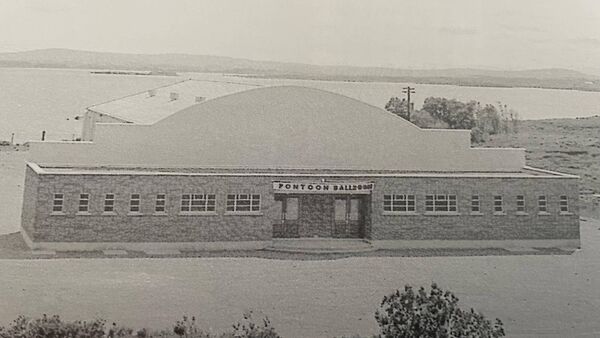
Pontoon Ballroom was one of the legendary music venues in Mayo in the 1960s.
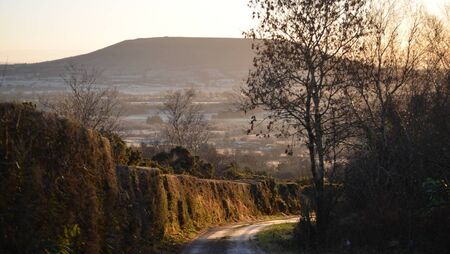
Today, there is little left to mark the spot. Just a strip of weatherâworn tarmacadam near the shore of Lough Conn - the bleak remains of the Pontoon Ballroom, County Mayo’s mecca of wild Saturday nights. A place once alive with music, colour and possibility is now a fading memory.
Driving from Castlebar to Ballina, the road still hugs the lake’s edge. I find myself searching, almost in disbelief, for the exact place where the ballroom once stood. Was it at this turn, or the next? Why is there no standing stone, no plaque, no inscription to say:
How many trips did my younger sister and I make from Ballina to this spot? And now all that remains is a strip of tarmac and the ghost of a dancefloor where lives were changed, loves were found, and hearts were broken.
I pull in and step out, hoping to recapture some trace of it. I walk down to the lakeshore, halfâexpecting to find an old mineral bottle or the rusted frame of one of those iron chairs. But there is nothing. Only the lapping water, the soft fall of rain, and a blackbird calling for companionship from a hawthorn bush. Beyond that, silence - the silence of an empty stage, the silence of drummers and countryâandâwestern singers long gone.
In my mind I see again the faces of Mayo girls swaying in the swelling crowds, assessing you as you crossed the floor, waiting for that hesitant “Will you dance?” In those few seconds, destinies were decided.
The Pontoon Ballroom was built by two local entrepreneurs, Brendan Kelly of Foxford and Eugene Maguire of Ballina. They put about £18,000 into the venture - a huge sum at the time - and what they created was extraordinary. A giant shed of galvanised sheets bolted to steel girders, sitting on a great slab of concrete, with a 9,000âsquareâfoot dancefloor that could hold 800 people. When it opened in August 1962, it was twice the size of most ballrooms in the country.
Its gaunt shape made an unforgettable imprint on the landscape. Planning permission in those days was a quiet file in a council drawer, and scenery was only beginning to be discovered. The stage faced away from the lake, as if the music itself was too shy to disturb the trout and perch who had enjoyed millennia of peace. That peace is restored now. The last cars have long since left for Ballina, Foxford, Kilkelly, Attymass, Castlebar, Crossmolina, Bonniconlon and Leathâardán. The bicycles too are gone, rusting in soft bogs at the corners of small fields.
The girls are gone, and the boys too - many of them now in Manchester, London, Newcastle, Philadelphia, New York.
And what of the Ford Anglia - my first car?
Getting to Pontoon in those days required both organisation and mechanical faith. Was Joe going? Was I going? Was there enough juice in the tank? My newly purchased 13âyearâold Anglia joined me on the first of many journeys.
It was a treasure. My brother Patrick spotted it in the small ads of the . I found it in a lonely shed in Foxford, where the two sisters of its late owner, retired schoolteacher Kay Brogan, had cared for it with devotion. On cold winter nights they placed a hot water bottle beside its 'Made in Dagenham' engine. They liked me, and trusted I’d mind it. We shook hands on £300. JIZ 616 - I remember no other number. Thirteen years old, but only 15,000 miles on the clock. Practically new.
Saturday nights began in Leonard’s Bar in Ballina, where young men built up the courage to face the dancefloor. If you had no car, you stood at the courthouse with your thumb out. Better still if you knew someone who’d lend you one.
One night, Patrick cashed in his finder’s fee and borrowed the Anglia. After half a crate of orange and lemonade, he needed a stop at the lakeshore. He jumped out, leaving the engine running. The door closed behind him - and locked. There it sat, humming away, keys in the ignition, doors sealed tight. Friends gathered, offering advice, shaking heads, admiring the stubbornness of the machine. The Anglia’s revenge.
Back in the ballroom, the girls were like the Anglia - beautiful but inaccessible. By tradition, men stood to the left of the entrance, women to the right. The test came in the heartbeat between songs. At that moment the men surged forward, pushing and jostling, each aiming for his chosen partner. “Will you dance?” was the question on which the night turned. And if you were already dancing, the next great leap was: “Would you fancy an orange juice?”
I remember one girl who said yes. We walked upstairs together, two bottles, two straws, no glasses. A small moment, but it has stayed with me.
But before this ends, let me rescue my brother from the locked Anglia. Those familiar with the model will remember the small triangular windows in the doors. A sharp mind and a sharper penknife allowed him to prise one open and reach the ignition key. A happy ending - though the Anglia, like most of its kind, did not enjoy one. But that is another story.
What remains now at Pontoon is absence - but an absence full of echoes. And so I return to the idea of a plaque. Something simple. Something true.
Perhaps:
Or maybe: