Wildcats have an ancient history in Ireland
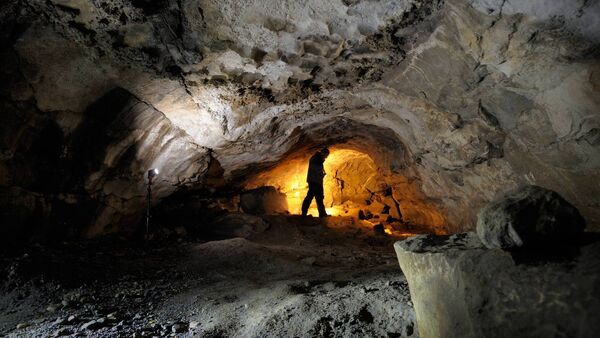
Glencurran Cave in the Burren, County Clare, where the earliest directly dated wildcat (Felis silvestris) ever found in Ireland was discovered. Picture: Ken Williams
I was intrigued recently to hear that a European Wildcat had been discovered in Ireland. I was thinking to myself, where did he escape from and how might he survive without a mate. Of course, I had only heard half the story and didn’t realise that the cat in question was 5,500 years old and only its bones had been found, in a cave in Co Clare.
In terms of archaeological finds however, the discovery was significant enough to make the news. While I had to accept that I was never going to meet the cat on my way to school, the fact remains that at one time, the European Wildcat did indeed prowl the ancient woodlands of the Ox Mountain.
The European wildcat (Felis silvestris) is a small wildcat species native to continental Europe, Great Britain, Ireland, Turkey and the Caucasus. Its fur is brownish to grey with stripes on the forehead and on the sides and has a bushy tail with a black tip. It weighs up to 7.5 kg (17lb).
The European wildcat lives primarily in broad-leaved and mixed forests, avoiding intensively cultivated areas and settlements. The northernmost population still exists in northern and eastern Scotland while it is locally extinct in England and Wales. In Ireland, according to recent reports, these cats are first recorded in 3600 BC. They died out by the 18th century, due principally to deforestation.
Dario Radley, writing in a recent edition of , suggests that new archaeological evidence and genetic studies confirms that the European wildcats once roamed prehistoric Ireland.
This discovery was made through excavations led by Dr Marion Dowd of the Atlantic Technological University. Although small numbers of cat bones have been recovered from Mesolithic and Neolithic sites over the past decades, none had ever been radiocarbon dated. This new discovery provides the first unequivocal confirmation that European wildcats were present in Ireland during the Neolithic period. Radley continues with further details of the recent find.
Prompted by recent developments, now seems like a good time to find out a little more about these cats and, also to see how cats in general came to be domesticated. Jack Tamisiea, writing for (2025), helps us to untangle the story of feline domestication but warns that, to date, it has proved tricky for researchers.
Around 10,000 years ago, humans began storing grain. This led to the proliferation and rise in the population of mice and rats. This explosion of mice is believed to have attracted wildcats, bringing them closer to humans for the first time. It also led to their subsequent taming - that cats, that is, not the mice. Cats that were more tolerant of humans were eventually tamed and so the process continued until we arrived at the development of the domesticated cat that we know and love today.
Archaeological evidence suggests that cats were commonly found in association with human settlements in the Fertile Crescent by about 3,700 years ago, and they became an ‘official deity’ (in the form of the goddess Bastet) in Egypt around 2,900 years ago. Thousands of cats were bred near temples in ancient Egypt, sacrificed to Bastet, mummified and buried along with their caregivers so that the person could inhabit the cat’s body during the afterlife. This suggests the Egyptians were actively breeding cats. By 2,000 years ago, there was increasing evidence of cats spreading throughout Europe, most likely linked to shipping and maritime trade.
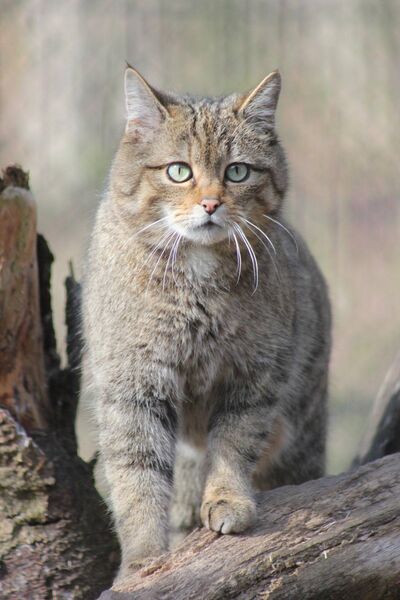
Cat folklore varies globally, often associating them with a paradoxical mix of luck, danger, magic, and the supernatural. Across cultures, cats have been linked to deities like the Egyptian goddess Bastet, or associated with witchcraft and the devil in European traditions. Common themes include their connection to the spirit world, their magical abilities, and their role as either omens of good or bad fortune.
Cats hold a prominent place in Irish folklore. Here too they are associated with both good fortune and supernatural powers. They are linked to the otherworldly, with figures like the Cait Sith, a large black fairy cat with a white spot, and monstrous wild cats in ancient legends.
Shannon Sinn in an article, , gives examples of the many characteristics that made cats the objects of curiosity and mystery.
In the construction of new houses in medieval times, it was not uncommon to place a dead cat in the walls. They were sometimes placed there with a dead rat alongside. This seems to be based on a belief that the presence of the cat (despite it being wifeless), as a warning or a deterrent to any mouse or rat who might fancy taking up residence with the new owners.
What is it about a cat that seems to embed itself in our imaginings? Maybe it’s their mysterious ways, their nature to adapt and survive in any given situation. Is it the cat’s reluctance to give up its wildness or is it our human need to demonise that which we do not fully understand? Regardless, there is lots more to know about cats and their place in our lives and I hope to come back to that at a future date.