Ambulances took over an hour to respond to 1,500 emergency calls
Ken Foxe
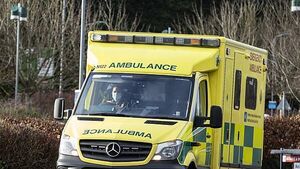
Ambulances took more than an hour to respond to more than 1,500 emergency calls in the first half of this year.
In one case, the response time was listed as just under seven hours while five other calls took more than four hours.
The data covers incidents classified as “PURPLE” and “RED” calls between January and June 2025.
The National Ambulance Service (NAS) had originally claimed the information did not exist and only released it following a review under FOI laws.
Just four ‘PURPLE’ calls – considered the highest level of emergency – took more than an hour.
Response times for those four cases range from just over an hour to around 76 minutes, according to the records.
There were 1,505 ‘RED’ calls, a lower level of emergency, that had wait times of at least an hour.
Six of them were logged as having a response time of over four hours, while a further eight took between three and four hours.
There were 50 ‘RED’ response times of between two and three hours, and 187 of between ninety minutes and two hours.
The majority of one-hour plus wait times, around 1,250 in total, were between 60 and 90 minutes, the NAS said.
Of the 1,509 total cases, 365 of them were reported in the regional health area covering Donegal, Sligo, Leitrim, Roscommon, Mayo and Galway.
The next highest total of 356 was logged in the region covering Tipperary South, Waterford, Kilkenny, Carlow, Wexford, Wicklow, and part of South Dublin.
The National Ambulance Service said demand for their services was rising every year.
In 2024, there were 430,000 total calls, up 10 per cent on 2023, with a further rise expected to 450,000 by the end of this year.
A spokesperson said: “Despite this increase in demand, NAS has continued to improve performance against HSE target times.
“74 per cent of PURPLE calls (life-threatening cardiac or respiratory arrest) and 46 per cent of RED calls (life-threatening illness or injury) [were] responded to within 18 minutes and 59 seconds in 2024 against a target of 75 per cent and 45 per cent respectively.”
An information note from the National Ambulance Service said just under half of calls are classified as either RED or PURPLE.
They added that around 32 per cent of patients conveyed to hospital were admitted after assessment, diagnosis, and treatment in emergency departments.
The NAS also said that some calls could be recategorised in severity as additional information became available.
That means a low-priority call could be upgraded if a patient’s condition appeared to be deteriorating or they had new symptoms.
The information note added: “In many cases, the call may have remained classified at a lower acuity for the majority of its duration, with the upgrade occurring only at a later stage.
“As such, the associated response interval may not accurately represent a response to a high-priority emergency from the outset.”