The heyday of the local creamery in the west
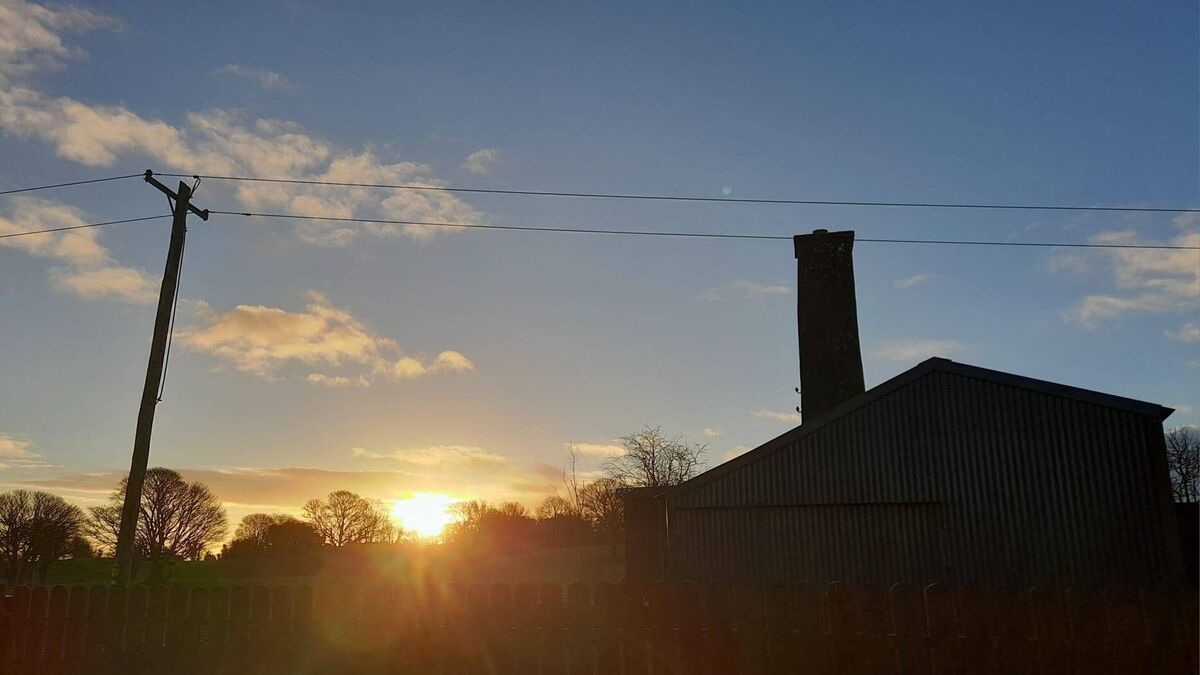
The local creamery's old steam chimney outlined against the setting sun, the only reminder that it was ever a platform for showmen. Picture: Pat McCarrick
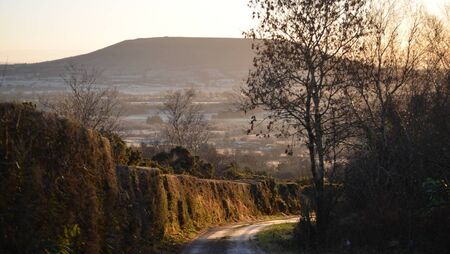
There is hardly a parish in the Ox Mountain region that does not contain the ruins of an old creamery. All these local depots were once vibrant focal points in farming communities that relied on them for essential income and a social outlet. Despite being taken over by todays larger co-ops and international PLCs, it is interesting to reflect on their place in our social fabric; the reasons they were created in the first place and their eventual demise.
The Plan of Campaign was a strategy adopted in Ireland between 1886 and 1891 for the benefit of tenant farmers. It was an initiative launched to counter distress in the farming community, caused by a continual fall in the prices of dairy products and cattle from the mid-1870s. , a paper by Cormac O’Grada, explains to us that the concept of ‘the old clan spirit’ was easily harnessed.
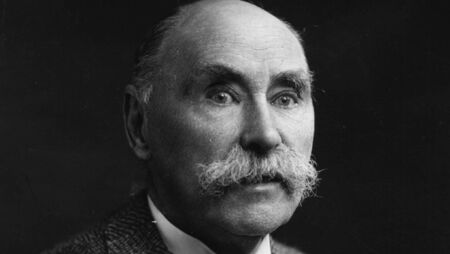
Horace Plunkett, an American social reformer, established the Irish Agricultural Organisation Society (later ICOS) in 1894. His goal was economic fair play; improving the quality of Irish farming, and revitalising rural life.
The movement's early strength was in agricultural co-operatives, especially creameries, that improved food quality and the reputation of Irish butter. The model for these creameries were that they were professionally managed and shareholder led. This simple structure ensured the best results for rural farmers while, at the same time, giving them a real sense of self-empowerment.
The movement had gained such strength in those early years that it was seen by many as being the backbone of Irish farming life. An inverted example of this can be seen in the destruction of creameries by the Black and Tans during the War of Independence, often as acts of reprisal against local IRA units. The burning of Rathscanlon Creamery near Tubbercurry, which happened in October 1920, was a prime example. Such attacks were a form of collective punishment, aimed at intimidating the local population. The British commanders had quite accurately identified that if they damaged the local creamery, it would impact every family in the surrounding parishes.
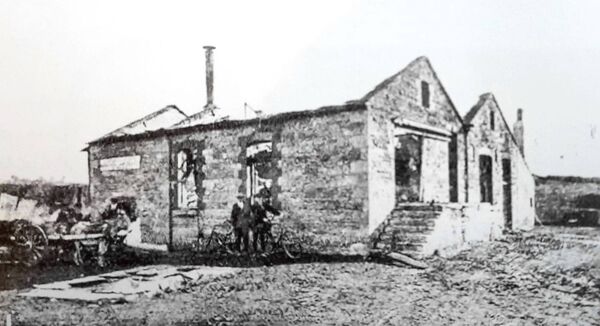
In times gone by, the local creamery was the centre of life in rural communities. It could be said that half the parish worked in the creamery and the other half received an income for the produce they sent to the creamery. Dairying was the main business but some had ancillary interests. For example, most had a shop where customers could get anything from a needle to a crowbar. Close to the Ox Mountains, Achonry Creamery had a bacon factory where local small-scale pig farmers could have their produce processed.
Our own, James Laffey, in his book, (A History of Aurivo Co-operative and farming in the West), describes the requirements of a small rural creamery in their early days.
The model was simple; milk was produced from small herds, it was taken in at the local creamery, churned into butter, the skimmed milk returned to the farmer and each month, the milk cheque arrived. Years later, Patrick Doyle, writing in (2019), relates the following little story, showing the impact and the social importance of the local creamery.
Like rural national schools, most creameries were no more than three miles from home. This meant that each farmer could deliver his own milk to the creamery each morning. He was saved the journey if he had a carter to ferry his milk to and fro, but there was a charge for this service, stopped out of the monthly cheque.
We had such a carter, Paddy. He had the exact same birthday as my father, December 5, 1911. They were twins in milk; my father produced and Paddy carted, highlighting the point that the creamery provided an income for everyone. For the most part, people brought their own milk. The ass was tackled each morning, the milk taken from the nearby stream and hoisted on to the cart for the jaunt to the ‘dairy’.
The journey provided time for reflection and the conversations at the platform or in the creamery shop were valuable social encounters. It was like a night in the pub; some came to perform and others came to listen, some had the latest news and others told the latest lies but, the whole experience was ever entertaining and always worth the trip.
Tractors with transport boxes and bulk tankers replaced the asses and carts and over the decades, many rural creameries closed and quickly descended into ruins. I pass one every day; its old steam chimney outlined against the setting sun, the only reminder that it was ever a platform for showmen.
North Connacht Farmers Co-operative Society (NCF) was formed in 1972 with the amalgamation of four co-ops, Achonry, Rathscanlon (Tubbercurry), Riverstown, and Kilmactranny. Over the next two years, six other co-ops, Gurteen, Ballaghadereen, Kinlough, Kilbarron (Ballyshannon), Palmerstown (Killala) and Ballintrillick, also joined NCF.
Connacht Gold was established in 2000 following the merger of NCF and Kiltoghert Co-Op. It then had over 14,000 farmer shareholders throughout Connacht and Donegal. The co-op officially rebranded as Aurivo in 2012 after taking over the dairy business of Donegal Creameries. Aurivo currently provides employment for more than 750 people. It seems, despite the passing of the tradition of the local creamery, the co-operative ideal still holds.