Bells of the Angelus echo through history
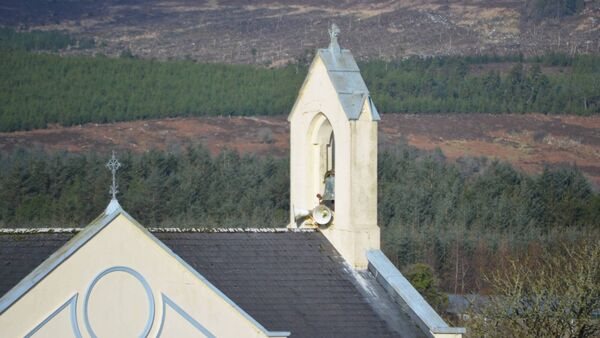
The Bells of the Angelus are heard from the village church each day. Picture: Pat McCarrick
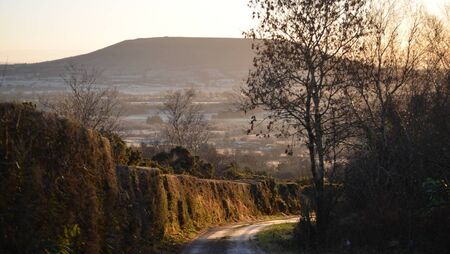
I work in a school that nestles at the foot of the Ox Mountains. Across the road from the school is the village church and each day, at noon, the Bells of the Angelus ring out across the valley. I am not a very prayerful person, but each time I hear the bells, they stop me in my tracks.
Apart from their call to prayer, the Angelus bells offer so much more. They are a symbol of our Christian tradition, they are a reminder of the faithful departed but most of all, they give us a chance to pause for thought. My mother was a great woman for the Angelus and there was hardly a day in her busy 97 years that she did not take the few moments required to recite the prayers that celebrates the Incarnation of Christ.
The Angelus is a set of three antiphons, or little verses, that reflect on the Annunciation; that moment when the Angel Gabriel announced God’s invitation for Mary to be the mother of the Messiah. The Angelus is so called because the prayer was originally said in Latin and the word is simply the Latin for angel. Each of the antiphons are taken from Scripture and each one in turn is followed by a Hail Mary. When the Angelus is prayed by more than one person, a leader says the first part, with everyone else reciting the responses.
The exact circumstances of how the Angelus came about is difficult to pinpoint. A review of Church history shows that the Angelus did not appear suddenly, but developed over several centuries. Most Church historians agree that the Angelus can be traced back to Italy in the 11th century, where monks said three Hail Marys during night prayers, “at the last bell of the day”. According to a brief history of the Angelus provided by the University of Dayton, from early on in its existence, the Angelus was said for peace and safety. How we could do with that right now.
There seems little doubt that the practice of saying three Hail Marys in the evening around sunset had become general throughout Europe in the first half of the 14th century and indeed was decreed an indulgence by Pope John XXII in 1318. It is believed that the saints had a particular devotion to the ritual, leading one faithful commentator to say, “If there’s something simple done by the saints that we can do, it’s likely we can grow in holiness by paying attention to it and implementing it.”
The Bells The Angelus, in the form we know it today, was finalised only in the first half of the 16th century. A theme throughout this prayer’s history is the number three. There are three antiphons, three Hail Marys, and the prayer has been traditionally said three times a day: in the morning at 6am, at noon, and in the evening at 6pm.
There is a pattern to the ringing of the bells that ring out the Angelus: 3-3-3-9. It is sometimes said that the last 9 are rung out on a different bell with a lower tone, but that would be getting fussy. The sequence is fitted to the prayers as follows: three chimes for the first verse and Hail Mary, three chimes for the second verse and Hail Mary, three chimes for the third verse and Hail Mary, with nine consecutive chimes for the concluding prayer. Sister Helena Maria, M.I.C.M., in an essay, , tells us that the bells themselves are greatly reverenced.
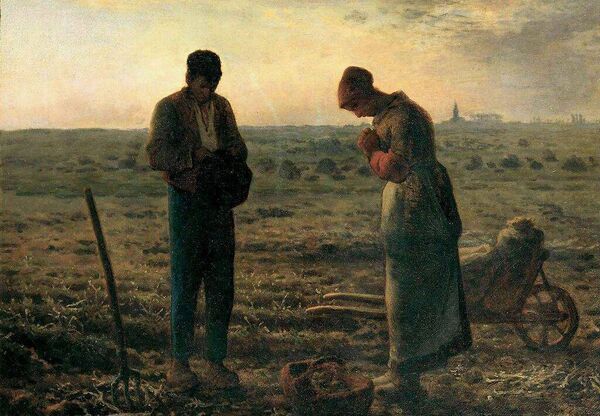
It was common at one time, in old cottages and new bungalows in the Ox Mountain region, to find framed prints of two paintings hanging on kitchen walls. It seems these images appealed because they were typically Irish scenes. One was, The Gleaners, depicting peasant farmers picking the last stalks of corn in a harvest field at evening. The other was known as, The Angelus. Both paintings are by a French painter, Jean-François Millet, and were completed between 1857 and 1859. The Angelus painting depicts two farm workers in a field bowing over a basket of potatoes, while saying the Angelus, marking the end of a day's work. A church spire on the horizon completes the scene.
There is some debate as to whether this painting is connected to the Angelus at all, so the story of its origins is interesting. It seems Millet was commissioned to create the piece by the American art collector, who never came to collect it. It was another artist, Salvador Dalí that first raised questions about the painting. An information piece from Theology Research News, , sets out the details. The piece summarises that, in all probability, it was never Millet’s intention to paint the Angelus in the first place but that changes made later gave the painting notoriety and eventual fame.
I am fortunate to have trekked in the Austrian Alps; the high peaks and fertile valleys make it a walker’s paradise every summer. On one particular day there, a long walk took us up to a high village, the location of a monastery, where the resident monks harvested honey, brewed beer and provided sustenance to passersby. Here also the bells rang out, not so much the Angelus bells, just the bells of the mountain hamlet, bells that echoed and re-echoed across the mountains reminding all who hear them to pause and reflect.
There is an ongoing debate here in Ireland about the Angelus being broadcast by RTÉ. Some say we are now a secular state, catering for the spiritual needs of many faiths and none. Why should a Catholic prayer be forced on everybody twice a day, every day? Others love the prayer and recite it devoutly. Then there are those like myself who may not always say the prayer, but still like to be reminded of the tradition. The ringing bell is not an invasive dictate; it is simply a reminder to pray if you wish.
Outside my school, at noon each day, the Angelus bells ring out again across our section of the Ox Mountains. Their echoes spread a blessing over ancient lazy beds, stony outcrops and mountain meadows. They remind me of old times; the men and women who once worked the fields and who took time out from toil, like the people in Millet’s paintings, to bow their heads in prayer.