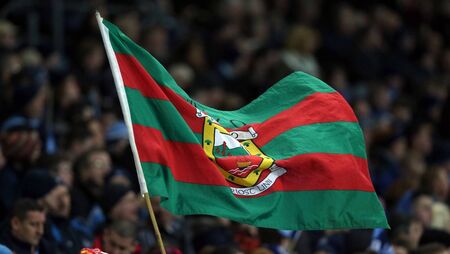
Late goals show why Tooreen will endure
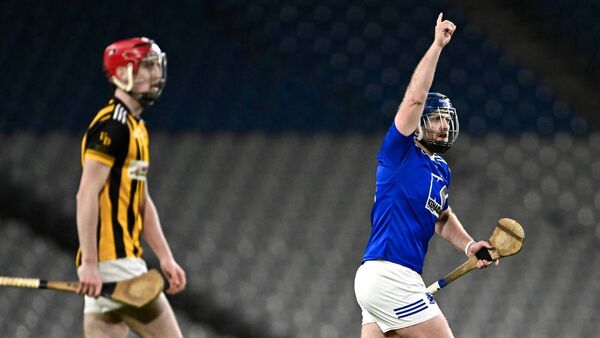
Kenny Feeney celebrates one of the three points he scored in the second-half of normal time in Tooreen's agonising defeat to Upperchurch-Drombane of Tipperary after extra-time in Saturday's AIB All-Ireland Club IFC Final at Croke Park. Picture: Piaras Ó Mídheach/Sportsfile
This will not soothe.
There will have been consolation offered, because there always is. An All-Ireland final. Croke Park in January. Mayo hurling stepping onto a national stage. For many, that would be enough – something to frame, something to revisit fondly once the sharpness of the pain fades.
But sweetness has a way of suffocating. Drowning in honey is still drowning, after all.
Tooreen did not make this journey for perspective, or to be reminded of how far they have travelled. They came to win an All-Ireland, and to make up for the final defeat in 2023. And when that is the only currency, everything else becomes small change. Milestones are ornamental. Occasion is just scenery. The more lavish the setting, the harder it is to ignore what slipped away.
Irish sport has an old reflex in moments like this: soften the edges, praise the effort, insist that the journey matters as much as the destination. It is well meant, but it is also entirely beside the point here. Because teams like Tooreen are not sustained by reassurance. They are fuelled by an unwilting desire to address unfinished business.
When the game went to extra-time, it already felt like something was slipping away for the Mayo and Connacht champions. Not dramatically. Not all at once. Just in the quiet, accumulative way finals have of turning against a side.
Extra-time is where matches strip away the narrative and leave only condition, composure and nerve. This is the stretch where legs reveal all and momentum announces itself without raising its voice. The scoreboard doesn’t shout yet, but it starts to speak plainly.
Goals arrived for Upperchurch-Drombane. The margin widened quickly, then cruelly. Ten points. The ending began to present itself. For most teams, this is where resistance gives way, where the game becomes something to survive rather than chase, where eyes start drifting towards the clock in anticipation of the sweet release of the full-time whistle.
But Tooreen didn’t look away. Not yet.
Three years ago, they stood in another All-Ireland final and left with the same hollow weight, beaten by Monaleen after a day that asked everything and returned nothing. That defeat could easily have been an ending, the sort that convinces a club they’ve brushed against their ceiling. Many would have drifted then, content to remember the run rather than re-enter the grind.
But Tooreen went after the title that slipped away.
They fought their way back into three successive Connacht finals after that – not with a sense of entitlement and not with the indulgence of a team living off reputation, but with the grim persistence of a group that seemed to treat the previous pain like rocket fuel. That dragged them back to an All-Ireland final as if proximity to heartbreak had become a kind of compass.
You start to wonder if comfort would even suit them – if an easy season would leave them restless and under-stimulated. There is something almost devotional in the way they submit themselves to these tests, as if suffering is not an obstacle but a requirement. The more it hurts, the more certain they seem that they are in the right place.
Which is why extra-time didn’t finish them. It merely brought them back to familiar ground.
By the time the fightback began in extra-time, the game had already left them. The margin was brutal. It was the kind of lead that signals closure, that invites resignation, that tells players it’s time to start thinking about hands to shake rather than lines to hit.
That is when Tooreen finally cut loose.
Two late goals arrived not as a plea, but as an interruption. Liam Lavin first. Then David Harrison. Sudden strikes that changed nothing on the scoreboard and everything in the understanding of the team that scored them. The game was decided. They played anyway. Out of habit. This is what they do when there is still a ball to be struck and a net to be found.
These were not desperation goals, flung forward in a blur. They were clean, purposeful acts. These were the sort of scores that come from a side still running its lines, still demanding the ball, still offended by the idea of easing off simply because the ending had been agreed. For a brief moment, the gap narrowed. For a brief moment, the settled narrative wobbled. It wasn't enough to save them, but it was enough to reveal their personality When most teams would’ve folded, Tooreen accelerated into the pain, as if the only unacceptable outcome was silence. And as if the real failure would have been to let the game die without protest.
They have the instinct to keep striking when the strike no longer serves you. There is a refusal to disappear politely. And teams like that don’t fade away after finals. They carry the ending with them and they remember exactly how it felt to keep swinging when everyone else was done.
It would be an easy mistake now to assume this is where the East Mayo club now begin to wither.
Another final. Another narrow escape for the opposition. Another long walk away with nothing tangible to show for it. But that reading misunderstands what has been happening in plain sight.
Teams that fade do so quietly. They retreat from moments. They manage games instead of attacking them. They learn caution. They protect themselves. What we saw instead from Tooreen was a side still striking when there was no reward left to be claimed, still insisting on expression when discretion would have been easier. That is not the behaviour of a group nearing the end of its journey. It is the behaviour of one still sharpening its edge.
Heartbreak, for some teams, accumulates like damage. For others, it acts more like pressure – compressing hurt, hardening it, forcing out the excess. There is nothing fragile about a group that keeps returning to the sharp end of seasons and refusing to adjust its ambition downward.
So, it would be foolish to frame this as a moment of reckoning or closure or weary acceptance. This was not a collapse. It was not a capitulation. It was a continuation.
Because sides that behave like that, that keep swinging after the ending has been agreed, don’t drift away from the picture. They stay in it. They linger. And eventually, the timing changes.