Garrymore and Castlebar prove there is more than one way to be great

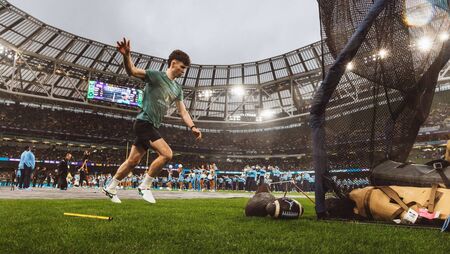
Garrymore's Eoin McGreal, Castlebar Mitchels' Bob Tuohy and Fenton Kelly of Davitts will all be in county final action next weekend. Picture: INPHO/James Crombie
The last time Garrymore met Castlebar Mitchels in a Mayo senior championship county final, few would have thought it would take another 44 years to arrange a reunion. It was 1982, Garrymore had just collected their sixth senior title in a decade, and there was every reason to believe another would come along before too long. As it turned out, the wait would prove rather longer than anyone anticipated.
Castlebar Mitchels, meanwhile, continued accumulating championships, passing the habit of winning from one generation to the next with the quiet assurance of a club that has long considered success part of its inheritance. Garrymore followed a different path, drawing from a far smaller pool of players and facing the challenges of rural depopulation, yet somehow refusing to surrender their place among the county’s leading contenders.
And now, more than four decades later, the old adversaries are back where they left off. Castlebar arrive into this year's decider armed with tradition, talent and enviable strength in depth. Garrymore head into the game as a proud rural club with a remarkable disregard for the limitations that are supposed to come with such clubs. Two clubs shaped by very different circumstances, arriving on the biggest sporting stage in the county.
There is something mildly discourteous about Garrymore’s refusal to fall away. Every year, the same sensible arguments are assembled against them. Their players are another year older, the supply of replacements is hardly inexhaustible and the advantages enjoyed by larger urban clubs become increasingly difficult to ignore. At some stage, they’re supposed to accept the situation, offer a polite farewell and leave the serious business to the larger towns.
Instead, Garrymore keeps winning matches. They’ve been doing it for so long that what ought to seem extraordinary has acquired an almost dull familiarity. Even Castlebar, with all their numbers and pedigree, have already lost to them once in this year’s championship. It is a rather pointed way of reminding people that a football match is not decided by a census.
There is a temptation to dress all this up as rural magic, as though Garrymore have discovered some secret ingredient in the local water. The explanation is less mystical and depressingly uncinematic: competent administration, sensible decisions and people who turn up when they’re supposed to. Try selling that to Amazon Prime.
The years keep passing. The players keep getting older. And Garrymore, apparently oblivious to the passage of either, keeps finding themselves in the conversation.
Castlebar Mitchels have a different sort of problem. When a club has won 31 county titles, people begin to regard another final as less an achievement and more of a routine administrative matter.
The club has advantages, of course. They have a deeper reservoir of players, younger legs waiting their turn and a panel sufficiently stocked to make team selection a headache for backroom teams. But numbers alone have never won a championship.
Castlebar have spent generations doing the less glamorous work of staying relevant: developing players, renewing teams, passing standards from one dressing room to the next until competing for titles begins to feel almost compulsory. And the trouble with building that sort of reputation is that nobody thinks to congratulate you for maintaining it.
Ballina Stephenites have enjoyed the upper hand in recent seasons, while Castlebar have been waiting since 2017 to add another title. So they arrive with more than a trophy at stake. For most clubs, reaching a county final is reason enough to celebrate. Castlebar, you suspect, doesn’t nurture such mindsets.
Yet strip away the differences in population and playing resources, and the distance between these two clubs begins to shrink. For all their contrasting circumstances, Garrymore and Castlebar have spent generations trying to solve essentially the same problem: how to ensure that a good football team is not merely an occasional accident.
In Castlebar, there is the constant business of renewing success, of making sure a rich tradition doesn’t become a museum exhibit. In Garrymore, migration trends have made the same work all the more important. The margins are smaller, the resources are thinner, and the room for waste is almost non-existent. Yet both clubs understand that yesterday’s reputation is of limited use when somebody comes charging at you with a football tomorrow.
Castlebar has become remarkably good at making the most of having plenty. Garrymore has become remarkably good at making the most of having less. There are different ways to build a great football club, and neither has a monopoly on the answer. For all the differences between them, perhaps the most revealing thing about Sunday’s finalists is how much they have in common.
Of course, all this mutual admiration will be of precious little comfort once the ball is thrown in this weekend. County finals are notoriously indifferent to good governance, admirable traditions and the tireless efforts of voluntary committees. There are no bonus points for community spirit, and the GAA remains, beneath all its worthy talk of belonging, a remarkably efficient means of making entire parishes miserable.
Having already beaten Castlebar in the group stage, Garrymore will hardly regard doing so again as a breach of etiquette. Castlebar, meanwhile, have had several weeks to consider that particular indignity and will be determined to ensure it remains a footnote rather than the defining episode of their year.
By Sunday evening, one club will have its reward. The other will be offered sympathy, consolation and the usual assurances that their day will come. These are generally delivered by people who have just enjoyed one of the finest afternoons of their lives.
There will be handshakes and speeches and generous tributes to the defeated. Everyone will agree that both clubs have done Mayo football proud, a lovely sentiment which will be of limited comfort to the men staring at their boots in the losing dressing room.
Yet whatever Sunday brings, there is something admirable about two clubs that have made excellence a habit in such different circumstances. Both have discovered their own way of remaining among the best, and neither has much reason to envy the other’s methods.
There is, after all, more than one way to build a great football club. The particular cruelty of Sunday is that only one of them will get to celebrate it.