Relics of old decency from a bygone age
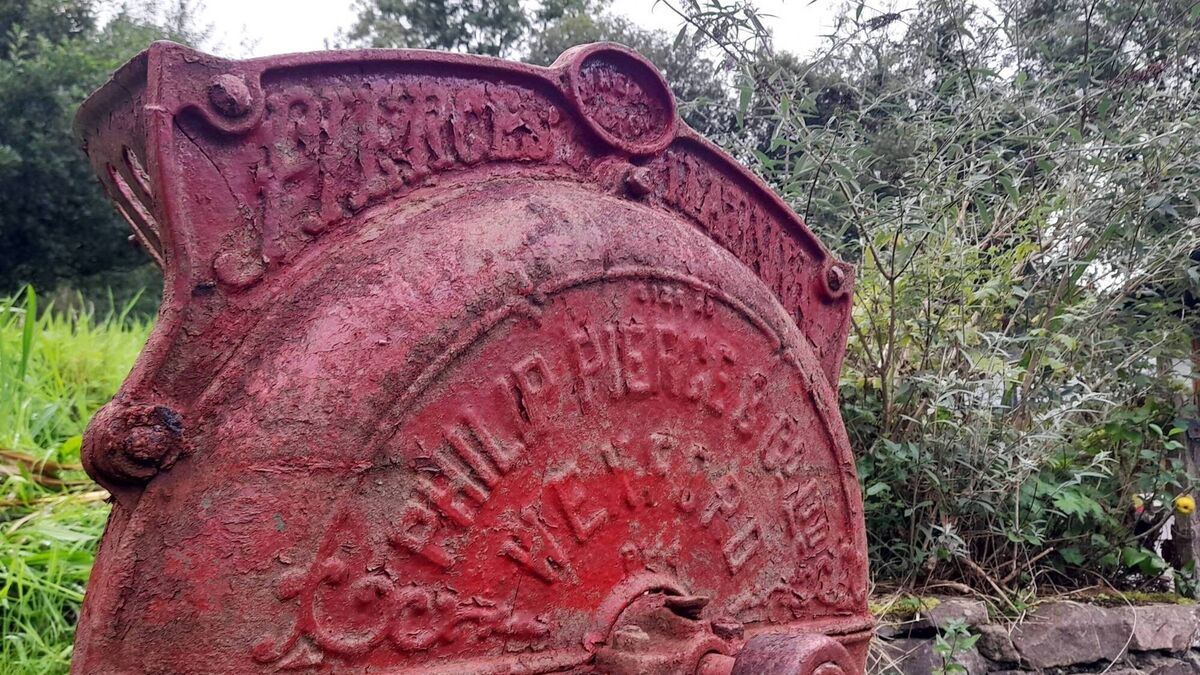
Beautiful decorative wording - referencing its manufacturer, Pierce's in Wexford - was emblazoned on the machine.
I recently came into the ownership of an old farm implement that was once a proud possession of father. Commonly known as a pulper, this old cast iron contraption had been in everyday use around home during my childhood. I never gave it much thought back then but now, when I look at it, I see it as something much more than a gadget for chopping spuds for cattle, it’s a relic of old decency.
In essence, a pulper was a hand-operated hopper on legs, with an internal set of slicing blades, that was used for chopping potatoes, turnips and beet. These implements were built simply, with ease of operation in mind, but they were built of long-lasting cast iron and the finest steel.
From Prehistory to Middle Ages, early farmers used basic wooden digging sticks and stone-bladed ploughs to clear the land and break the soil. Simple flint sickles and later iron-forged scythes allowed humans to cut wild and domesticated cereals close to the ground and the grains of such cereals were separated from stalks by being beaten with a wooden flail on an earthen floor.
Later, in an era known as The Age of Leverage and Hand-Cranked Innovation, in the 18th to 19th centuries, there were further advances. Hand-pushed hoppers dropped seeds into the earth as operators squeezed release handles. Hand-cranked mills used rotating fans and wire screens to separate grain from lighter chaff. Hand-operated chaff cutters, turnip choppers, and manually driven butter churns further reduced everyday labour.
Many of the advances in farm machinery took place during or as a result of the Industrial and Agricultural Revolutions. The growth in population, as well as innovations in agriculture and industry, spurred on both innovators and manufacturers in an effort to create machines that would increase production and save time. While most of these developments happened in England, Ireland also benefited, albeit in a reduced and less adventurous way. Put simply, our land was poorer and our crops were smaller. Not withstanding this, innovations were embraced and adapted and labour that was hard repetitive work was reduced wherever possible.
Ironmaster, James Pierce, of Wexford, was born in 1813. He established the Pierce Iron Foundry there 1839. After his death the business was carried on and developed by the brothers Philip, Martin and John, to become the largest iron foundry in Ireland.
An illustrated talk delivered by Myles Miller a number of years ago, gave an insight into the rise and fall of Pierce’s Foundry. It discussed the circumstances around the firm’s formation in the mid-19th century and looked at its rise from humble beginnings to its eventual decline and sale by the Pierce family in the 1960s. Miller explains:
Those terraced house and church railings are not the only items that remain of the Pierce foundry; implements can still be found on many farms and in homes throughout Ireland. Pierce of Wexford manufactured a whole host of farm machinery - horse-drawn mowers and all manner of other haymaking and harvesting machines. Most of this farm machinery made by Pierces is no longer in use; some are restored and exhibited as artifacts while others languish in a state of dilapidation in the hedges and gaps of mountain fields. The pulper, which I just inherited, was designed and manufactured by Pierce of Wexford.
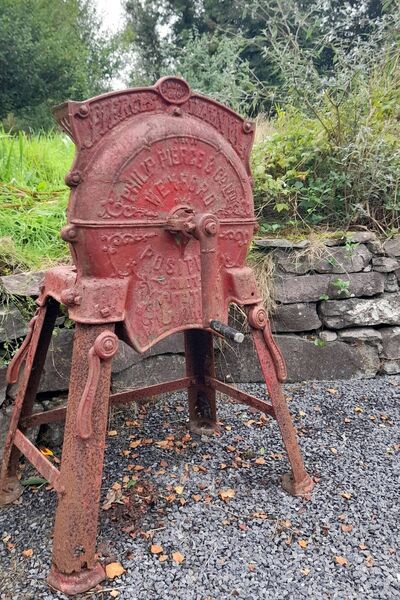
The free-standing, hand-operated pulper did as the name implied; it made pulp of whatever tubers or roots were dropped into its hopper. A turning handle at the front allowed the operator to circulate the internal cutting blades and the pulped contents tumbled downwards into a waiting basket or basin. While it was a simple enough operation, it frequently took a fair degree of force to get the desired result. A grown man could manage the task easily enough but as a child, I remember fighting with the process in an effort to get the expected result.
My father loved his pulper, or Positive Root Activator, as it was officially named by its manufacturers. Not every animal around our house got pulped spuds and barley meal, but some did. These were my father’s special cases, like the cow he hand-milked for the house or the missed heifer that he was fattening on death row.
His routine was to wash the spuds or turnips by streaming water over them through an oversized willow basket which was laid on top of a large tub. The basket’s contents would then be shaken dry before being pitched into the pulper. Handle turned and spuds pulped, the awaiting wide-mouthed receptacle underneath filled with perfectly proportioned pieces of potato. A couple of handfuls of this mixture, topped off with some barley meal, made a very wholesome snack for any beast.
I mostly remember my father washing spuds and pulping them in this way on cold winter evenings. He loved the ritual of work. In this exercise he was ticking boxes all over the place; his own spuds grown with great pride, his own hand-made basket for straining them, his beloved pulper chopping them into perfect bite-size pieces, and feeding his own little handy cow, which he milked morning and evening for the family table. Traditionally, the woman of the house got much credit for lovingly feeding the family but the men, who did a similar job in the outdoors, often in poor weather conditions, were sometimes overlooked in the efforts they made, and the love they showed, in caring for their animals.
The old pulper, despite its quality Pierce foundry makeup, has suffered with the passing of time; its blades are dull and its swing handle is stiff. The old legs are getting light with rust and there is a crack in its cast iron back. My mother’s efforts to keep the old pulper looking cheerful over the years, with numerous coats of paint, have probably ensured that the old machine has held together, but her actions have also somewhat obliterated the beautiful decorative wording emblazoned on it once proud face: NEW VICTOR – PIERCES MARVEL – PHILIP PIERCE & Co Ltd WEXFORD – POSOTIVE ROOT ACTICATOR.
I have yet to decide how to exhibit the pulper; will I plant a few seasonal flowers in it each year, will I try to dig off some of the coats of paint that my mother covered it with, or will I just leave it as it is. Maybe I will just place it along some wall where I can see it often as I pass by. I know that each time it catches my eye, it will remind me of my parents and their individual personality traits; my father’s industrious yet caring nature and my mother’s ability to always keep the good side out.