Winter is not complete without a little snow
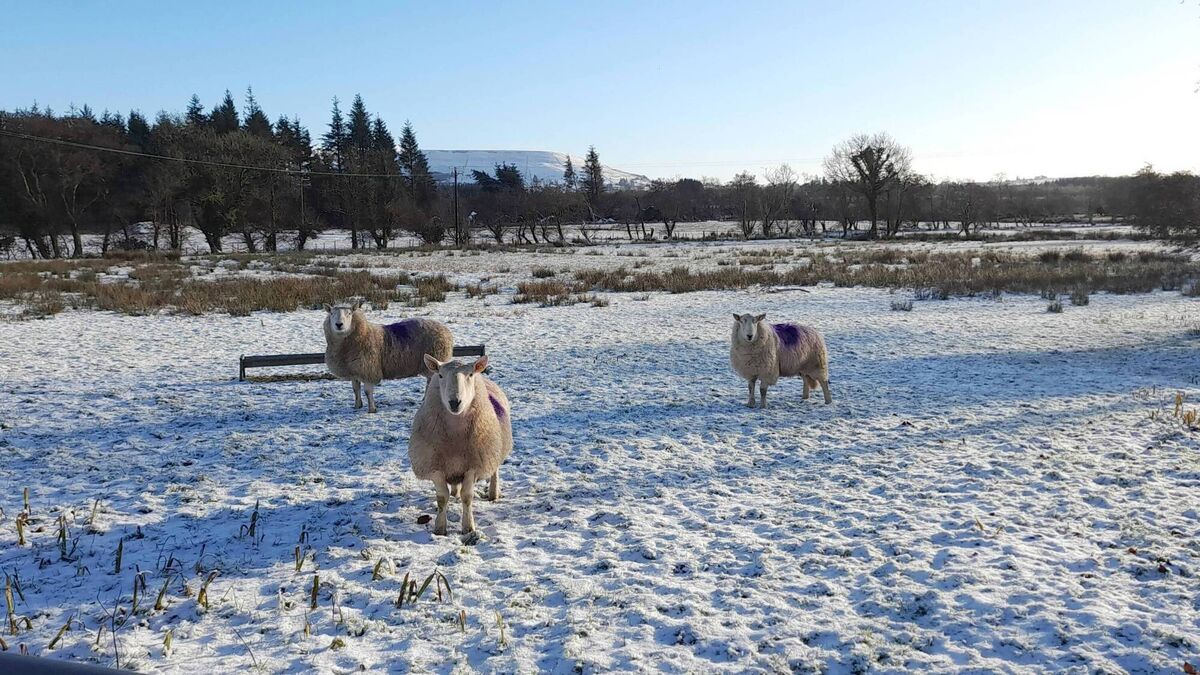
Packed snow acts as a frozen reservoir that stores water during the winter and releases it slowly in the spring and summer. Picture: Pat McCarrick
I love snow. We are probably in the perfect global location in the Ox Mountains for snow to always be a novelty. I know it can be a pain in the neck at times, now that we all have such busy lives and so many places to be, but snow does paint our world a different colour for a few days each year and, I for one, am okay with that.
I had two days off work in recent weeks because of snow and it gave me time to reflect on the one form of precipitation that never fails to amaze us. One day we are living in a world of green and grey, the next, everything is highlighted in pristine white.
It was the great weather forecasting phrase at creamery platforms or in the pub, especially if a sharp east wind was blowing. Forecasting snow is not the same as forecasting rain; anyone can predict rain, but it takes a keener observer of atmospheric conditions to know that snow is on the way. He might counter that it is too cold to snow at present, but give it a few days and… there’ll be snow.
Snowflakes are unique, six-sided ice crystals formed from water vapor freezing onto atmospheric dust, growing as they fall through changing temperatures and humidity, which dictates their intricate, symmetrical patterns. Each snowflake's journey through different atmospheric conditions creates a unique snowflake, resulting in diverse shapes, even though they always maintain their six-fold symmetry. The variations in temperature, humidity, and air currents that a snowflake encounters during its fall ensure that no two are exactly alike, making each a tiny, frozen story of its journey to earth.
Snow and hail are not from the same precipitation family. Snow consists of delicate ice crystals forming from water vapor in cold clouds, while hail forms as solid ice, or frozen raindrops, built up in layers by strong updrafts in thunderstorms, often in warmer seasons. Snow is fluffy but hail is hard. The key difference lies in formation: snow is direct water vapor freezing into crystals, whereas hail involves liquid water repeatedly freezing into ice pellets within a storm clouds. Snow falls in cold, wintery conditions; hail can fall at any time, even in warm weather.
It could be said that the snow we get in and around the Ox Mountains is not real snow at all. It is just a token display that is visited upon us every so often, with a decent fall occurring about every ten years or so. Real snow falls in places like the Alps and the Rocky Mountains and is predictable and deep. It leads to a particular way of life; snow tyres, ski slopes, and avalanche warnings.
A paper issued by Aidan Murphy of Met Éireann (2018), , has some interesting statistics about our encounters with snow over the centuries. Murphy starts with some general information.
Interestingly, the West of Ireland features high in the league table of snow depth because of various storms over the decades. For example, Belmullet had 17cm on January 24, 1958 and Claremorris had 20cm on January 27, 1984. The deepest snow recorded in Ireland in recent years is only 45cm at Casement Aerodrome near Dublin on December 31, 1962. These recordings are from weather stations, not high mountain basins, but they do point to the fact that, in general, we seldom experience serious snowfall. Notwithstanding this, Murphy highlights years when snowfall did impose considerable hardship on the population, among them the year 1807.
Global snowfall information is interesting and throws up a few interesting facts. Snow covers over 100 countries seasonally, with the winter snow in the Northern Hemisphere sometimes covering almost 50 million square kilometres of ground. Climate change is leading to less snow in many regions, such as the United States, which is receiving 33% less snow than it did in the 1970s. Japan is recognised as the world's snowiest country, with some cities getting over 26 feet annually. This phenomenon occurs due to moist air from the Sea of Japan hitting the country’s high mountain ranges.
Often known as the Third Pole, the Himalayas are another key snowfall location. Recent years however, again shows a decline, with 2022-23 seeing less snow in winter but more in spring, highlighting regional shifts. Mount Baker, in the US, holds the record for a single season with 95 feet recorded in 1998-99. Georgetown, Colorado, received just over five feet in 24 hours on December 4, 1913, a US record.
Apart from the obvious beauty of a recent snowfall, snow has countless gifts to bestow on our planet. Snow acts as an insulating blanket for the ground, protecting soil, plant roots, and dormant animals from extreme cold and predation. Snow reflects almost 90% of incoming sunlight back into space. This prevents the Earth's surface from absorbing too much solar radiation, helping to keep the planet cool.
Packed snow acts as a frozen reservoir that stores water during the winter and releases it slowly in the spring and summer. As snow falls, it collects nitrogen and other particulates from the atmosphere, acting as a natural fertiliser when it melts, often referred to as "poor man's fertiliser".
My father was a great man for snow. Like myself, he liked the novelty of it. Even though it invariably made his farm tasks more difficult, he seemed to have a certain forgiveness for snow - if it didn’t linger too long.
I always loved to hear his stories of the Big Snow in 1947 - and he loved to tell them. It was like he had been on some strange adventure and had survived to tell the tale, a bit like Tom Crean returning from the South Pole. He talked about the six-week long advance freeze, the eventual snowfall, the subsequent blizzard, the weeks of clearing paths, sledging the ice-covered Moy and ferrying river water to thirsty, house-bound cows.
As well as all the practical benefits of snow, there are personal benefits. Apart from the joy of waking up to a snow-covered landscape, my favourite snow sensation is standing in falling snow, in the dark. Try it sometime, alone or with your child. On a calm night, as snow begins to fall, feel those perfectly formed flakes fall gently on your face as you gaze into the darkened heavens, and listen for the tiny whispers of the snow as it softly falls through leafless trees.