Fuel protests were nightmare vision of future
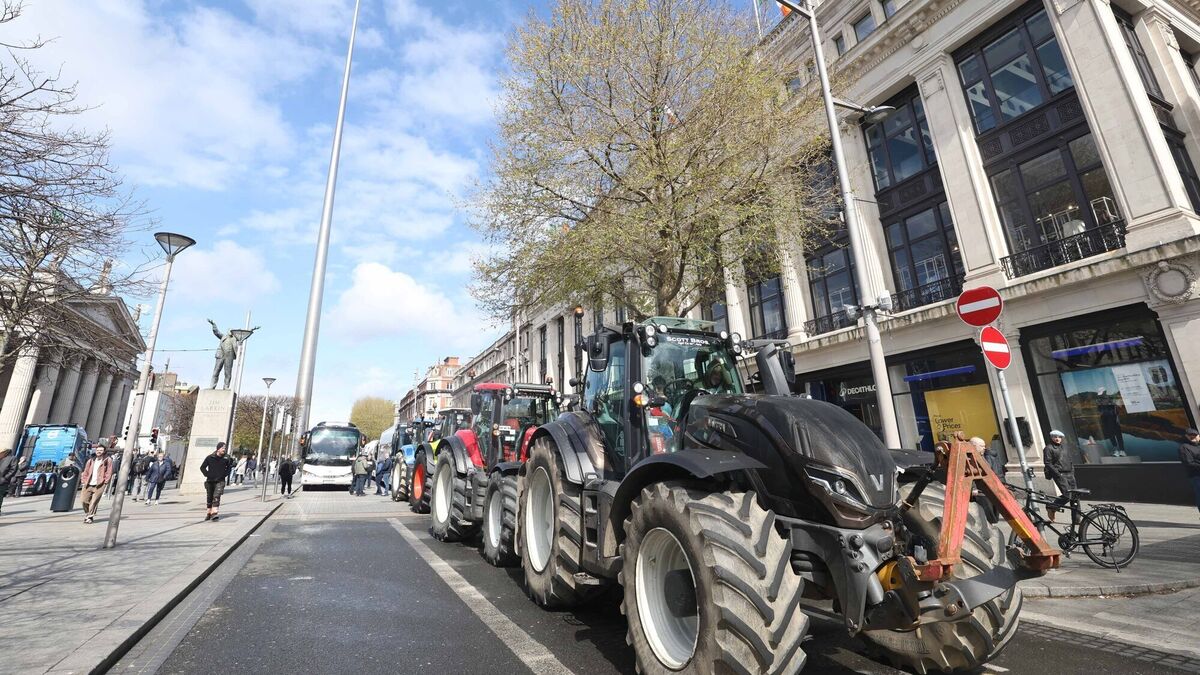
Tractors parked on O'Connell Street in Dublin during the fuel protests earlier this month. Picture: Leah Farrell/©RollingNews.ie
We’re living in a time of great global uncertainty. We’ve witnessed it in the horrors from Gaza, Ukraine and Lebanon being relayed on our television screens. We’ve witnessed the devastation of property, homes, jobs and in the horrors of death, especially the sufferings of innocent children.
These sights speak of a world where might seems to be right, where money is what ultimately matters and where power is exercised often without the guidance of a moral compass. Pope Leo called it out recently when he said: "The world is being ravaged by a handful of tyrants, yet it is being held together by a multitude of supportive brothers and sisters."
The truth be told some of our brothers and sisters are paying more than others. Here in Ireland, so far we’ve escaped the worst of it. Most of us live in reasonable comfort in one of the richest countries in the world where holidays are often taken for granted, where cars are available to most families, where economic circumstances provide a level of comfort and well-being that our grandparents, even our parents, could scarcely have dreamt of.
We’ve got used to it. We take it for granted. Indeed we now feel entitled to a reasonable standard of living – whoever pays for it – and when it’s in danger of being threatened or taken away we feel aggrieved, as do those who aired their grievances recently in what will forever be described as the ‘Blockade of 2026’.
Maybe it’s time to have a closer look at the 'Blockade of 2026’, its truths, half-truths and convenient embellishments. First, the right to protest was well and truly established. That’s fine. It’s an important right that needs to be unambiguously cherished. But as an exercise in democracy, it fell well short of the ideal. While it established one democratic right, it did so at the expense of diminishing, even at times extinguishing, the democratic rights of others.
The blockade, effectively, took over the country, facilitated by a government asleep at the wheel. It shouldn’t have. It brought the country to a standstill and claimed the right to an authority way beyond any constitutional remit. Protest is a right but it’s not an absolute right. And how protest is executed matters.
The protestors were from many different organisations and interest groups – farmers and hauliers struggling with sudden soaring prices, individuals and families dealing with a cost of living crisis, some with legitimate and reasonable grievances and others with overtly political aims and ambitions, including anti-migrant activists and others talking up ‘revolution’, and others again encouraging mock confrontation between urban and rural Ireland.
And then, of course, there were the politicians with their eyes firmly set on votes in the next election, cheerleading the blockaders at every available opportunity though reluctant to point out the crucial imperative of not undermining those in authority in the state. Old warhorses like Bertie Ahern and Seán O Feargáil, looking for attention; young thrusting TDs taking the opportunity to make their mark; others like the Healy-Raes panicking that in holding on to power such as it is they might lose more in the long run; Mary Lou reduced to explaining to the Dáil how brave she was though her courage didn’t extend to pointing out the primary authority of the office she is so intent on occupying; and finally those with the reins of power (Micheál Martin and Simon Harris) who take to the higher moral ground by holding up to the light the mix of a motley crowd of genuine citizens, migrant conspirators, and not least the owners of classic John Deere or New Holland tractors who insist, regardless of the inconvenience to others, on parking them wherever they would most inconvenience the travelling public going about their business.
So it didn’t really seem to matter if as a result of the blockade medical appointments were missed or treatments for cancer victims had to be postponed or if people didn’t get to work or home helps couldn’t get to the vulnerable elderly whose essential needs they usually attended. The great and the small necessities of people’s lives were casually brushed aside by the leaders of the blockade.
As an indicative comment of one of the main spokesmen of the blockade, the indelicate Christopher Duffy, whose reaction to a worry about the environmental activist, Greta Thursburg, was once framed: ‘I couldn’t care less if she got raped or beaten and I make no apology for saying that’, is indicative of a quality of leadership that doesn’t warrant even being placed in charge of a henhouse. It sets in due perspective the sad plea of genuine supporters of the blockade who argued in good faith that the protesters were all ‘good people’.
While I have no doubt but that there were many genuine and upright people who were honest participants in the 'Blockade of 2026', the jury isn’t still out debating the characters of the main players. I suspect that like many other more public participants, leaders of the blockade were sought out not on the basis of character reference but in the lower reaches of toxic social media.
Is it not permissible to ask this obvious question: under what legal or other rubric did the self-appointed leaders of the blockade claim the authority to subject, for example, the rights of the elderly, the fragile and the vulnerable to such dismissive, offensive, unthinking disregard? Or who or what gave them permission to attack or abuse the members of An Garda Siochána?
In a classic column in , the incomparable Fintan O’Toole, as he does so often with such verve and authority, cut to the chase:
"We’ve been here before through the long history of militant Irish republicanism with attacks on the legitimacy of democracy itself. It posits the existence of a superior group that is purer and more authentic than the rest of the citizenry and that therefore has the right to enforce its will. As Geoghegan (one of the leaders of the blockade) crowed in , ‘It’s in our hands, we call the shots. Whatever we decide to do is what everyone one else will do’."
What O’Toole described succinctly as a future for Ireland with ‘big wheels being driven over democratic norms’ is the stuff of nightmares.