The need to protect our children online
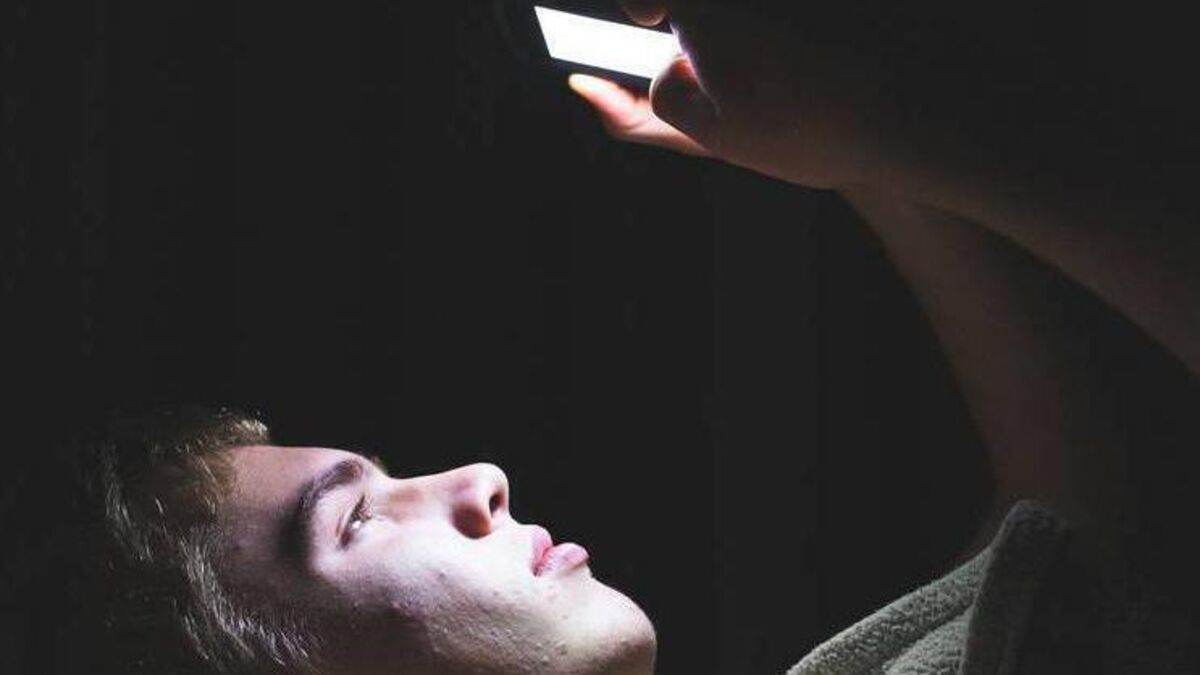
The number of teenagers experiencing sleep deficit is soaring due to smartphone usage.
We are at a critical point for our children’s mental and physical health when it comes to technology, social media, smartphones and all that goes with it.
When you hear from people at the coalface, both professionals and parents of older children who have already walked this path, you get a great insight into the potential troubles ahead and the need for collective action.
I myself am fortunate to be part of a newly-established group, the Achill Smartphone Free Childhood group. The stated aim of the group is to ‘support our children’s wellbeing and help them enjoy a safe, balanced, and happy childhood - free from the pressures of smartphones, social media, and age-inappropriate content’.
The mechanism for this is a voluntary agreement that parents can sign up to to agree to delay giving their children their own smartphones and access to their own social media channels whilst in national school, as well as respecting age-appropriate gaming.
But beyond that we are simply hoping to have a more conscious and collective discussion around something that has insidiously crept into our lives and find the best approach. There is strength in unity in this regard too and it is clear that many parents feel the same way (93% of Achill parents surveyed before Christmas were in favour of withholding purchasing a smartphone for their child while in national school).
Last week we hosted an event with expert speakers which was at times alarming in terms of the real dangers children face online but also very empowering about what parents can do both individually in their homes and collectively as a community.
Included was Emmet Major, one of the leading youth workers in Connacht, whose work on the Planet Youth survey of young people in Mayo is extremely instructive across so many issues.
Deputy Keira Keogh is the Chair of the Joint Oireachtas Committee on Children and has been a strong and passionate advocate on this topic. Community gardaí Shane Nallen and Padraic O’Connor talked about the real problems they encounter in their work arising from social media while Hilary O’Connor, a driving force behind the establishment of a similar group at the Quay NS in Westport, explained how such groups can make a profound difference.
However, a contribution from the floor, from Dr Noreen Lineen-Curtis, an experienced GP in Achill, brought home the simplicity of it all. She is also a parent who is, as she described it, ‘thankfully out the gap’ as her youngest is 18.
Speakers had repeatedly stressed the importance of ensuring that if children or teenagers have phones, they should keep them out of the bedroom.
“Keeping it out of the bedroom, I couldn’t agree more. As a GP I’ve dealt with so many issues that just didn’t need to happen if the child just didn’t have the phone or didn’t have the phone in the bedroom, the problem just wouldn’t have happened and I’ve dealt with that so many times through my working career in the last 10 to 15 years.
“There’s obviously huge benefits to the smart world and the digital world... There’s huge advantages but for our children, they’re not ready and they do not know how to deal with all of this and we have to protect them, that’s our job,” she said.
It was a great summary. The online world is here and we cannot completely insulate our children from it, whether we want to or not. It has many benefits and is a wonderful tool for learning and connection.
But its dangers are becoming ever clearer and when and how we let our children enter different spheres of online is something we have to think carefully about.
For many parents, it has felt like trying to stop the tide and almost unknowingly, the ages at which children encounter content and platforms they should not be accessing has lowered while the amount of time they are spending online has stealthily increased.
Through his involvement with the Western Region Drug and Alcohol Task Force and as the Planet Youth project co-ordinator in Connacht, Emmet Major is one of the best-placed individuals to comment on the change that has taken place.
Every two years, every secondary Transition Year or Fifth Year (if they skip TY) student in Mayo fills out the Planet Youth survey.
It is such a bountiful guide into the challenges and issues facing young people nowadays not in some abstract location but in our own communities. It is freely available online and ought to be required reading for all parents.
It explores substance use, wellbeing indicators, home life, school life – everything and anything to do with a young person’s life and provides invaluable data in terms of where the problems are and how they should be acted upon from an educational, health and societal perspective.
Emmet revealed that a substantial spike had been observed in time spent on social media among Mayo teenagers and the number of teenagers experiencing a sleep deficit (less than six hours a night) was also increasing at a worrying rate across the last six years. Lack of sleep is, he said, the biggest preventable health issue. That’s because 80% of the respondents have their phone in their room at night (down from 83%) but if those percentages could be flipped to 80% not having the phone in their bedroom at night, ‘we would have a much happier, healthier bunch of kids’.
“When you are giving the phone, it has to come with the rule that it won’t be in the bedroom at night,” he urged. “And if you have to have the whole house do it, that’s good too because we’re all struggling with it,” he added.
He has considerable data from teenagers about what they would say to their younger selves about the phone and they had so much to say about what they would do differently and that they wouldn’t want the phone as young as they got it.
He revealed that the 2024 survey showed 36% of respondents got their first smartphone at ten or younger. That’s a frightening statistic in my view.
“The idea of a no smartphone agreement... Parents can do a huge amount. I would have taken your hand off for that. My kids are older now. At the time I would have been thrilled if this was available, I really would," he added.
Deputy Keira Keogh spoke comprehensively on the topic and urged parents to delay giving a smartphone.
“The first thing you can do is delay the smartphone access. If you do have a smartphone in your house or any device, make sure it is not in the bedroom or any private place, use as many parental controls as you can; maintain open communication with your children. This is their world, they want to be here, if they can talk to you about it, that’s the big step,” she said.
Hilary O’Connor spoke about how this is not a judgement, that all parents are finding this journey difficult.
“We’re not saying how could you give your child a phone? We’ve all been hoodwinked in lots of ways. These phones have come into our lives, they’ve snuck in in the dead of night as far as I’m concerned.
“This has been a social experiment and our children were used for it. We’re not experts, we’re just trying to get through the day. Now we know better so we should do better.
“We know algorithms are recommending inappropriate and dangerous content. Our kids aren’t looking for this stuff but it is coming up. Imagine the scenario years ago where your child went into a newsagents’ for a comic and came out with a soft-porn magazine underneath it that the newsagent had given? It’s just unbelievable that this is happening.”
That is a very good analogy for what is happening.
Garda Shane Nallen and Garda Padraic O’Connor spoke about the dangers posed by inappropriate and explicit photos being sent. It was absolutely frightening. This was not on the other side of the country but here in Mayo. Some of the particular stories the gardaí told were staggering.
One key principle Garda Nallen impressed was around the bedrooms, a massive takeaway from the evening.
“Keep the phones in shared family spaces. Keep the phone out of the bedroom. It is pivotal... They won’t take a naked picture of themselves in front of you in the living room or the kitchen.”
Such cases may be rare but do happen and the wider impacts were made very clear on the night.
Parents can take back control and it is clear with the growth of such groups around the county (Ballina, Erris and Westport that I am aware of) and around the country that it is underway.