The colourful lives of our majestic trees
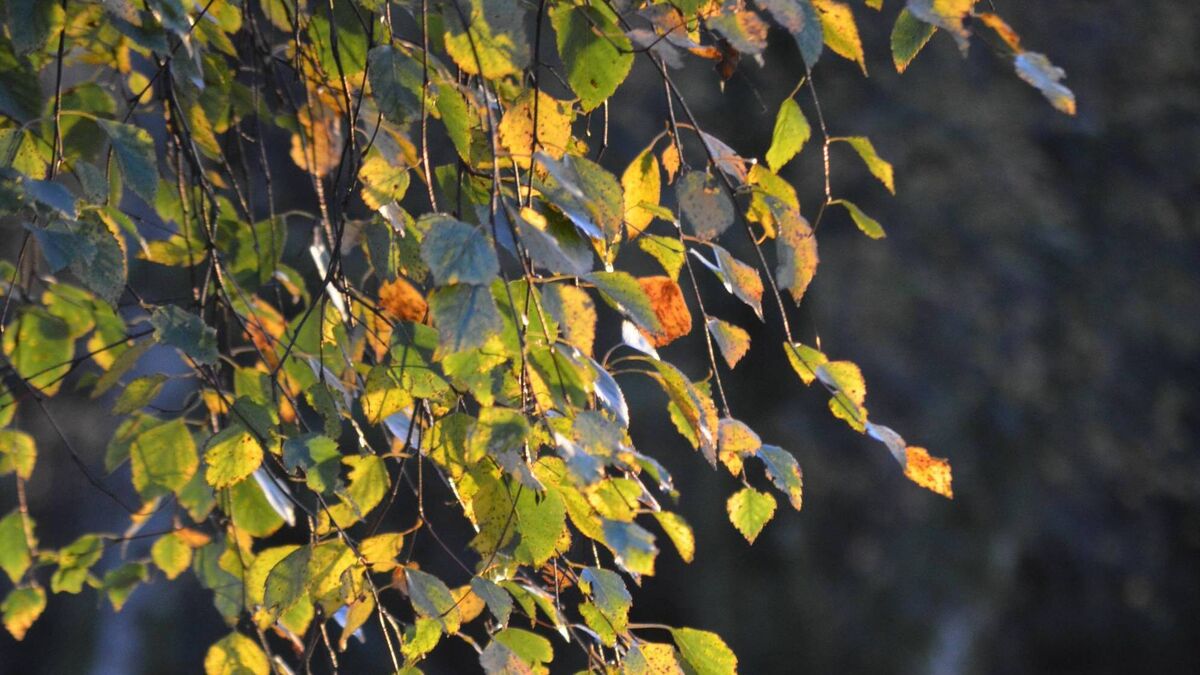
In Autumn, hidden pigments are revealed, creating colours of yellow and orange. Picture: Pat McCarrick
People see trees in many different ways; some see them as a source of timber, shelter from the wind, shade from the sun or some kind of nuisance that either spoils our view or litters our driveway with leaves. All too often we take trees and their way of living for granted.
It is difficult to ignore trees at this time of year as they colour up for autumn. This year, more than another, their leaves seem to be that little bit more colourful and the trees seem to be holding on to them that little bit longer. Maybe they are holding on to the memory of a better than average summer or simply reluctant to drop their colourful cloak in the face of approaching winter.
One of the first lessons in school biology is the life cycle of the leaf. It is, after all, the story by which most plants live and die. While not wishing to remind readers of boring botany lessons given in cold science labs, reviewing this particular lesson, as adults, might do no harm. It seems to be a lesson that has been largely forgotten the world over with some devastating results for the planet.
In telling the story of the tree, it might seem logical to start at the bottom but I will start instead with the transient element, the leaf. The life cycle of a deciduous leaf moves through many stages. Next year’s leaves form during the previous summer. Having survived winter, the warmer temperatures and lengthening days of spring prompts these buds to open up, allowing new leaves to unfold. By summer, these leaves reach full size and each one begins to operate like tiny solar-powered food factories. Using chlorophyll, its green element, the leaf captures sunlight and combines carbon dioxide and water to produce food for the tree while releasing oxygen to the air.
In autumn, shorter days and cooler temperatures signals the tree to prepare for leaner times. The tree cuts off the supply of nutrients to its leaves. As chlorophyll fades, hidden pigments are revealed, creating colours of yellow and orange, while trapped sugars produce bright red and purple hues. Then, the leaf detaches and falls to the ground, conserving the tree’s energy and preventing Ox Mountain storms from breaking their branches. Fallen leaves form a protective carpet over the woodland floor where earthworms, beetles, fungi, and bacteria break down the organic material. This decomposition process releases vital carbon, nitrogen, and minerals back into the soil to nourish new growth.
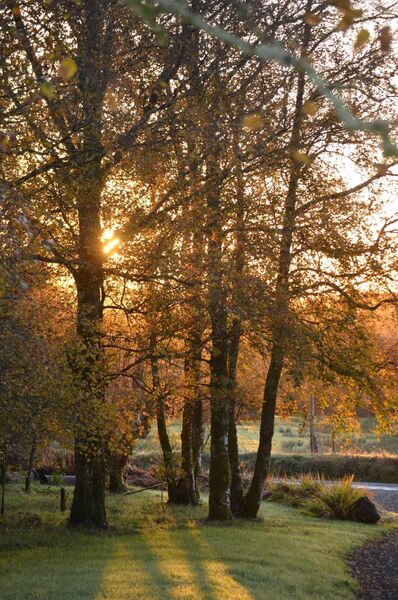
The life story of the leaf, while interesting in itself, is accompanied by a million communications from a tree’s roots and branches. It is little wonder that key words such as ‘roots’ and ‘branches’ are commonly associated with our own family structures; the telling of our stories and the sharing of our accumulated familial knowledge.
Roots are essential to a tree's survival, making up almost 50% of a tree’s weight and acting as its life support system. Tiny, hair-like roots, located in the top few inches of soil, soak up water and essential minerals. Without them, a tree cannot feed itself or fuel the photosynthesis taking place up above. Larger roots act as a massive underground anchor; bracing trees against heavy winds. Roots function as an emergency department, storing surplus carbohydrates and sugars which the tree relies on to survive winter dormancy.
Branches are also a vital element of a tree because they act as the support system for leaves, holding them up and allowing them to capture maximum sunlight. Branches and the trunk are a dual carriageway that transports water, minerals, and manufactured sugars back and forth between the root and the leaves.
Branches also spread out the physical weight of the canopy, flowers, and fruit, while helping the tree handle environmental stresses like rain. They provide the necessary platform for flowers, pollen, and seeds to develop, enabling the tree to reproduce. If a branch is damaged or diseased, the tree can actively seal it off at the branch collar to prevent infection or decay.
Like ourselves, most trees work best in a community. A lone tree is vulnerable while those that stand together are more supported, even to the extent to exchanging vital information with each other.
, a best-selling book by Peter Wholleben, reminds us time and again how fascinating and how valuable trees actually are. He reveals astonishing discoveries about the social networks of trees and how they communicate with each other. He also suggests that the ancient wisdom of trees might well have something to offer mankind as we battle global warming.
Wholleben explains that in a drought situation the roots of a horse chestnut tree that stands alone work differently to those of the same tree situated in a larger group. The roots of the lone tree sends out a panic message to trigger leaf shedding while the group seem to deal with the same drought by calmly reassuring each other that there is safety in numbers and they continue as normal.
While the coloured leaves of autumn have become more noticeable here in Ireland in recent times, with the roadside planting of maple and American oak, the attraction of coloured leaves is best known in North America. There, they give rise each year to a whole tourist season, known as ‘Viewing the Colours’ or ‘Leaf Peeping’. Well appointed hotels and mountain hostels are swarmed at this time of year by enthusiastic viewers and photographers.
The seasonal colourful transformation in North America is most brilliantly displayed in the mountain areas of New England, the Great Lakes, and the Appalachian Mountains. These particular regions are famous for having some of the most vibrant autumn foliage displays on Earth. Species like the Sugar Maple create a complex mix of scarlet, orange, and amber. Sunny autumn days combined with colder nights to create the ideal conditions for the production of spectacularly coloured leaves.
But let us not forget our own trees, the beech and the birch for example. These are our native trees and given ideal conditions, they too can put a display of colour and beauty. Now that we are being presented with a period of cool, clear and calm weather, they remind us that we don’t have to travel the earth in search of miracles.
As I often recommend, take a little time, get out to the woods and enjoy nature. Kick a few leaves and savour the wisdom of trees. It is an ancient wisdom, a bit like the wisdom we have in our own DNA. Sometimes, we just have to stop and read the signs, stop and listen, stop and enjoy.