Mayo GAA plans for a CEO a positive step
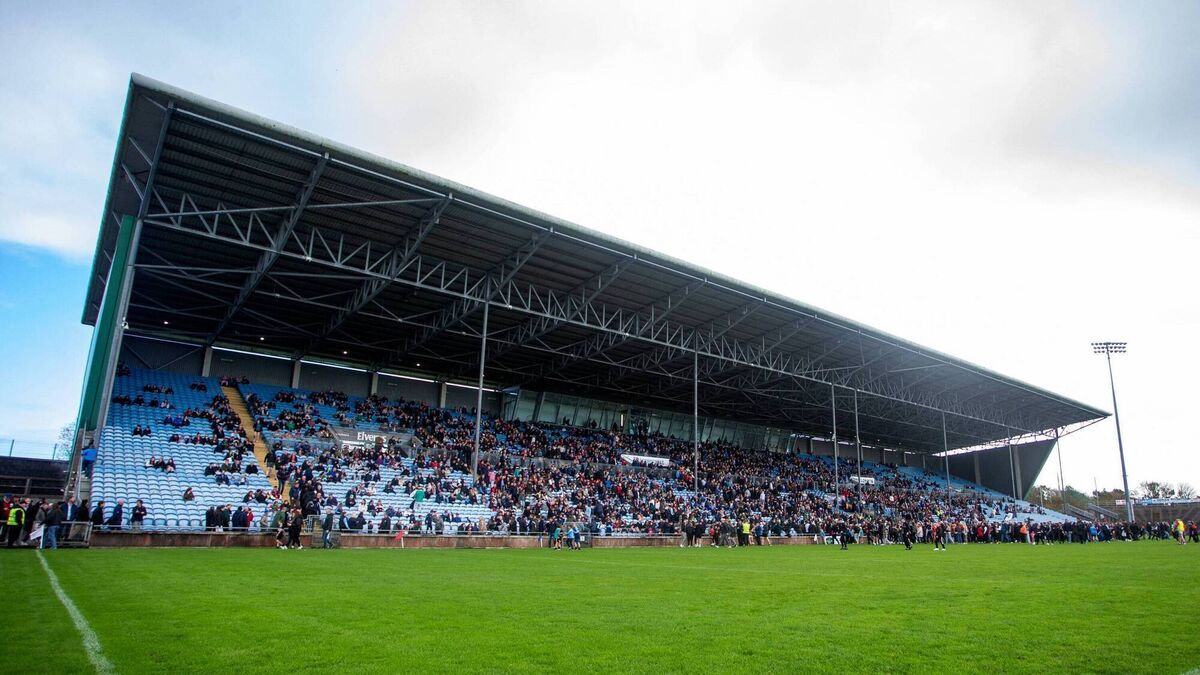
Spectators at Hastings Insurance MacHale Park, Castlebar ahead of this season's Mayo SFC final between Ballina Steohenites and Westport. Picture: INPHO/Dan Clohessy
It is better late than never.
It is great to see that Mayo GAA are finally biting the bullet and going down the road of appointing a full-time chief executive officer.
The advancement of such a role is long overdue.
Indeed, many of the specs spelt out by the Mayo GAA Board about the CEO were part of the recommendations made by Liam Horan’s Strategic Review committee in 2010/11.
That was a review which had the potential to utterly transform for the better Mayo GAA Inc. It was turned down by the board at the time, who may have feared spotlights being shone into dark corners.
And while on the pitch for the next decade, Mayo enjoyed considerable success, off the pitch, little changed.
Mayo reached ten All-Ireland semi-finals in eleven seasons, reached the final on six occasions and while they infamously failed to cross the line, they did set a higher bar than previous eras, who tried to end the gap stretching to 1951 for our last All-Ireland.
However, while the culture changed considerably on the field, off the field, at board level, there were always far too many concerns and issues. The appointments of various managers were poorly handled, as were departures. The noose that MacHale Park was around the necks of Mayo GAA did not loosen, despite the incredible commercial opportunities that the Mayo senior footballers presented. Such opportunities were criminally wasted at a time when the brand value was very high yet unrealised.
The opportunity to embrace change by appointing key, full-time roles like other counties were, for the large part, turned down.
Why? It is hard to be too critical of volunteers who have to give ever-increasing amounts of their time to run Mayo GAA. The roles are often thankless but what has been frustrating about Mayo GAA for the past 15 years has been the reluctance to bring in people from the outside to help to lighten the load, to add expertise and to ensure there is a high-performance culture both on and off the field.
Liam Horan’s Strategic Review revealed how many people are willing to help. Yet it appears that many board officers in that time who have been quick to point to unsustainable workloads have been much slower to share the keys to the castle.
This is both in terms of setting up more sub-committees with expertise to lead on certain aspects and also in terms of seeking to get more fresh and driven people coming forward to seek board positions.
The best players in Mayo, by and large, play for the Mayo senior team. Do our best administrators throughout the county step forward to board level? In some cases they do but not near enough of them.
On the face of it, anyone can step forward but we rarely hear encouragement for new faces.
Donal Walsh from Kilmaine and Daithí Gallagher from Castlebar Mitchels, but with strong Achill roots, were appointed by the executive to explore the need for a CEO or a commercial development manager, something chairman Séamus Tuohy highlighted as a necessary appointment at last year’s Mayo GAA Convention.
They made a few very honest admissions. Mayo GAA is ‘playing catch-up’ with other counties who have already taken affirmative action in this regard.
Donal Walsh said ‘with all the effort we put into our teams, are we putting the same effort in with our administration?’ The answer is self-evident.
Daithí Gallagher highlighted the need to ‘entice some younger, newer volunteers’. In terms of commercial development, he said Mayo are one of the most recognised sporting brands in the country but ‘our commercial activity has been underdeveloped’. Coaching and strength and conditioning work across various grades is ‘at times fragmented’. There is no specific ‘footballing ethos’.
These are all self-inflicted woes by various boards and it is encouraging to see that there is no longer denial of these realities by the board.
It was encouraging to hear that they had enlisted the support of some ‘high-level individuals’ to guide them on their way. Such resources are freely available with such widespread passion for Mayo GAA. Too often, though, these supports are not sought by the board.
‘Volunteer burnout’ is an increasingly big problem, they said, with Gallagher identifying it as a massive issue at club level also, which it undoubtedly is. Getting people to take on such roles is getting harder and harder because of the workload involved.
One could say that volunteer burnout at county board level in Mayo is an inevitable consequence of not resourcing the roles properly in terms of supportive expertise and enough fresh blood coming through. But it is also fair to say that the size and scale of Mayo GAA is long beyond that which is fit to be managed by unpaid volunteers.
Liam Horan’s strategic plan highlighted as much 15 years ago but the board of the time dragged their heels.
You cannot but help wonder how much better off we would be right now if that board had grasped that tremendous opportunity to transform Mayo GAA for the better or, at least, embrace the bulk of those proposals into their own strategic plan but that was, as Horan said at the time, a box-ticking exercise.
Daithí Gallagher highlighted the ‘outstanding’ work done in governance in Mayo GAA in the past five years, particularly around their operations manual. However, he added Mayo GAA have been ‘not particularly good at telling that story’. Communication in many regards is often woeful.
Their plan that a CEO would enable the board to move to an ‘oversight of operations’ rather than ‘being in the thick’ of day-to-day operations is welcome. In theory, this should enable some badly-needed strategic planning. Such strategic thinking appears to have been conspicuous by its absence in plans for a Centre of Excellent in Bohola with very little indication as to how it will be paid for. Instead, officers seem to be rushing from one fire to the next, overwhelmed by the day to day role which is absolutely taking up huge reserves of their time.
It is a massive crossroads now for Mayo GAA. A CEO can be transformative. The breadth of the role as described by Donal Walsh does appear a bit foreboding though. He said the CEO will initially take over responsibility for governance, finance, commercial revenue, marketing and communication, volunteer engagement and performance development.
That’s describing at least two full-time roles, if not three. Perhaps that is the medium-term plan.
The CEO will report to a five-person strategic leadership committee consisting of the chairperson, secretary, treasurer and two members of the executive. Right now that committee will consist of Séamus Tuohy, Ronan Kirrane, Valerie Murphy, Daithí Gallagher and Donal Walsh. An outside, impartial professional in human resources or high-level industry could be a very useful addition to this group. The CEO needs to have a hands-on role in strategic leadership and cultural change too.
There will be monthly meetings between the CEO and the SLC, quarterly meetings with the executive and twice-annual meetings with the County Board (incorporating club delegates).
One hopes it is something that will entice our brightest and best.
It has been easy to criticise the county board over the years. On far too many occasions, they load up the gun and fire the ammunition themselves. There have been far too many such self-inflicted wounds that have created headlines for the wrong reasons.
They now have the chance to be part of something hugely positive that they can always be associated with. Getting the right person and then enabling them to perform their function without unnecessary meddling can transform Mayo GAA. This is a glorious opportunity, it cannot be wasted.