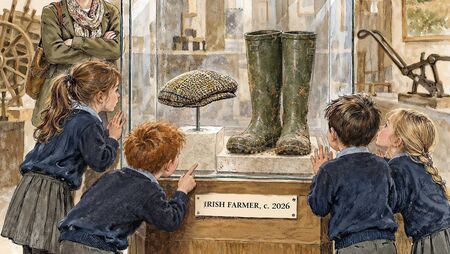
Ireland's enduring love affair with the potato
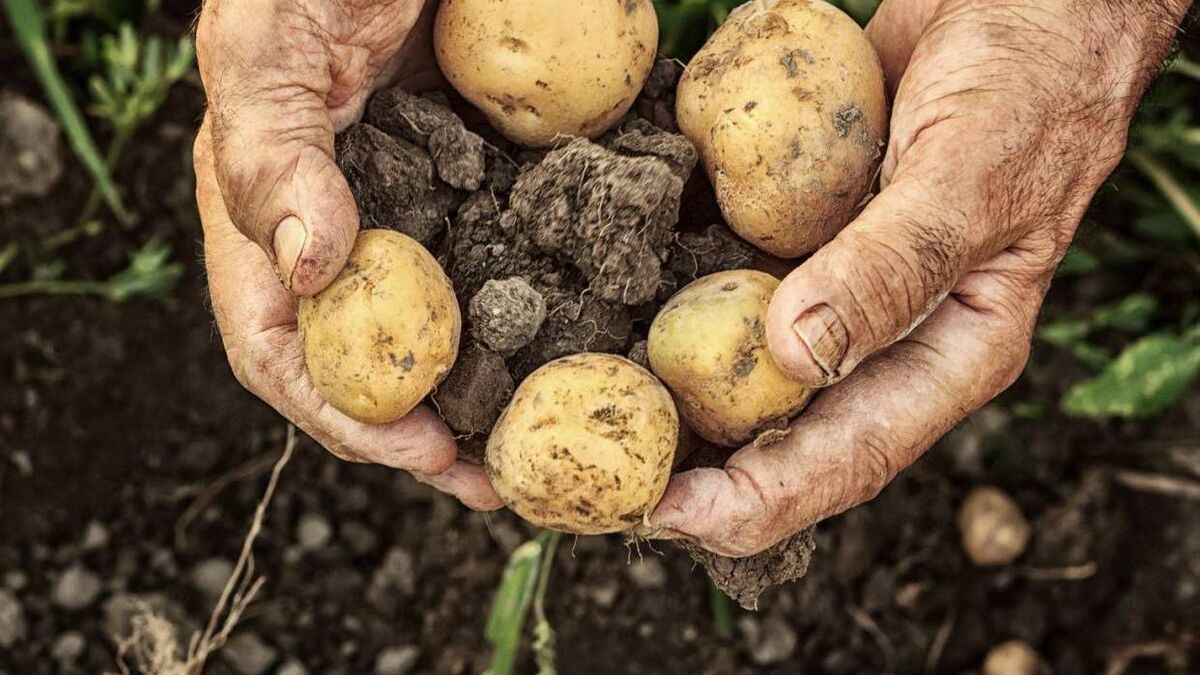
The importance of the potato as a food source and culinary delight varies by region and is still changing.
I often notice the old abandoned potato ridges of Famine times as the light of evening highlights them in small fields high on the Ox Mountains. These reminders take us back to a time when our forefathers were pushed to their very limits in a desperate effort to get enough to eat.
Despite the cataclysmic disaster of the Great Famine, our relationship with the potato endured. We are not the only country to love the spud but we really do love it. Almost everyone in Ireland has an opinion on their favourite variety and the way they like to have it cooked.
The potato, which is a tuber, not a vegetable, was first domesticated in Peru in South America about 8,000 years ago. It was the Spanish who discovered it growing there, serving the needs of the Inca people. The Spanish very much enjoyed this early spud and endeavoured to bring it back home to Spain, arriving in the second half of the 16th century.
The English word 'potato' comes from Spanish patata (the name used in Spain). The name 'spud' for a potato comes from the digging of soil (or a hole) prior to the planting of potatoes. The word has an unknown origin and was originally used as a term for a short knife or dagger. Around 1845, the name transferred to the tuber itself, the first record of this usage being in New Zealand English. Several languages, including French and some variants of German, are known to use a term for 'potato' that translates roughly into English as 'earth apple' or 'ground apple'.
Today, potatoes are a staple food in many parts of the world and are an integral part of much of the world's food supply. Following thousands of years of selective breeding, there are now over 5,000 different varieties of potatoes. Over 99% of potatoes presently cultivated worldwide descend from varieties that originated in the lowlands of south-central Chile.
The potato history in the United States is a bit like the history of the potato in Europe in that it was not immediately accepted. While it spread throughout the northern states in limited quantities, an important element of its eventual success was when it received a presidential seal of approval from Thomas Jefferson, who served potatoes to guests at the White House. Thereafter, the potato steadily gained in popularity, this popularity being strengthened by a steady stream of Irish immigrants to the New World. Nowadays, potatoes are grown almost everywhere in the United States. Since 2000, over one million acres of potatoes have been planted and harvested there each year.
The importance of the potato as a food source and culinary delight varies by region and is still changing. It remains an essential crop in Northern and Eastern Europe, where per capita production is still the highest in the world, while the most rapid expansion in production during the 21st century was in southern and eastern Asia, with China and India leading the world production of 376 million tonnes. And we thought the spud was ours.
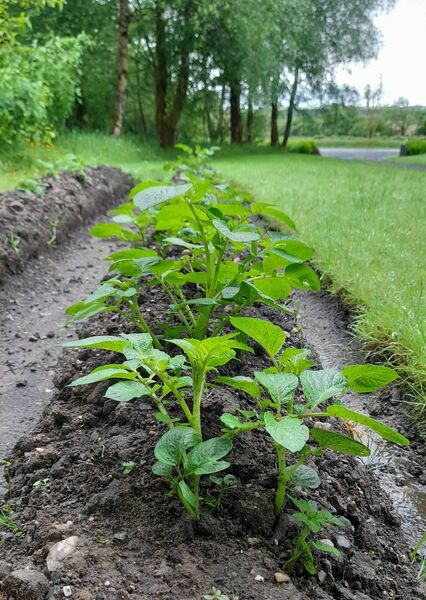
The reproduction of a potato is in essence very simple; you plant a potato and over time it reproduces twenty-fold. A slightly more scientific explanation is that the potato plant undergoes asexual reproduction via vegetative propagation.
Vegetative propagation is the reproduction process in which new plants can be created from vegetative parts of the original plant such as roots, stems, or leaves. Each potato contains small ‘eyes’ which in the presence of moisture, sprout to form leaves. These leaves or stalks then develop into new whole plants.
While this process is the same for every spud, not every spud is the same. This is where the infinite number of varieties come in. Potatoes come in all shapes and sizes, all colours and all flavours. Each country has its own favourite, each culinary task demands a certain texture and then there is personal preference. The Irish for the most part prefer a dry, floury potato. There are many varieties providing this option including Kerr’s Pinks, Golden Wonders and Roosters.
Roosters are, in fact, a designer potato, created especially for the Irish palate. Their pink skin and yellow flesh is of less importance than their consistent floury makeup. Roosters are uniformly roundish in shape with shallow eyes making them easy to peel. They are a general-purpose potato; they can be boiled, mashed, chipped, roasted, steamed, and baked.
The Rooster was originally bred in 1990 at the Teagasc Oak Park Research Centre in Carlow, by Harry Kehoe. Currently, Rooster potatoes account for 40% of the total potato production in the Republic of Ireland. Well done, Harry Keogh, you got that one right. Why is this man not a national icon?
Many old Irish varieties are no longer in common use but their colourful names remain: Arran Banners, Gardenfillers, Lumpers and Irish Chieftain.
Marie Antoinette, the wife of Louis XV, made potatoes a fashion statement when she started wearing potato blossoms in her hair.
The biggest potato grown to date from one plant was 370 pounds! This was achieved in 1974 by Englishman Eric Jenkins.
In October 1995, the potato became the first ‘vegetable’ to be grown in space. NASA and the University of Wisconsin created the technology with the goal of feeding astronauts on long space voyages, and eventually, feeding future space colonies.
It is believed that the Belgians were the first to begin the process of frying strips of potatoes, at some time between the late 17th and early 18th century. Legend has it that the poor villagers of Meuse subsisted on a diet of fish caught in the local river, which they would then fry before eating.
Our own love of the spud demanded that we found different ways of cooking it, to avoid getting bored. Apart from the usual methods found here and around the world, we came up with one concoction that seems to have escaped all others, including the ancient Incas. It is, of course, Boxty. For some reason, it has assumed negative connotations but taste it once and you will forget all that.
Many of you might be familiar with the yarn about the man from Leitrim who died and went to heaven. Saint Peter turned him away saying, “Sure, we can’t be making boxty for one.”
Boxty is as simple to make as the spud itself is to grow. You simply grate the spud (peeled or not), add a saucer of flour, season to taste, add bread soda and buttermilk and then simply fry the mixture as you might a large pancake. You can doll things up with onions and cheese and eggs and porter if you wish. I would suggest, for best results, that you allow the boxty to cool and reheat it the next day. While you will feel like over-dosing, resist the temptation or you could be in for a night of the you-know-whats!
The old lazy beds highlighted by slanting sunlight are a strange reminder of times past; the failure of the potato crop, the massive loss of life, the hordes who had to abandon home in search of a better life. The beauty of the scene belies the tragedy of what the scene represents. The potato: the staple that let us down and yet, remains our forever friend.