'Vital' work is helping to restore Mayo beach
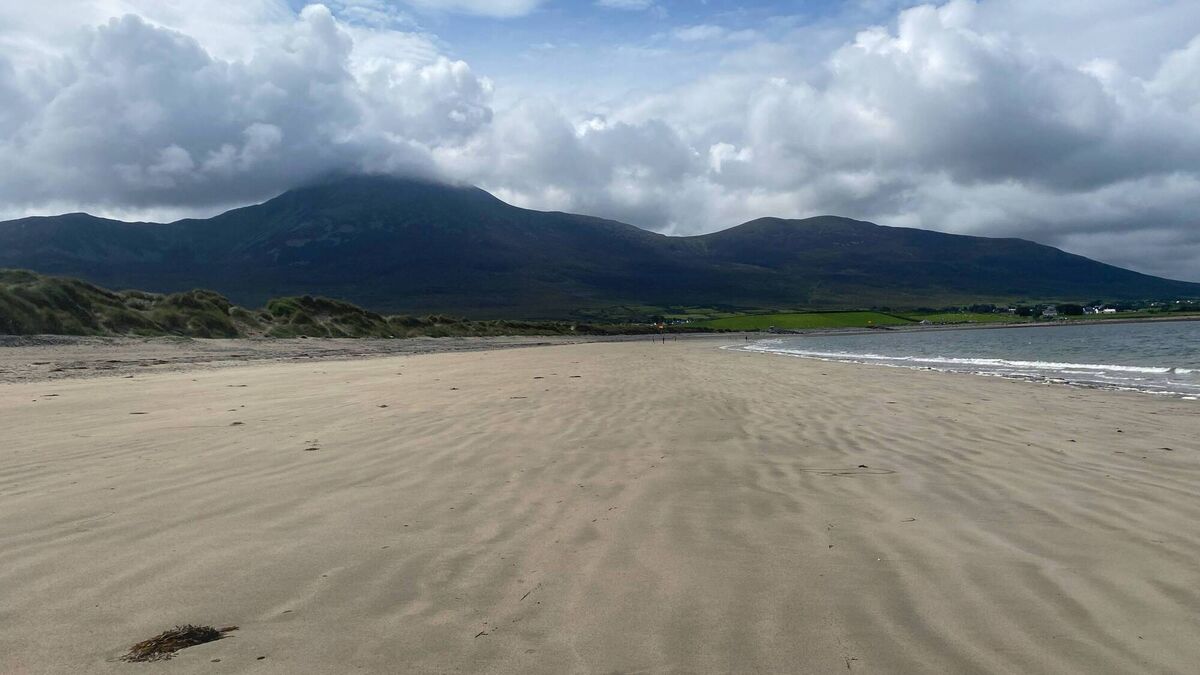
A serene and idyllic view of Bertra Beach near Westport. Picture: David Farrell Photography
Nature-based solutions and work by a local conservation group are helping restore and protect the dunes at a West Mayo beach, as vegetation is beginning to return to previously eroded areas along the dune. However, a lack of dedicated funding and project leadership is threatening the continuation of the work and the progress made so far.
That was the message delivered to Mayo County Council's Climate Change and Environment Strategic Policy Committee (SPC) at its November meeting, where Dr Kevin Lynch of the University of Galway outlined the work being carried out through the Bertra Connected group.
Dr Lynch, who has been researching nature-based solutions at Bertra for a number of years, said this past summer was the first time that a dedicated co-ordinator had been in place to oversee activity on the beach and dunes. The three-month appointment was made possible through funding from the National Parks and Wildlife Service.
The Bertra Connected group brings together members of the local community, Mayo County Council, the National Parks and Wildlife Service, University of Galway, Clean Coasts and Leave No Trace. Work to protect Bertra's dunes has been ongoing since 2018, although Dr Lynch said progress had been “on and off” over the years, because work depends on volunteers and funding availability.
Bertra is under significant pressure from climate change and recreational activity, with people walking across the dunes contributing to erosion and preventing vegetation from growing. Measures introduced to protect the area include sand fencing, rope fencing, and planting marram grass to help stabilise the dunes.
An information campaign has also been introduced to encourage visitors to stay off the dunes. Signs made by children from the local school have highlighted the importance of protecting the area.
Dr Lynch explained that sand fencing was installed at several locations between December 2022 and April 2023. However, in the summer of 2025, the group formally closed off sections of the dunes and began a more visible public information campaign. The positive impact of those measures is visible. By March 2026, areas where paths had formed through repeated trampling began to recover, with vegetation growing back across previously exposed sand.
“A lot of that [area] has greened up and solidified the sand and stopped it from blowing away or being eroded by the waves,” Dr Lynch said. “There is a lot less erosion and a lot less pressure just from us asking people to stay off the dunes.”
Two counters were also installed at Bertra, one in the car park and another at the entrance to the dunes, to monitor visitor numbers and activity. Dr Lynch estimated 100,000 annual visitor numbers between 2023 and 2026, with around 10% of them going onto the dunes. He stressed that the measures had not reduced the number of people visiting Bertra, and they had not taken the beach away as a community resource.
Dr Lynch said the reduction in people walking across the dunes, alongside the visible return of vegetation, showed that the nature-based solutions were having an impact. However, maintaining that progress and building on the work already done remains the biggest challenge. He said a dedicated co-ordinator was needed to provide leadership, continue the restoration work, and ensure the improvements seen over the last year are sustained.
“We need somebody to take leadership, we need some commitment from a body or some type of framework to do this, because so far it has been ad hoc,” he said. “It is a very important site, and we know actions work. We need to find leadership to continue that going forward.”
Cllr Peter Flynn welcomed the positive news, adding that the amount of money spent on nature-based solutions is “miniscule” and that it was “amazing how small interventions can make a difference”.
“Volunteerism is great but it's the continuity and bringing people back every year that is the challenge and that is where the local authority and other statutory bodies have an important role to play,” he said.
He said the work carried out over the past eight years had been vital in protecting the dunes.
“If that intervention hadn't happened eight years ago, and the work that has gone on since, there is a possibility that those dunes would not be there today. None of us know what that would mean for the Clew Bay area.”
The Westport-based councillor, who has been involved with the Bertra group, said greater public awareness and engagement were needed to protect Mayo's coastline.
“I don't want to be scaremongering but we need to wake up to what's going on in terms of climate change, to the fact we are a coastal county with huge exposure, and we need to figure out how we manage it going forward,” he said.
- Published as part of the Local Democracy Reporting Scheme