Davitt's GAA legacy recalled as Sam visits Straide
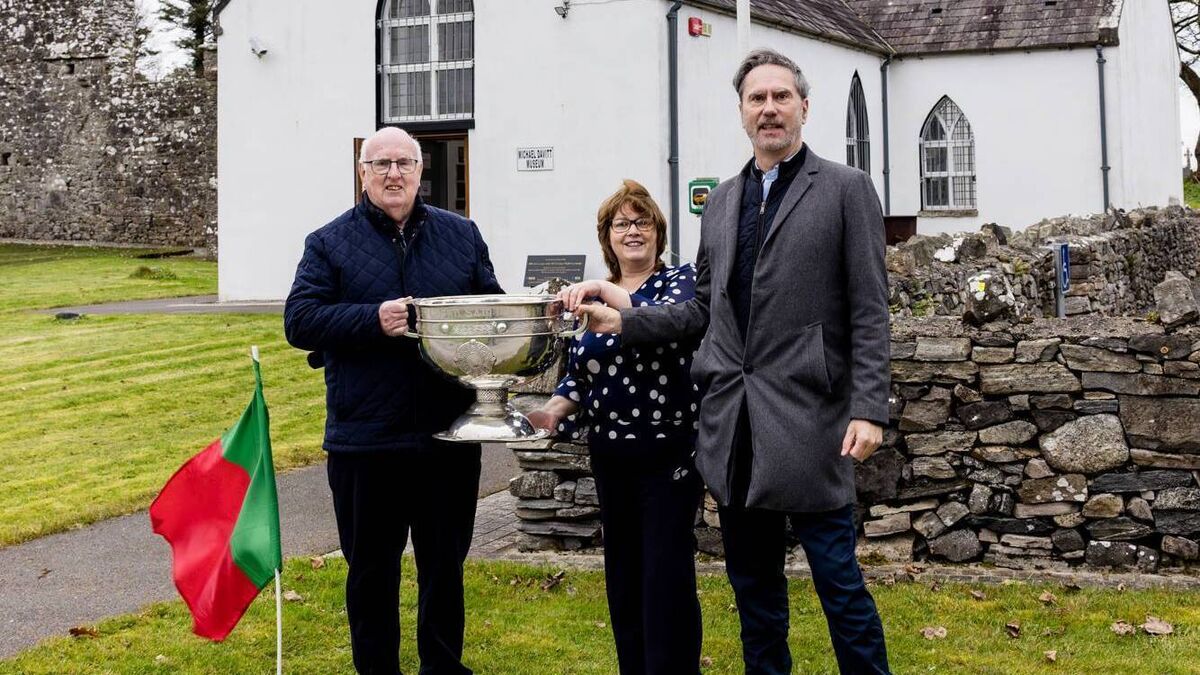
Michael Diskin (left), Acting Chairperson of Mayo GAA, with museum curator Margaret Keane and Michael Davitt's great-grandson, also named Michael Davitt.
Mayo’s All-Ireland triumph and Michael Davitt’s legacy were celebrated at a very special event last week as the Michael Davitt Museum in Straide played host to Sam Maguire.
The museum celebrates the life and legacy of Michael Davitt (1846-1906), founder of the Irish National Land League, social reformer, international activist, and one of the founding patrons of the GAA.
Michael Davitt’s great grandson Michael Davitt and museum curator Margaret Keane welcomed the famous trophy into the museum to celebrate the 2026 win and pay homage to Michael Davitt’s historical connection with the GAA as one of its founding patrons.
The event also brought together a number of the GAA clubs that bear Michael Davitt’s name including Moy Davitts, the Davitts club from Ballindine and Irishtown, Belfast Davitts, Derry’s Michael Davitt's GAC Swatragh, and Carlow’s Michael Davitts GAA.
The Belfast Davitts Club are to open a Michael Davitt heritage centre in their grounds next year.
Moy Davitts own All-Ireland hero Cian McHale was also in attendance.
Davitt was one of three founding patrons of the GAA in 1884, along with Dr Thomas William Croke, Archbishop of Cashel, and Charles Stewart Parnell, the leader of the Irish Parliamentary Party, but Davitt was the only one consulted in advance of the establishment of the association by its founder, Michael Cusack.
In 1888, the GAA sent a group of 50 Irish GAA players to tour America and draw up support and membership for the organisation, what became known as ‘The American Invasion’. However, due to financial constraints they were unable to return home. Davitt provided what was initially to be a loan of £450 to cover the losses incurred by the tour and never sought repayment, thus allowing the GAA to remain afloat at a critical period in its development. Davitt also wrote the preface to the GAA rule book in that year and publicised GAA activities and results in his weekly newspaper, .
Davitt believed that Gaelic games helped strengthen Irish identity and bring communities together. He supported the GAA in its early years and encouraged the promotion of native Irish sports at a time when Irish culture was undergoing a revival. He also helped ensure that the association remained focused on sport and community rather than becoming divided by political differences. Davitt recognised that the GAA could unite people from every walk of life through a shared love of Irish games.
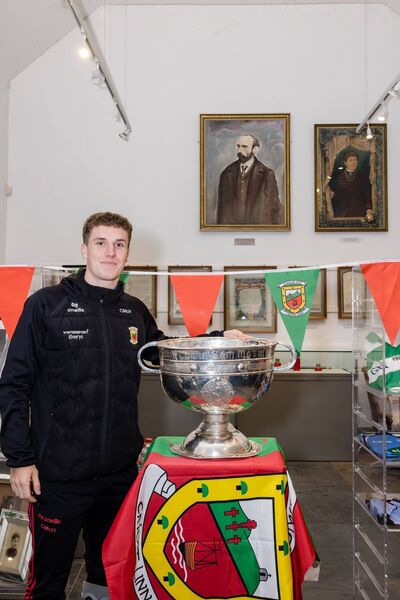
Curator Margaret Keane said the occasion was a “very proud moment in the history of the musuem".
“We are very honoured to have three of the Davitt family here with us,” she added.
She said the event celebrates Mayo’s victory while putting a spotlight on Davitt’s contribution to the early development of the GAA.
“We are so proud to have Sam Maguire here,” said Margaret.
Michael Diskin, Vice-Chairperson of Mayo GAA, said Davitt was one of the first people to recognise the importance of the GAA as a “community organisation". He also paid tribute to Cian McHale.
“Cian played a very significant part in all the Mayo games played this year. Well done Cian, and you are now correctly a part of the local history here,” said Michael.
Michael Davitt’s great grandson Michael spoke on behalf of the family.
“It’s a real privilege to be here on behalf of the Davitt family and to see so many clubs proudly carrying my great-grandfather’s memory,” he stated.
He said the family delighted in Mayo’s success.
“When you watch Mayo play, you are not just watching a group of sportsmen representing a team, you are watching men who have grown up in these communities, played for local clubs and whose families and neighbours are often sitting alongside you in the stand,” Michael commented.
“They are not just representing Mayo, in a very real sense, they are Mayo,” he added.