Memorial service is held at historic Mayo burial site
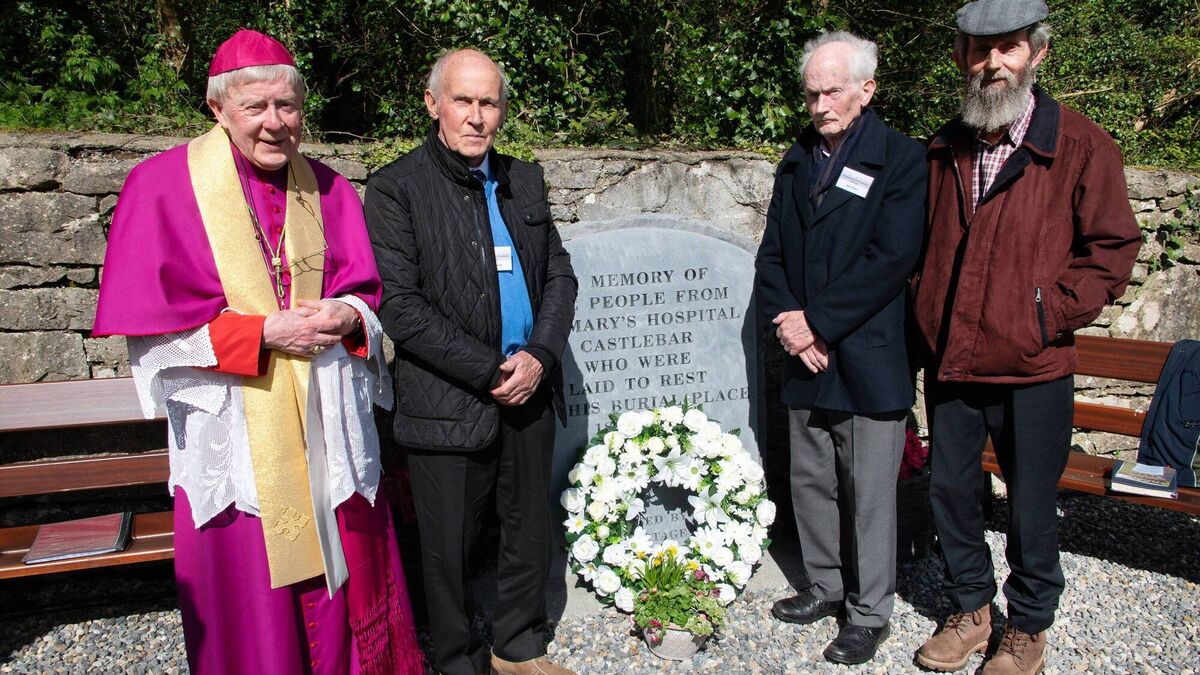
Archbishop Emeritus of Tuam Dr Michael Neary, Tom Scahill, Matt Shaw and Gerry Neary laid a wreath at the Aglish Historic Graveyard in Castlebar. Picture: Alison Laredo
A memorial service took place at Aglish Historic Graveyard on Sunday, April 19, hosted by St Mary’s Hospital Castlebar Heritage Society.
The event marked the 160th anniversary of the opening of St Mary’s Hospital (1866) with master of ceremonies Mike Finnerty coordinating the service.
The blessing of the graves ceremony was performed by Archbishop Emeritus of Tuam Dr Michael Neary, assisted by Fr Conal Eustace and Fr Mattie Long. Minister of State Alan Dillon delivered the keynote address acknowledging the importance of this step in restoring dignity and recognition to those who came before us. He reiterated his commitment to ensuring a lasting memory for those buried in the graveyard.
Historical research has shown that this graveyard was formally approved as a burial place for patients who died in the institution and was consecrated by the late Archbishop John McEvilly of Tuam.
The service provided an opportunity to reflect on a part of our shared history that has often gone unrecognised. Many of those buried there lived and died in circumstances shaped by the realities of their time, including stigma and extreme economic hardship in Ireland in the years following the Great Famine.
Across Ireland, former asylum graveyards are now part of an important national conversation. Dr Fidelma Creaven and Anthony O’Boyle spoke about the importance of commemorating the lives of those buried there with dignity and respect, while also conveying the importance of recognising their place in our shared history and ensuring their memory is not lost to time.
It is estimated that hundreds of individuals are buried at Aglish Graveyard. All were laid to rest with religious rites, though often without family present.
The Aglish Graveyard Restoration Project, undertaken by St Mary’s Hospital Castlebar Heritage Society and supported by the Health Service Executive and Mayo County Council, aims to preserve and restore the graveyard, reconnect the community with this history, and ensure those buried there are remembered as part of Mayo’s heritage on an equal basis with all citizens.
The large community gathering in beautiful sunshine marked an important step in restoring dignity and recognition to those who came before us. The grounds over the last number of weeks were beautifully supported by Cllr Ger Deere and Castlebar Tidy Towns.
Brian Donnelly, former senior archivist, gave an overview of the value of historical archival material held in the former St Mary’s Hospital, highlighting its importance in guiding and informing future scholars.
Historical records suggest that when a patient died in the Castlebar Lunatic Asylum (as it was then called), they were transported by cart to Aglish Graveyard in coffins made in the asylum. In most cases, the coffin may have been accompanied by a nurse and, occasionally, by another patient.
When examining the history of asylums, it is important to recognise the challenges of interpreting past practices solely through the lens of modern standards. Many patients buried there were not returned to their communities by their families for a variety of reasons. Records indicate that most families did not reclaim the remains of relatives due to a combination of stigma, fear, poverty, and limited transport options. These were the realities that shaped life in Ireland during that period.
Ultimately, the restoration of Aglish Graveyard is about reconnecting the people of Mayo with an often-overlooked part of their history, honouring those who came before us, and ensuring their memory is preserved for generations to come.
This event was followed by a big gathering at the recently refurbished Heritage Society's space in the former St Mary's Hospital where the archival memorabilia is held dating back to the mid-1800s.