Mayo's coastline facing a 'stark' threat
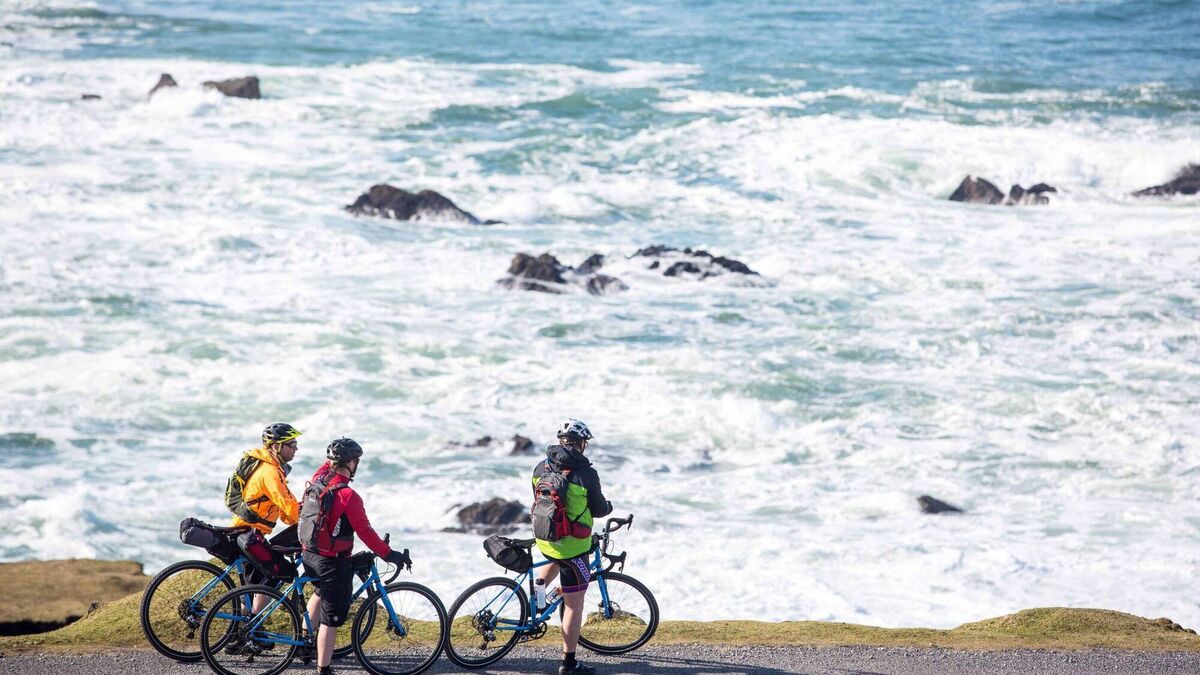
More than 400km of Mayo's coastline is at the highest level of exposure to coastal hazards, according to a recent study.
More than 400km of Mayo's coastline is at the highest level of exposure to coastal hazards, according to a recent national study, prompting calls for greater urgency in how the county prepares for the impacts of climate change.
Mayo has the greatest extent of coastal exposure of any of Ireland's 14 coastal local authorities, with a further 60km potentially at risk if protective coastal habitats like sand dunes and saltmarshes were to disappear.
The findings were outlined to Mayo County Council's Climate Change and Environment Strategic Policy Committee (SPC) at its November meeting.
Cllr Peter Flynn described the findings as a “stark” picture for Mayo, saying the public needed to “wake up to what's going on in terms of climate change”.
“That's nearly 420km of coastline we are talking about. If you got in the car and drove to Maynooth and back, that's what we are talking about here. If you were to say that everywhere between Maynooth and Castlebar was under threat of flood, there would be a lot of people panicking,” he said.
“It's because it's on the coast and it's not impacting the larger population, I don't think people are as concerned, and they need to be concerned," he added. “When you see Mayo at the top of the charts as a high exposure location, we do need to sit up and figure out where we are going.”
Dr Denise McCullagh from University College Cork (UCC) presented findings from a coastal risk study led by Dr Kevin Walsh, which examined Ireland's coastline exposure to extreme winds, coastal flooding and erosion.
The research assessed 8,500km of coastline across 14 coastal local authorities, using a Coastal Exposure Index that was developed to measure the combined influence of physical coastal characteristics and meteorological and climate-related factors. The index incorporates 30 years of wind and wave records, sea-level rise rates and storm surge levels, while also accounting for coastal habitats like dunes, machair, saltmarsh and seagrasses, which play a protective role in reducing exposure. The overall results showed high levels of coastal exposure around Ireland, with Mayo recording the greatest extent of very high exposure.
“Mayo has roughly 415km of coastline that is at the highest exposure level,” Dr McCullagh said.
The study also highlighted the important role that natural coastal habitats play in reducing that exposure. Dr McCullagh said Belmullet was identified as having one of the largest reductions in coastal exposure nationally, due to the combined presence of high, wide sand dunes, machair habitats, saltmarsh and seagrasses.
“Dunes are deemed to have the greatest exposure-reducing effect. Having those sand dunes in place is really protecting the coastline,” she said.
The research paper also examined a hypothetical scenario where coastal habitats were removed.
“If these habitats were to disappear, you would have up to 473km of the coast exposed at a very high exposure rate, around 60km more than what is currently exposed,” Dr McCullagh explained. “At the local level in Bertra, the presence of these coastal habitats have the potential to reduce our coastal exposure risk. By increasing nature-based solutions in targeted areas, we can reduce our risk even further,” she said.
Dr McCullagh’s presentation followed an update from Dr Kevin Lynch of the University of Galway on the Bertra Connected project, which is working with local conservation groups to restore and protect the sand dunes at Bertra Beach in Westport through nature-based solutions.
Cllr Flynn said the findings highlighted the need for greater attention to coastal management within the local authority. He questioned whether sufficient resources were in place to deal with the threat of flooding during storm surges and spring tides, noting that while the council has a Head of Marine role, the position focuses more on piers.
“I'm not sure we have anyone looking at the coastline,” he said. “I don't want to be alarmist, but those graphs are real, and it shows Mayo to be top of the table in terms of risk.”
Cllr Flynn compared the lack of urgency around coastal protection to what would happen if a similar length of road was at high risk of deteriorating.
“If this were 415km of road there would be a lot of engineers, councillors and residents jumping up and down, I don't see that urgency here,” he said. “I don't want to be scaremongering, but we need to wake up to what's going on in terms of climate change, to the fact we are a coastal county with huge exposure, and we need to figure out how we manage it going forward.”
The SPC meeting also heard about efforts to establish a more coordinated approach to coastal management through the Clew Bay Living Lab and a newly established Clew Bay Partnership. The Mayo-based living lab is one of three established around Ireland as part of the EPA TalX 2 Project, focusing on coastal management and community resilience.
Five workshops have taken place between May 2025 and September 2026, bringing together stakeholders from across Clew Bay and the catchments that feed into it. Covering an area of more than 2,000sq km, the initiative aims to bring together national and local stakeholders to develop a coordinated approach to protecting the region.
“There is a wide range of stakeholders who have been involved in the process from the start,” Dr McCullagh said.
She said the next step was to bring more people and volunteers on board to ensure the partnership can continue to progress its work.
“There is a lot of work ongoing, it is a difficult challenge. It's about bringing all of those people together and how nature-based solutions can support long-term adaptation in the region. You need to work with a wide range of stakeholders,” she said.
Cllr Flynn said he had not previously known about the Clew Bay Partnership and asked for more information on how the local authority could get involved. While welcoming the establishment of the group, he reiterated the need for action on coastal protection.
“We need to wake up to what's going on in our county and in our country in terms of climate change and how we manage it. We need to start using nature-based solutions urgently,” he said, pointing to the work carried out at Bertra.
- Published as part of the Local Democracy Reporting Scheme.