Man goes on trial accused of attempting to murder three children in Dublin
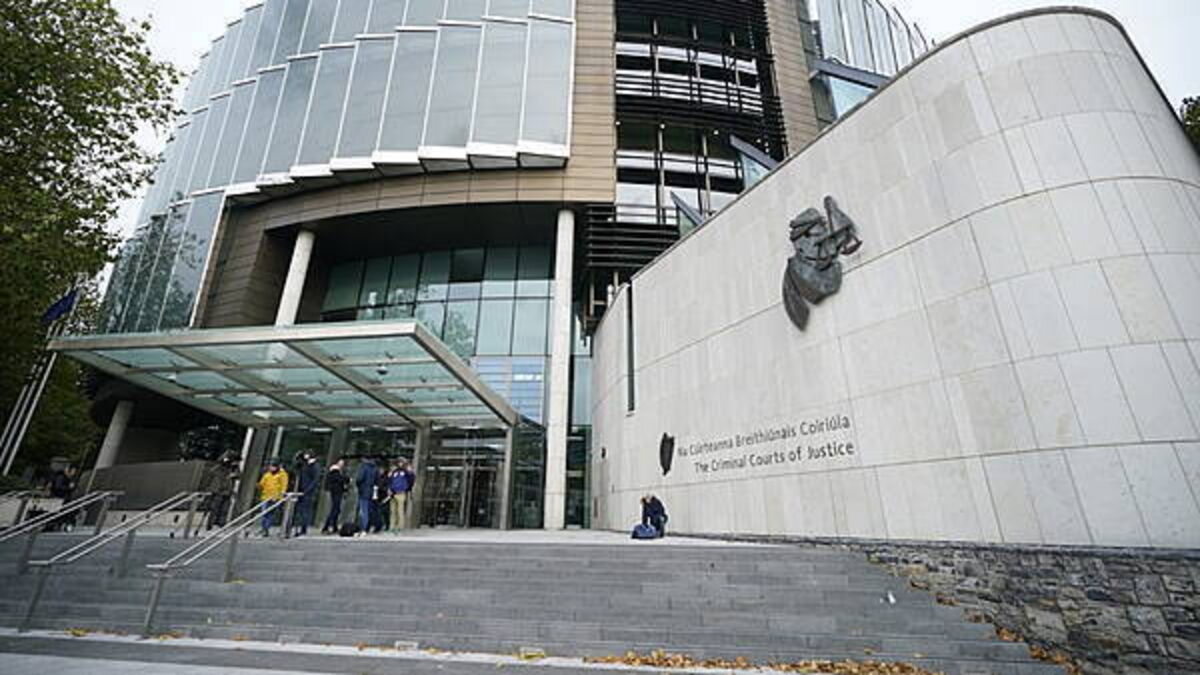
By Cillian Sherlock, Press Association
A man accused of attempting to murder three children made repeated stabbing movements, a jury has been told.
The trial of 52-year-old Riad Bouchaker, of no fixed address, opened before the Central Criminal Court in Dublin on Wednesday.
He is charged with the attempted murder of two girls and one boy, and assault causing serious harm to a care worker, at Parnell Square East in Dublin City on November 23rd, 2023.
He is also charged with assaulting three other people and with producing a 36cm-long kitchen knife.
Bouchaker, who is using an interpreter, earlier pleaded not guilty to all eight charges.
Trial judge Justice Tony Hunt told the jury of nine men and three women about the presumption of innocence afforded to Bouchaker and that they were decide on the charges based on the standard of beyond a reasonable doubt.
For the prosecution, Karl Finnegan outlined to the jury what evidence he expected them to hear during the course of the trial.
He said it was the prosecution case that young school children were leaving Gaelscoil Choláiste Mhuire on Parnell Square East on the afternoon of November 23rd 2023, and being brought to an afterschool by creche staff.
Finnegan added they would argue that Bouchaker approached those children, produced a knife, and began stabbing or attempting to stab them.
He said they were likely to hear an afterschool staff member attempted to intervene and was herself stabbed, before other members of the public intervened and brought Bouchaker to the ground and restrained him.
Finnegan told the jury members they were all likely to have heard of the incident which attracted “a considerable amount of public attention”, including commentary and social media, but told them they had to put all of that entirely out of their minds and decide the case only on evidence they see in the court.
The prosecutor said they were likely to see CCTV footage of the attack during the trial and also hear evidence on the “medical consequences of what happened” as well as garda interviews with Bouchaker.
He said they will also hear from parents of some of the children.
Finnegan said the jury was likely to hear that Bouchaker was caused upset by a letter informing him of a rejected social welfare application.
The barrister said they were likely to hear that the accused repeatedly said he was sick and not in his right state of mind and did not mean to hurt anyone.
He told the jury they were likely to hear he had previously suffered a benign tumour which required brain surgery in 2021 and that he suffered a further head injury during the interventions of members of the public which required hospital treatment for roughly a month.
Finnegan said Bouchaker now had an “acquired brain injury” which impacted upon his concentration and attention and the trial would have breaks to accommodate this.
However, he argued there would be no suggestion he was suffering from mental disorder at the time of the incident itself.
The barrister told the jury they were likely to hear that one of the children suffered life-threatening injuries and that when the assistance of an ambulance technician was attained, the child had no pulse and was not breathing.
He said they would be told that the child had a central chest wound and heart injury, while another had a significant head wound and a third had wound to their neck.
Finnegan said the jury were likely to hear that Bouchaker also said in garda interviews that he did not want to kill or harm the children.
The barrister said that intent is rarely proved by a person announcing it and that the prosecution would suggest it can be proved by what a person does.
For example, he said this could relate to what weapon is used, where blows are directed, and how often they are delivered.
He said they would be asked to consider the use of the knife, the “selection” of the children, and the targeting of the upper body, chest, neck and head areas – as well as “repeated stabbing or jabbing movements” and the need for members of the public to intervene.
The trial continues.