Galway firms among winners at Irish Motor Industry Awards
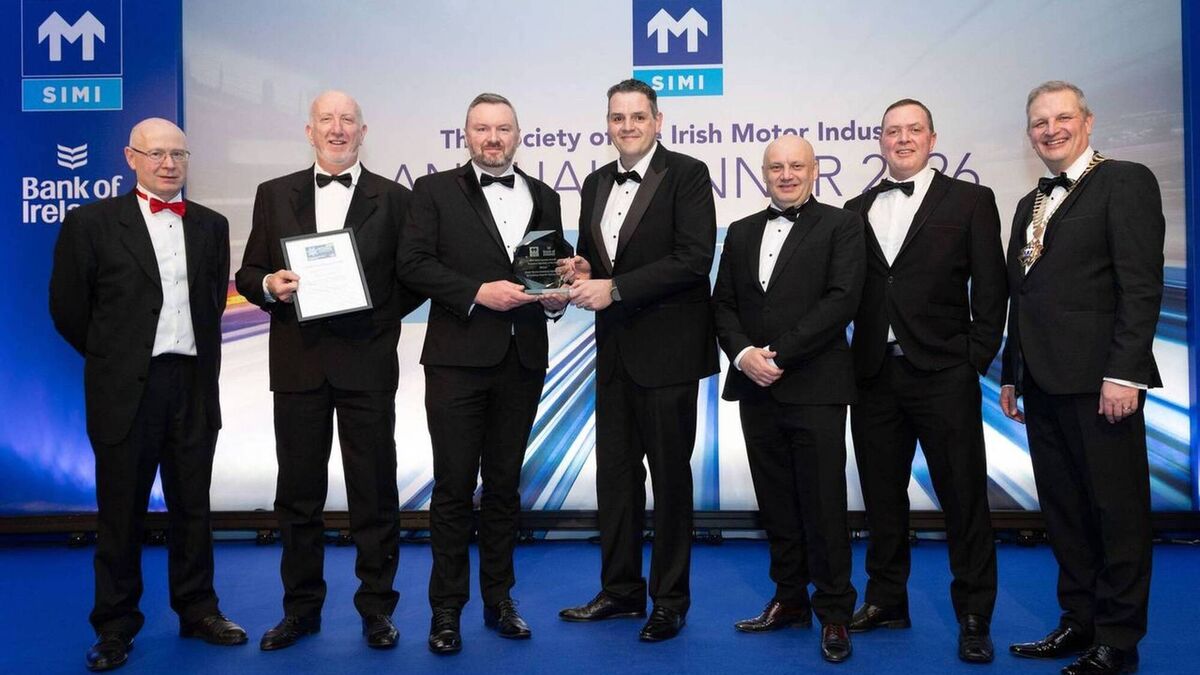
Collision Experts Galway East receive their award at the Irish Motor Industry Awards in the Clayton Hotel in Dublin.
The Society of the Irish Motor Industry (SIMI), in partnership with Bank of Ireland, announced the Irish Motor Industry Award Winners at the prestigious Clayton Hotel in Dublin on February 19.
Marty Whelan, master of ceremonies, revealed the winners in front of over 700 senior figures in the motor industry. Brian Cooke, SIMI Director General, and Vinny Coghlan, Head of Asset and Motor Finance, Bank of Ireland, presented the awards.
An independent panel adjudicated the winners in six award categories, highlighting excellence and best practices in the Irish motor industry over the past year.
Category award winners were: Bodyshop of the Year - Collision Experts Galway East; Vehicle Recovery Operator of the Year - Cartow.ie, Dublin; Independent Sales Operation of the Year - Ashford Motors, Wicklow; Independent Aftersales Operation of the Year - Service Stop Ltd, Dublin; Franchised Aftersales Operation of the Year - Fitzpatrick’s Garage, Kildare; Franchised Sales Operation of the Year - Fitzpatrick’s Garage Mercedes-Benz, Kildare.
SIMI President Mark Woods acknowledged the wide, diverse, and wonderful businesses that form the Irish motor industry.
Zero Emission Vehicles Ireland (ZEVI) also announced the regional winners of the ZEVI EV Dealership of the Year awards. These awards recognise and reward excellence in the promotion and sale of electric vehicles (EVs) in Ireland. The winners were: Fred Kilmartin Ltd, Co Galway, (Connacht); Fitzpatrick’s Garage, Naas, Co Kildare (Leinster); Nyhan Motors, Co Cork (Munster); Connolly’s Volkswagen, Letterkenny, Co Donegal (Ulster).
Mr Woods commented: “The automotive industry is undergoing a dramatic transformation. The shift to battery-electric and hydrogen-powered vehicles is an exciting moment for our sector. Change on this scale brings increased costs, new regulatory demands, and a different way of doing business. This decarbonisation transition will be delivered through a combination of technologies: electric and hybrid vehicles, low-carbon fuels, and ongoing efficiency improvements across the entire fleet. Managing this transformation requires coordinated action from policymakers, infrastructure providers, energy suppliers, and industry, so that emissions continue to fall while maintaining affordable, practical, and accessible mobility for consumers and for businesses.”