Irish placenames are a precious part of our heritage
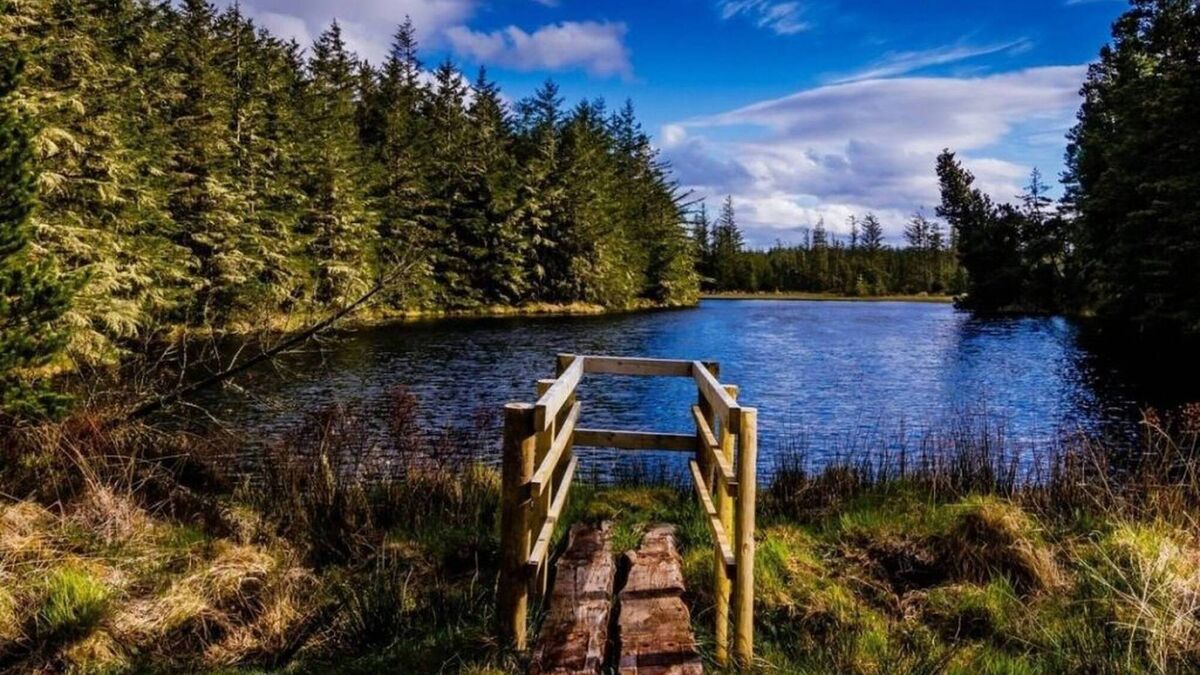
The popular Blanemore Forest is situated in a townland rejoicing in the name Tawnywaddyduff or Tamhnaigh an Mhadaidh Dhuibh.
I never met Manchán Magan but I wish I had. A beloved writer and broadcaster, he was a passionate advocate for the Irish language and landscape. Through his books and documentaries, this great-grandson of The O’Rahilly (killed during the 1916 Rising) revealed how our native tongue holds ancient knowledge about place, ecology and identity.
A mutual friend suggested, just months before his passing, that I speak to him about my own work on Irish mythology, local placenames and their deep ties to the land. She was right, of course. But the conversation never happened. By then, Manchán was already in the latter stages of the terrible illness that would soon rob us of him. And so, instead of meeting him, I mourned his passing last October - and then I rediscovered him.
In listening to the many memories Manchán has left us, I began to understand that his genius lay in something deeper than scholarship. It was intimacy. Manchán didn’t just know the Irish language, he felt it within its connectedness to the land. He showed how the Irish tongue isn’t merely a system of words, but a landscape in and of itself, a map of the psyche of those who once lived in intimate relationship with their surroundings and depended on it for their lives.
That understanding changed something in me. I am not a native speaker of Irish. I wasn’t taught through Irish in school, but learned it as a separate subject. I see this divorcing of the language from everyday life as a key reason why most of us never felt the need to use it - and why many hated it.
I thus took a meandering route to the language, arriving at it like a sympathiser who turns up late to a burial - well past the funeral Mass and shaking of hands. When I acted in the TV series some native speakers ‘joked’ that I didn’t have “fíor Gaelige”. I took offence - and then I understood. They were right, I didn’t have 'real Irish'. I was studying the language like an archaeologist, not as an authentic, living speaker.
But I’ve always listened to Irish stories. And I’ve always loved maps. As a boy, I was captivated by Tolkien’s Lord of the Rings, especially his map of Middle-earth. I remember staring at names like Dol Guldur or Mount Gundabad and wondering what adventures they held. The places not even mentioned in the text intrigued me most. I soon began mapping my own world - our farm in Moygownagh. I gave names to the woods and streams, the ditches and forts, the rusted machinery abandoned in hedges. I drew a new mythology from the shape of my home, in between farm chores and milking cows.
Manchán’s work made me think again about all that we’re losing. Not just the hedgerows and streams, but the names themselves - and the stories that lived in those names. Many people today don’t know the true identity of the locality they live in, especially if they live on a street with a name dreamt up by some tired draftsman in a builder’s office, completely ignorant of the area - and caring less. Y
et there are exceptions. I remember how a younger Peter Hynes, many years before ascending to Mayo County Manager, sought out the (now sadly deceased) Sean Mitchell to understand what local name should christen the new council houses in Moygownagh village. Seeking authenticity, the consummate businessman asked me about my research (while I was still only a student) and thus Knockroe was named after the hillside the estate is built into. A míle buíochas, Sean.
Every inch of Ireland lies within a townland - and those townlands are some of the oldest surviving structures of our national psyche. Most were fossilised in the mid-17th century, during the re-mapping of seized Irish lands by Cromwellian invaders. English-speaking surveyors wrote down the Irish names of these parcels as they sounded to foreign ears. The spellings stuck, as the new landlords were paranoid in upholding their claims against those dispossessed of their inheritances. Later, in the 1830s and ‘40s, antiquarian John O’Donovan and his team attempted to trace the origins of these mangled Irish names during the world’s first national Ordnance Survey. They got many right. Some they guessed. And some, they simply misheard.
The beauty of these names, though, lies in what they reveal. Just beyond where I grew up, there’s a place called Drumnanangle - Droim na nAingeal - the rise of the angels. A ruined church still lingers there on a small mound, unnamed on modern maps but alive in local memory. We lived in the neighbouring townland, Tonree. O’Donovan’s team translated it as “the bottom of the king”, which gives a certain poetry to the idea of crossing the river from the lofty abode of the angels to land squarely on the royal arse. Obviously embarrassed, the Placenames Commission (logainm.ie) later decided it was originally Tóin Fhraoigh or “the heathery bottom”. Yet this remote renaming by far-away academics is as inauthentic as ‘modern’ housing developments. Much more likely, it comes from Tamhnaigh an Rí, meaning something like “the grassy upland field of the king” - and as a native, I can confirm it is a steep hill of grass!
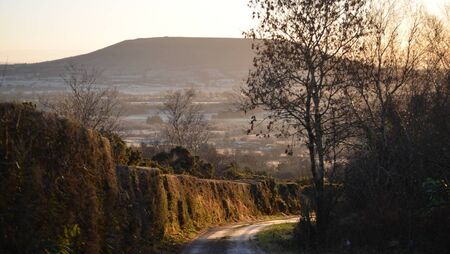
The popular Blanemore Forest is situated in a townland rejoicing in the name Tawnywaddyduff or Tamhnaigh an Mhadaidh Dhuibh. Locals thought it referred to “water dogs” or otters. In truth, it refers to the mythical Madra Dubh - a fierce, black fairy-dog believed to guard the entrances to the otherworld. The place is dotted with granite boulders and ancient graves. Standing there as the sun sets on this vast upland, you can almost hear the unearthly growl arising from the threshold between the living and the dead.
The Ordnance Survey also recorded some sub-denominations of townlands, which have no legal status but contain a wealth of tradition and heritage. One of my favourite such names is Doondragon in Kilfian parish - a group of now long-vanished houses by the Keerglen river. The 1838 survey map locates a "Dragon’s Grave" nearby, but there’s no dragon. Just blackthorn. Draighin is Irish for this thorny tree and the correct name of the area is Dún Draighin, the fort of the blackthorn trees. Sure enough, my recent visit revealed an ancient promontory fort surrounded by them. A while upriver is a rise which hides Skahaghnashee or Sceach na Sí. Hidden in a small nook in the boggy hill overlooking the river are these gnarled “hawthorns of the fairies”, still visible to this day. Ancient folklore said someone once hung themselves there. The place remembers, even if everyone else forgot.
Sometimes these evocative names are accurate transliterations. There’s Crocknacally townland or Cnoc na Caillí, the Hill of the Hag. This was no crone, but the powerful Cailleach, one of the triple aspects of the divine Goddess in pre-Christian mythology. The hill gave its name to a school, long closed. Local people spoke of her stone nearby, long lost in the Coillte forest. A careful forestry contractor, Tony Davis, eventually found it - a lone rock protruding from the peat. From a distance, it would have resembled a shawled woman hunched against the wind on the once bleak mountainside. Fitting.
Just beyond that stone lies a spring, now piped, once marked Tobaravilla, "the well of the sacred tree" or Tobar an Bhile. This was more than a tree and a well; it was a sacred upwelling of water, a site of the revered feminine. From this word comes the name Dervla or Deirbhile, "daughter of the sacred tree". Today it’s just called the Marl Well, named for the sediment in its base. The name is lost, but the water still flows.
And then there is Moygownagh itself, the parish where I grew up. There is no townland of that name. Just the parish, which translates to Maigh Ghamhnach, or "the plain of the strippers", not geographically challenged pole-dancers, as some might think (I see you, Noel Kelly), but milch cows. first-time milkers, young and fertile. A name denoting abundance.
A millennium-old legend claims the name comes from St Cormac, a cranky 7th-century saint from Munster who found refuge in a local nunnery after being mistreated by kings and monks across Connacht. The mother-abbess there, named St Daria, treated him kindly and gave him milk, not the water he had been used to getting. In return, in rather overdone praise, he blessed her lands to always abound in milch cows.
That’s the Christian version. The more likely story is this: Daria was a goddess. Or rather, she had been, before she was rewritten and her extensive foundation by the Owenmore River appropriated by Christian authorities. In fact, this saint was also known as Sodhelbh (the ‘beautiful’) and the Cailleach, the threefold goddess of Irish myth. The patriarchal Church needed a story to supplant hers. And so, St Cormac got the credit for the fertility of Moygownagh, while Daria was banished to the aforementioned wailing mountains in her old hag form.
What Manchán reminded us is that a placename is not just a label. It is not simply what a space is called for legal purposes. In older Irish ways of thinking, to name a place was to baptise it, to grant it meaning, sanctity, identity. Naming was an act of relationship, connecting landscape with community. When a hill was named for a goddess, it wasn’t a metaphor. It was a statement of fact: the land itself was sacred. A relationship to be negotiated and renewed, not subjugated and enslaved. This applied even when a name was simply describing a topographical feature, such as Abhainn Mhór or the Great River (Owenmore). These rivers are often small in our modern context, but their names reveal how important they were in the local context of their ancient composition, re-enforcing the small world attention of our ancestors.
That’s what we forget now, especially when we name things. I shudder every time I see street names proclaiming Foxborough Manor, Ashbourne Boulevard, or Westfield Villas - more to do with marketing slogans than authentic culture. We litter the country with hollow titles and signs that mean nothing, connect to nothing, evoke nothing. We should do better. We should think harder. A name can root people in place. It can offer them dignity. Continuity. Identity.
And just as we need to protect our placenames, we also need to protect the places beneath them. It should not be easier to bulldoze an ancient glen than to build a garden wall. The features of our landscape - the rivers, forts, hollows, ridges, trees, even ruined cottages and sheds - are our heritage. They are sacred. When we erase them for convenience or commercial gain, we sever the stories that made us. Forever. And for everyone.
Manchán Magan understood that.
So when next you go home - wherever that is - take a second look at the land beneath your feet. Listen for the names it still remembers. Speak them aloud. They may be all that’s left of angels, gods and fairy hounds (and kings’ arses). But if we say them often enough, maybe they’ll live on for the generations to come.