Irish importer of Nissan, Renault and Dacia brands bought by Portugese Group
Michael McAleer
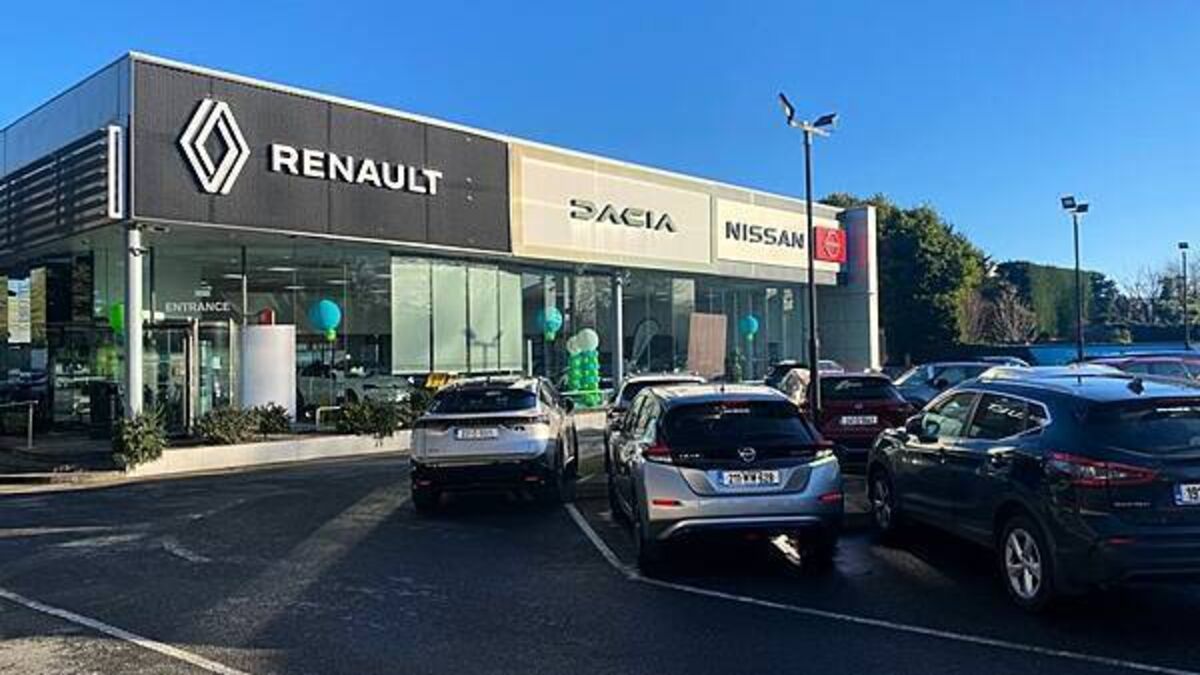
One of Ireland’s largest motor distributors and retailers, the Cedar Motor Group, has been bought by the Portuguese-based Salvador Caetano Group.
Cedar employs 600 people in Ireland, distributing the Nissan, Renault, Dacia, and Alpine brands, as well as owning the Windsor Motor Group. Its car brands recorded 12,527 new passenger car registrations last year, and a further 5,723 van sales.
Meanwhile, Cedar’s retail arm, Windsor, sold 10,000 new and used vehicles last year through its 11 dealer outlets. Alongside handling the Cedar brands, it also holds dealer franchises for Peugeot, Opel, Mazda, Citroen and Suzuki vehicles.
For nearly 50 years, it has been under the ownership of the Kuwaiti-based al-Babtain family, who purchased the Datsun franchise for Ireland in 1977 from the Brittain Group.
In 2023, the Cedar Group bought out the Renault franchise for Ireland, adding it along with Dacia and Alpine to its portfolio. Before this, Renault was handled by a directly-owned subsidiary of the French car brand, which itself had bought back the Irish distribution rights from businessman Bill Cullen in 2007.
The Group also holds a 50 per cent stake, along with AIB Bank, in Autolease Limited, a vehicle leasing company which trades as Nifti Business.
The Cedar Group reported revenues to the end of December 2024 of €659 million and earnings before tax of €1.79 million.
The Salvador Caetano Group has automotive operations in 48 countries across Europe, Africa and South America, with over 8,900 employees. It recorded a turnover of €4.3 billion in 2024, with aggregated group earnings before interest and tax of €318.4 million.
It is involved in distribution, retail, bus manufacturing, industrial equipment, aftersales service, information technology and renewable energy solutions.
The Salvador Caetano Group started in 1968 as the distributor for Toyota in Portugal, and now handles dozens of automotive brands across Europe, Africa and South America. These range from both Audi and BMW in Portugal, to Volkswagen in Angola, Nissan in Rwanda and Chad, and Renault in Venezuela.
Across its brands in 2024, it reported vehicle sales of 167,125, of which 55 per cent were sold in Portugal, 21 per cent in Spain, eight per cent in Denmark, seven per cent in Hungary, six per cent in Sweden and two per cent in Africa.
In a statement on the takeover, the Cedar Group said the Irish management team “remains unchanged and will continue to lead the development of the Group into the future”.
James McCarthy, chief executive of The Cedar Group, said: “Our Group is now part of a dynamic international automotive group with interests on three continents, allowing us to benefit from international best practice and 80 years of industry experience as we continue to grow and expand in Ireland.”
Sérgio Ribeiro, chief executive of Global Automotive Distribution at Salvador Caetano Auto described Ireland as “a dynamic and growing market”.