Ireland’s basking sharks and other fish risk overheating, says ‘sobering’ study
By Grainne Ni Aodha, Press Association
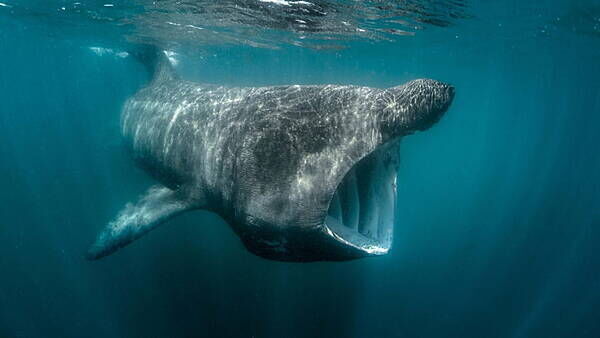
Ireland’s basking sharks and other warm-bodied fish face risks from overheating due to warming oceans caused by climate change, a study has warned.
The new research found that warm-bodied fish such as Great White sharks burn up to four times more energy than cold-blooded fish and face a “double jeopardy” of warming waters and declining food supplies.
The “sobering” research found that a 10°C increase in body temperature more than doubled a fish’s routine metabolic rate, meaning as its body warmed, it needed to consume more food.
The research, led by scientists at Trinity College Dublin in collaboration with those at the University of Pretoria’s (UP) Faculty of Veterinary Science, was published on Thursday.
It found that warm-bodied fish such as tunas and some sharks, including the famous Great White and Ireland’s basking shark, burn nearly four times more energy than their cold-blooded counterparts.

This means they are likely to face an increasing risk of overheating as oceans warm, which may result in a reduction of suitable habitat and an enforced relocation towards the poles.
The study, published in leading international journal Science, focuses on “mesothermic” fishes, a rare group comprising fewer than 0.1 per cent of all fish species, which can retain metabolic heat and keep parts of their bodies warmer than the surrounding seawater.
This ability has evolved independently several times in some sharks and tunas, enabling higher swimming speeds, long-distance migrations, and enhanced predatory performance.
To understand the cost of this high-performance lifestyle, the Trinity and UP scientists developed a novel way to estimate metabolic rate in free-swimming fish.
By analysing biologging data — from tiny sensors that record body and water temperatures — the team calculated how much heat fish produce and lose in real time.
They combined these new measurements, including data from huge basking sharks weighing up to 3.5 tonnes, with hundreds of lab measurements from smaller species.
Dr Nicholas Payne, research author from Trinity’s School of Natural Sciences, said: “The results were really quite striking – after accounting for body size and temperature, we found that mesothermic fishes use about 3.8 times more energy than similarly sized ‘ectothermic’, or ‘cold-blooded’ fishes.
“In addition, a 10°C increase in body temperature more than doubles a fish’s routine metabolic rate which, in practical terms, means warm-bodied predators must consume far more food to fuel their lifestyle.
“But that heighted energy demand is only part of the story because as fish grow larger their bodies generate heat faster than they can lose it.
“This creates a mismatch driven by basic geometry and physics because bigger bodies retain heat more effectively, and in mesotherms, high metabolic rates amplify this effect.”

The team found that larger fish become increasingly “warm-bodied” simply because of this imbalance, and it is this scaling mismatch that creates an overheating dilemma with significant implications for these species.
“The implications are really sobering as this new finding essentially places these animals in ‘double jeopardy’,” Dr Payne added.
“Many mesothermic fishes are already heavily impacted by overfishing of themselves and also their prey species, so their elevated energy needs make them especially vulnerable when their food becomes scarce.
“Fossil evidence suggests that warm-bodied marine giants, like the infamous extinct Megalodon shark, suffered disproportionately during past climate shifts when seas changed and today’s oceans are changing at unprecedented speeds, so the alarm bells are ringing loudly at this point.”
Professor Andrew Jackson from Trinity’s School of Natural Sciences, and a senior author of the research paper, said: “Based on the data we were able to create theoretical ‘heat-balance thresholds’, which are the water temperatures above which large fish cannot shed heat quickly enough to maintain stable body temperatures without changing their behaviour or physiology.
“For example, a one-tonne warm-bodied shark may struggle to remain in heat balance in waters above about 17°C.
“Above such thresholds, fish must slow down, alter blood flow, or dive into cooler depths to avoid dangerous warming but that comes at a cost too; it might be harder to find food, or catch it, for example – especially if your main weapon is speed and power.”
This research shows that being a high-performance predator in the ocean comes at a greater cost than we previously appreciated
These findings seemingly help to explain long-observed patterns in the ocean, where large fishes tend to occur in cooler waters, at higher latitudes, or at greater depths. They also migrate seasonally, tracking favourable temperatures.
Unsurprisingly, the scientists predict that under future warming scenarios, suitable habitat for large mesotherms will shrink, and particularly so during summer months.
While some species, such as Atlantic bluefin tuna, can temporarily increase heat loss or dive to cooler waters, they may be pushed to their limits if surface waters continue to warm.
Dr Edward Snelling, UP, said: “This research shows that being a high-performance predator in the ocean comes at a greater cost than we previously appreciated.
“As the oceans warm, these species are being pushed closer to their physiological limits, which could have consequences for where they can live and how they survive.
“What’s particularly concerning is that these animals are already operating on a tight energy budget, and climate change is narrowing their options even further.
“Understanding these constraints is essential if we want to predict how marine ecosystems will shift in the coming decades.”
The research was supported by funding from Research Ireland, the Marine Institute, Future Legend Films, Oregon State University, and a National Geographic and Human Frontiers Science Project.