Coroner post-mortems end in southeast as Waterford hospital withdraws service
Sarah Slater
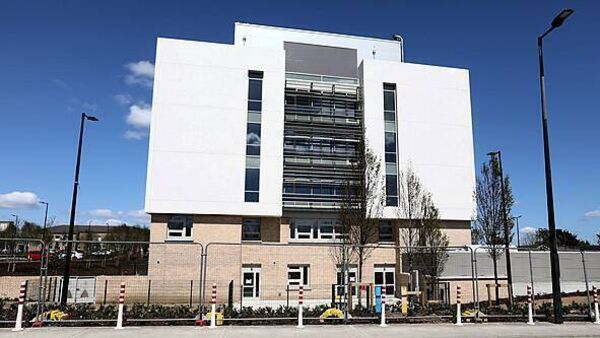
Pathologists based in University Hospital Waterford (UHW) are no longer available to carry out coroner-requested post-mortems for the entire southeast.
Consultant pathologists at the hospital stopped conducting such post-mortems on New Year’s Day. The cases dealt with involve deaths which are classed as suspicious by gardaí, accidental, or unexpected, and maternal deaths.
Up to 700 coroner-directed post-mortem examinations are carried out annually at the hospital and counties affected by the service ending include Carlow, Kilkenny, Tipperary, Waterford and Wexford, which have a combined population of almost 460,000.
It is now feared that results from such post-mortems will be delayed even further and perhaps even outsourced to other hospitals.
Several other hospitals in Cork, Dublin and Limerick also no longer provide the service due to a shortage of pathologists and the demands of daily diagnostic services.
Minister for Justice Jim O’Callaghan is conscious that the situation in UHW has reached a “critical juncture, and an urgent solution” is required.
The provision of post-mortem examination services to support the work of the Coroner Service is supported by several government departments and agencies.
The Department of Justice is responsible for the legislation concerning the work of coroners, while the provision of the post-mortem examination service is largely provided through the health service and its personnel.
A Department of Justice spokesman said that following a recent meeting in UHW attended by representatives of these parties, pathologists employed there have indicated that they are “not available” to carry out post-mortems.
He added: “On foot of this, the Department is engaging with a number of firms who are proposing to supply locums to provide the post-mortem service in UHW.”
The spokesman explained that this approach is an “unfortunate necessity to minimise any impact on bereaved family members” who are engaging with the Coroner Service.
“However, a long-term sustainable solution is nevertheless required, whereby locum pathologists are not relied upon to provide the post-mortem service, and instead this service to the community is provided from within the pathology profession in Ireland generally,” he outlined.
The Minister said he is aware that securing the provision of the post-mortem service is challenging and he has been engaging with Minister for Health Jennifer Carroll MacNeill, “to address the reasons behind these challenges,” the Department of Justice noted.
There are issues around the pathology profession generally, relating to training and recruitment, as well as competing demands on pathologists in areas of diagnostic and research work.
The Department of Justice, Home Affairs and Migration in April 2022 established a ‘Standing Committee on the Provision of Coroner Directed post-mortem examination services’.
Membership consists of representatives from the Department of Health, the Health Service Executive, the Office of the State Pathologist, An Garda Síochána, the Coroners Society of Ireland, the Department of Housing, Local Authorities and Heritage and the Faculty of Pathology, Royal College of Physicians Ireland as well as the Department of Justice, Home Affairs and Migration.