Baskets - their long history and many uses
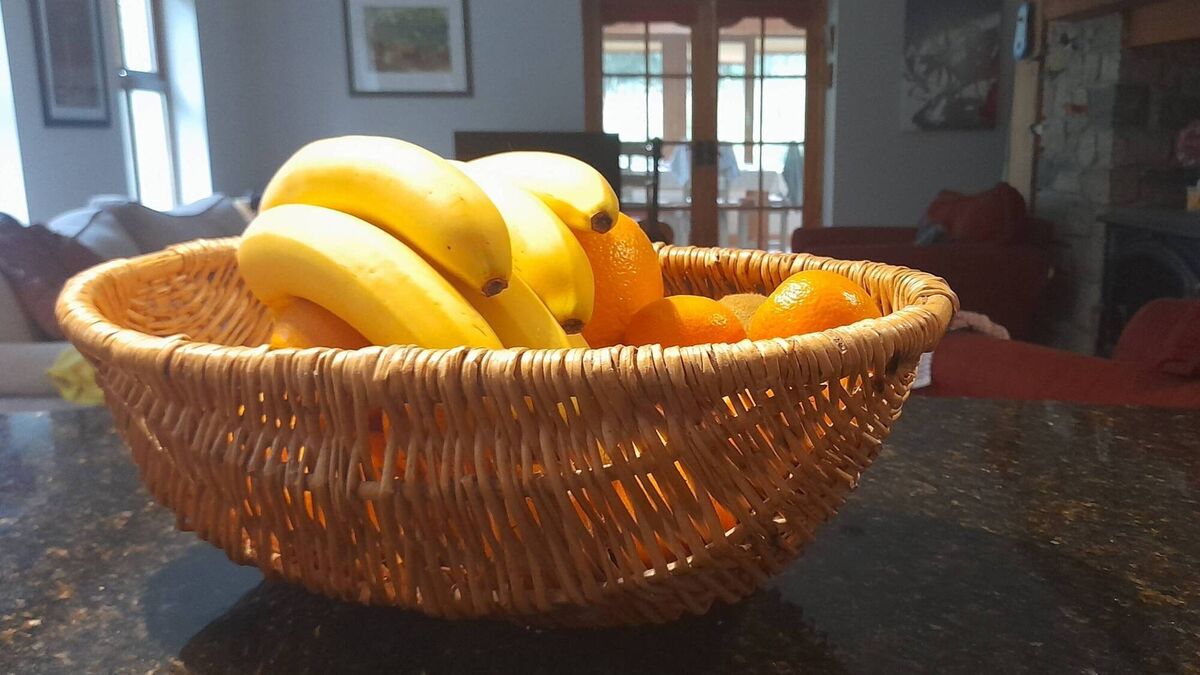
One of my father's baskets, which was made from peeled sally rods and is still as good as the day he made it. Picture: Pat McCarrick
There exists a vibrant cottage industry centred around basketmaking. Such baskets are seen as a craft items, created by those who keep an old tradition alive and cherished by others as a special keepsake. There was a time however, in the lives of people who lived in the Ox Mountains, when baskets were an essential item of everyday life.
Baskets were easy enough to make from materials such as willow that were freely available and they were used for everything from straining potatoes to bringing home the shopping. At this potato-picking time of year, it might be interesting to recall their heritage.
As an item of domestic use, the basket has been in existence almost from the start of civilisation. Alastair Heseltine in his booklet, , takes us back to the origins of basketmaking and wickerwork and shows how the craft was so important in the lives of our ancient ancestors.
Basketry is one of the oldest skills in the world. Examinations of stone carvings found throughout Europe and as far away as Siberia, dating from between 20,000 and 30,000 BC, show that civilisation at that time had already mastered the art of weaving plant fibres into cloth, nets and baskets.
The materials used in making baskets in these early times were based on practical need and had little to do with prestige or adornment. As soon as people became aware of a need for a container, they used whatever natural materials were available, twisting and weaving them into some sort of basket. Around the world, everything, including fine grass, roots and straw, were used for basketmaking. In Ireland, willow, or sally, was the basket weaving material of choice. Heseltine further explains:
Seasoned willow rods are flexible enough to weave yet strong enough to form a durable network when in position. The baskets themselves were relatively easy to make, remake or replace as required. From their early history, baskets were likely very similar to those found in use on the farms here in Ireland up to the second half of the twentieth century. The main feature of such baskets, which had countless uses, was their simplicity of design.
‘Frame’ baskets, one of the most basic designs, were constructed with sally rods on simple but time-consuming principles. In all regions, basketmaking mostly remained a seasonal job, reserved for the dark days of winter. Baskets and their designs were principally influenced by the maker and the materials they had at their disposal.
The potato basket, used for straining and serving spuds, was such a frame basket. Despite its common use, there was of course never a potato basket in Ireland before the arrival of the potato itself, sometime in the late 1500s. Notwithstanding this, it is likely that that there was a similar basket in use since the days of our early hunter gathers.
My father, who was a maker of baskets, often said that the hardest part of making any basket was gathering the raw material. He would go on to say that the actual making the basket was the easiest part of the process. Incidentally, he learned the craft from his grandmother who was born before the Great Famine in 1835.
The making of baskets is described in several contributions to the National Folklore Collection (NFC). In one contribution from Áine Ní Laoghaire, from Co Kerry, we see a particular reference to a ritual associated with gathering of the rods (which she refers to as twigs).
Basketmaker and author Joe Hogan describes the most commonly used potato basket, the skib or ciseog, and highlights its once widespread use throughout Ireland.
Another contribution to the NFC, under the heading, , suggests that such baskets could, in the hands of the right person, be turned out in a short enough space of time.
Hogan explains how the potato basket was actually used in the everyday lives of ordinary people.
Like many items of material culture, the days of the potato basket were numbered. The introduction of electricity changed everything, giving rise to improved housing conditions, an uplift in the standard of living and the availability of modern cooking utensils. All this accelerated the demise of homemade baskets in general and of the potato basket in particular.
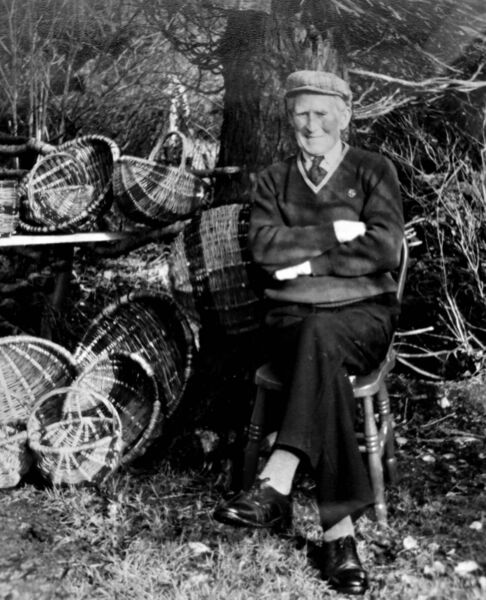
One of my most prized possessions is one of my father’s baskets. He once gave it to me as a gift - I probably asked him for it - and was one of a set of three that he made with peeled sally rods. These rods had been steeped in boiling water to loosen their skin and were then peeled to reveal the lovely white wood that lay beneath. This was a painstaking process and so, very few of his hundreds of baskets were made in this way. To this day, that beautiful piece of craft work sits on my worktop, where it acts as the family fruit basket. Without exaggeration, it is probably as good as the day it was made, more than 40 years ago.
I have made willow baskets, desperately trying to remembering how my father made them in times past. I achieved reasonable results but anyone could tell my method needed practice. I will get back to it sometime, but for now, I will simply savour my special basket, holding fond memories of my father and the many happy days he spent perfecting his craft.