A world champion with Ox Mountain roots
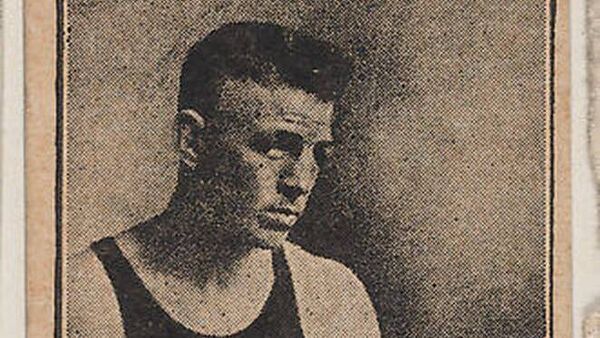
World champion boxer Mike O'Dowd had family roots in the Ox Mountain region.
One of the most remote places in the Ox Mountains is Mountaffe. Close to Lough Talt, it isn’t so much a mountain as a place; an out-of-the-way location where a vibrant community once lived. Today it is a place without homes; a hidden valley lost in time.
James O’Dowd was born in Mount Taffe in 1865 and emigrated to the United States as a young man. He eventually settled in St Paul, Minnesota and there, with his wife Eileen (O’Connor), whom he married in 1892, they raised a family of four sons - John (Jack), James, Cornelius (who died at a young age), and Michael Joseph, who was born on April 5, 1895. No one could have foretold at the time of his birth that Michael, later known as Mike, would go on to become a world champion boxer.
There is little doubt about O’Dowd’s appetite for sport and success. Young Mike was a football star prior to commencing his boxing career. In 1913 alone he is reputed to have fought seven times, and in October that same year, was scheduled to compete in a wrestling match, justifying his alias, the St Paul Cyclone.
The International Boxing Hall of Fame features information about Mick O’Dowd where they describe him as an American boxer who held the world middleweight championship from 1917 to 1920. He regained the title again in 1922.
On his march to the middleweight crown, O’Dowd boxed several no-decision bouts with fellow aspiring professionals as well as non-title bouts with two welterweight champions of the time, Britton and Lewis. In 1917, he eventually won the world middleweight title from Al McCoy. Shortly after this O’Dowd enlisted in the American Army and went on to serve in Europe.
O’Dowd’s visit to the front in Europe seems to have been short-lived and he was soon back in Minnesota and back in the ring. The International Boxing Hall of Fame picks up his story while telling us that the St Paul idol was “a terrific infighter and gifted defensively".
In the 1921 rematch with Johnny Wilson, O’Dowd picked up a nasty injury that seemed to hasten the end of his career. During the fight on St Patrick's Day that year, O’Dowd suffered the setback, later highlighted in the sports pages of .
O'Dowd never defended his November 1922 title win against Rosenberge but strangely did continue to fight, his last fight taking place on March 16, 1923. By not officially defending his title, he retired a world champion. After retiring, O’Dowd invested whatever money he had made in a St Paul nightclub. The club was named after the man himself, Mike O’Dowd’s Harp, which he operated for the rest of his life.
The period in which Mike O’Dowd fought in America is often described as the Golden Age of Boxing. Several factors were responsible for its transition from work-a-day, small-purse brawls to professional fighting. A key figure in all of this was promoter Tex Rickard, who staged massive, million-dollar gate events. Jack Dempsey was the era's biggest star. Other notable fighters included Gene Tunney, Benny Leonard, and Harry Greb. As mentioned above, O’Dowd fought Greb in February 1918 in the St Paul Auditorium, for the world middleweight title, with the match ending in a draw.
It was a rousing battle. The twin cities had six newspapers at the time. Three voted for O'Dowd ( , , and ), two voted for Greb ( and ) and one ( had the bout a draw but stated "strictly scoring the bout on points Greb would be entitled to a shade, but a draw verdict harms neither".
In 1920, the Walker Law legalised professional boxing in New York, and the National Boxing Association (later WBA) was later formed, in 1921. Radio increased the popularity of boxing by allowing widespread, real-time access to major matches. Major fights included Dempsey vs. Carpentier (1921), and the historic 'Long Count' rematch between Dempsey and Tunney in 1927 are prime examples of massive radio listenership.
Boxing attracted both struggling immigrants and an otherwise down-trodden black population. It was seen by some as a handy income - for a man trying to feed his family - for others, it was a pathway to riches. Despite the popularity of black boxers like Harry Wills, the "colour line" often prevented them from getting title shots. Notwithstanding all this, the sport became highly competitive and frequently drew thousands and thousands of spectators, solidifying its place as a top American sport.
According to the 1930 US census, O’Dowd was still living with his brother, John, and their father. By this time, his mother had passed away and both sons are listed as ‘single’. Mike’s occupation is given as ‘none’ and John works as a street cleaner. Despite this, the three men have a housekeeper, a woman by the name of Nan Cusack.
In a professional boxing career of 118 fights (93 wins, nine draws and 16 losses), O’Dowd had established his place in boxing history. He was inducted into the Minnesota Boxing Hall of Fame in 2011 and the International Boxing Hall of Fame in 2014. Michael Joseph O’Dowd, proud son of St Paul and grandson of Mountaffe in the Ox Mountains, died from a heart attack at a veteran's hospital in Minnesota, on July 28, 1957, aged 62.
- Acknowledgement: This piece was inspired by information originally published in (Vol I, P.146).